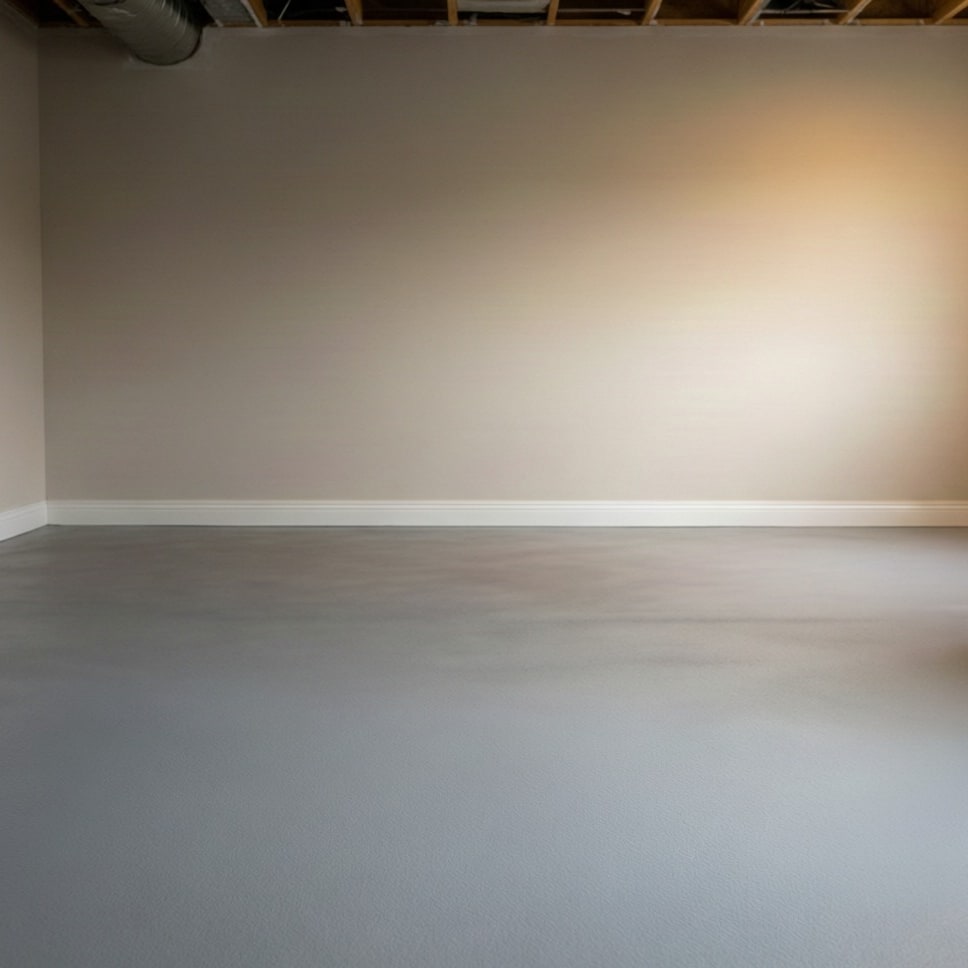
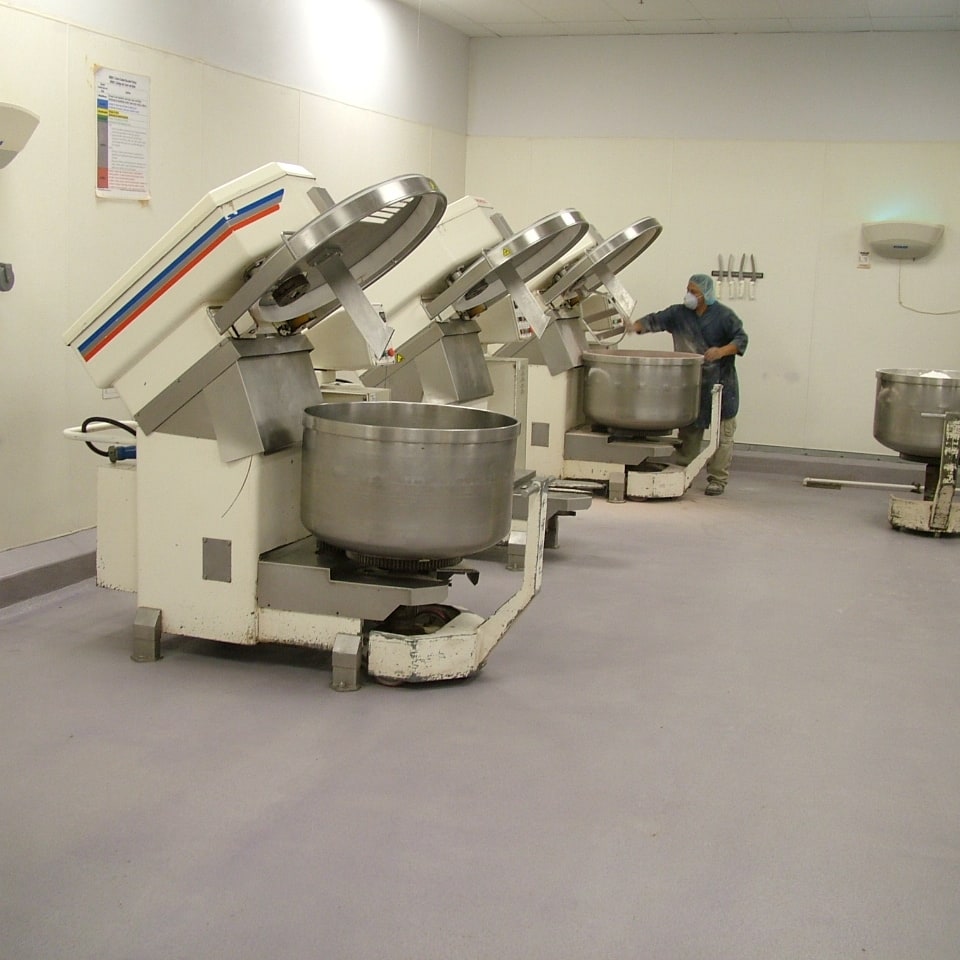
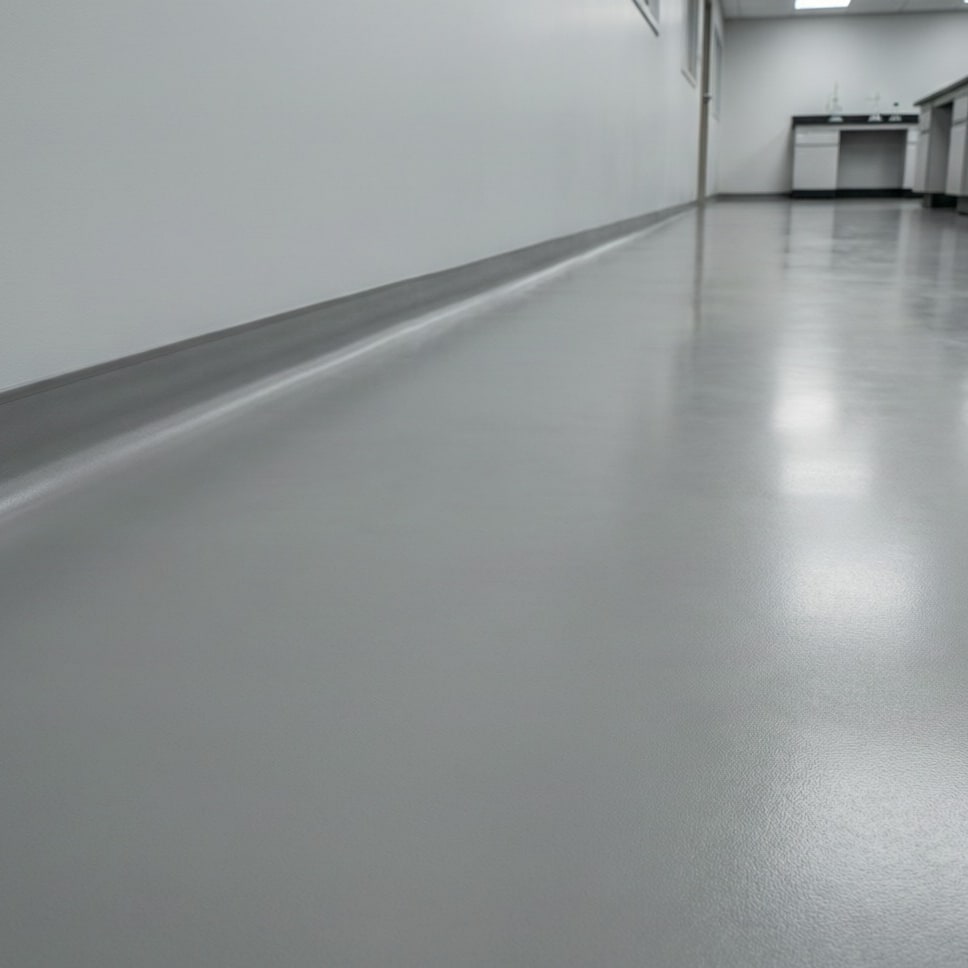
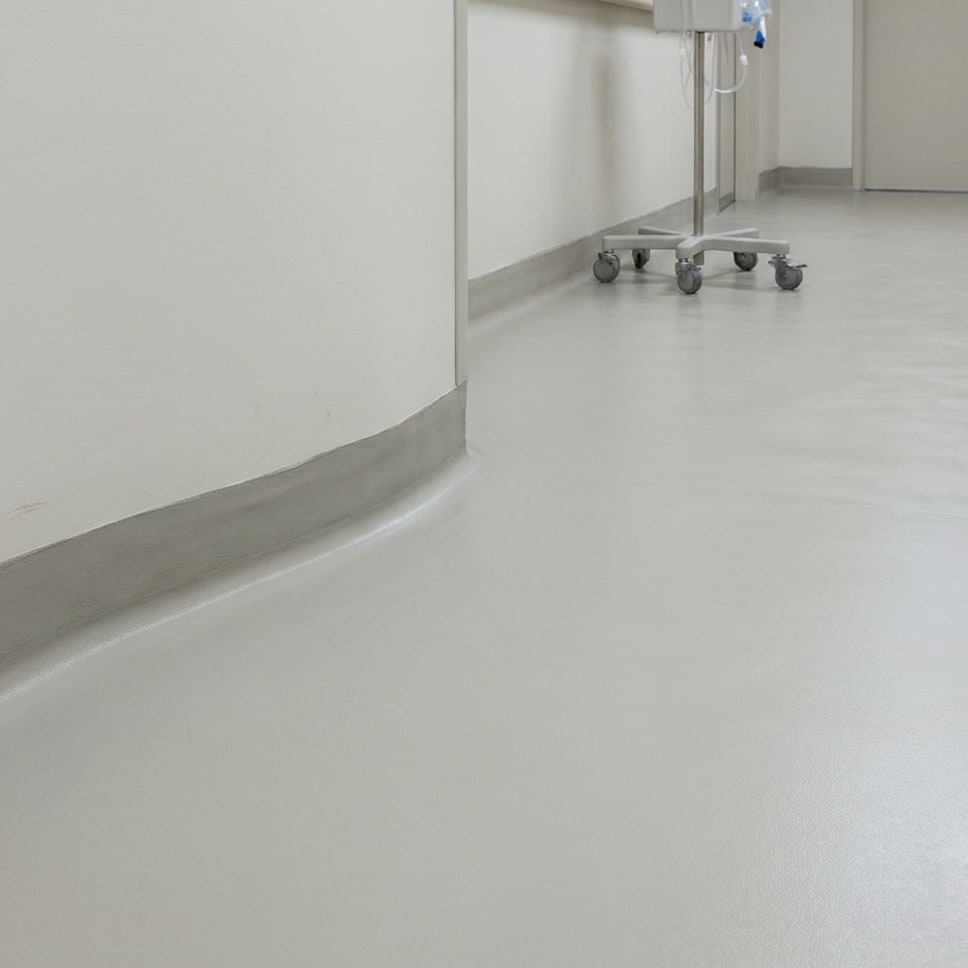
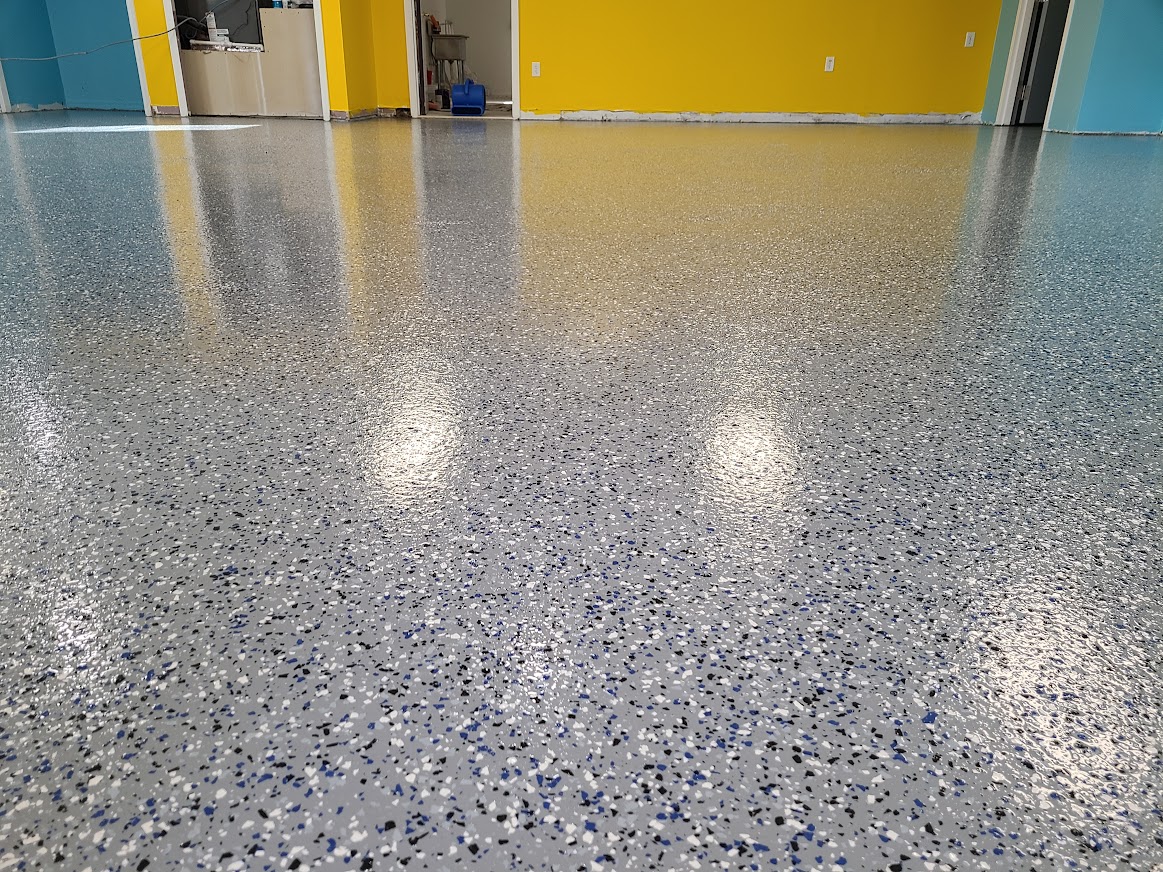
Kitchen over old tile or vinyl
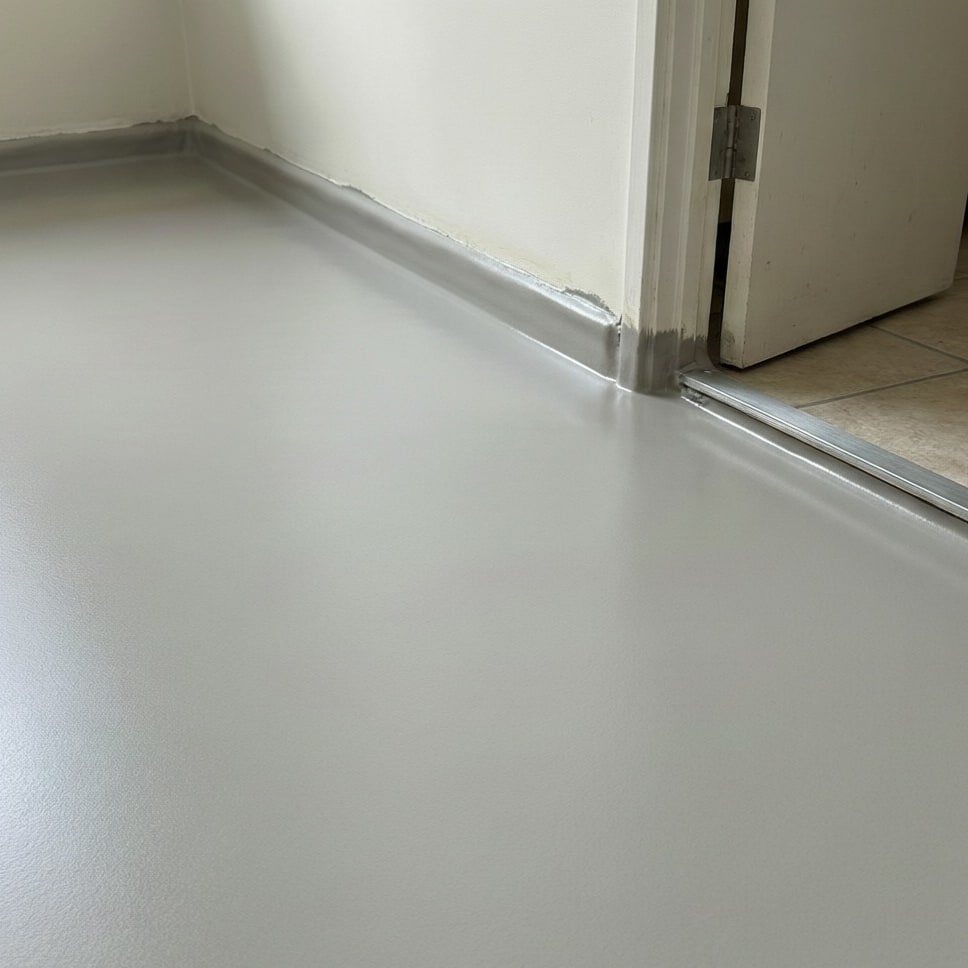
Seamless surface with no grout lines to hold grease; the level change is handled at the doorway threshold.
SKU: FW-SLF-RTV
A seamless resin floor laid directly over sound ceramic or quarry tiles — no demolition, no dust, no re-screeding. Built to key into a glazed surface and to stop the old grout grid printing through.
Key Parameters
Standard pack: 20 kg/set (A: 15 kg + B: 5 kg). Reply within 24 hours. Custom RAL colours and OEM packaging available.
System line:Self-Leveling Epoxy > Epoxy Self-Leveling
A seamless resin floor laid directly over sound ceramic or quarry tiles — no demolition, no dust, no re-screeding. The build-up is designed to key into a glazed surface and to stop the old grout grid printing through.
A self-levelling resin floor specified to go over sound tile rather than take it up: 3 mm built at 2.2 kg/m² per mm, satin with a fine texture, mixed A:B = 4:1 out of a 20 kg set (15 kg resin + 5 kg hardener). It holds >80 Shore D and 78 MPa compressive with a pull-off of 1.5 MPa measured on abraded glaze, wears at ≤0.03 g on the Taber plate, and carries a French A+ indoor-emission classification. 30 minutes of pot life at 20 °C, walk-on at about 10 hours, full cure at 7 days.
A broadcast build on ground, profiled concrete is specified at 3.8 MPa — see our flake coloured sand system. This overlay is published at 1.5 MPa, and the difference is the substrate, not the resin. A ceramic glaze is dense and non-porous: there is nothing for the film to key into until the glaze has been ground open, and a pull-off taken on abraded glaze will read lower than one taken on concrete. We ask for a trial area and a measured pull-off on it before a large floor is committed, because on this system the preparation is the specification.
What you cannot skip is preparation: the system now hangs off a dense, non-porous glaze it was never designed to bond to, so the glaze is mechanically abraded, the grout grid is filled and skimmed, and the level rise of 3–6 mm is planned at doors and thresholds.
An overlay is a stiff film bridging a shallow valley. Grout lines are channels a couple of millimetres deep, and a thin film follows them. What appears later is a faint square pattern in the finish — the old grid printing through, usually first seen in raking light, and usually after the client has moved back in. The buffer/skim step is what stops it, and it is the line item a price comparison is most likely to remove. If two quotes for the same room differ by more than they should, ask which one includes the skim.
This is a coating over a floor, not a repair of one. A hollow or debonded tile comes up before anything is poured; a foam-backed vinyl or a loose-laid sheet is removal, not a substrate. If the tiles are sound but the slab under them reads damp, the moisture question is first — our basement floor coating is the build specified around a moisture reading. And where a tired floor needs a wearing section rather than an overlay, a broadcast build is the better starting point. Where the tiles are sound and the ask is only the look — colour, a speckled surface, no grout line to scrub — the decorative coloured sand floor over existing tiles is the thinner of the two builds, comes in a wider palette, and has its own page.
Tearing up an existing tiled floor is the expensive part of a renovation: the breaking, the skip, the dust, the new screed, the drying time, and in a flat the neighbours. If the tiles are firmly bonded and level, you can put a seamless resin floor straight over them and skip all of that. What you cannot skip is the preparation, because the whole system now hangs off a glaze it was never designed to bond to.
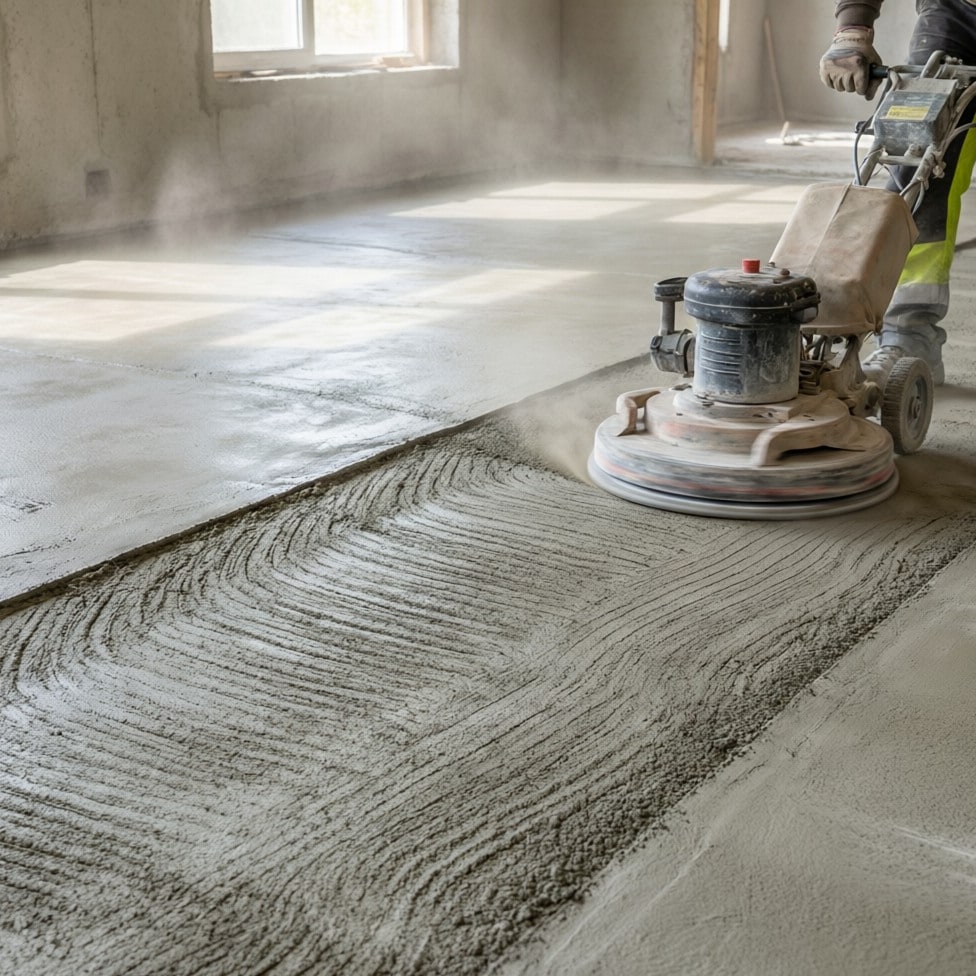
Two things decide the job. First, mechanical key: a ceramic glaze is dense and non-porous, so it has to be abraded (diamond grind or scarify) until it is uniformly matte, then primed into that profile. Acid etching is not acceptable — it leaves salts under the film. Second, the grout grid: grout lines are porous and they move differently from the tile, so a thin film poured straight over them will print the grid through within months. A filled and skimmed buffer coat levels the grid before the body goes on.
Be clear-eyed about what you are getting. Bond to an abraded glaze is lower than bond to prepared concrete, and when an overlay fails it usually fails at the glaze or the old adhesive, not in the resin — so we ask for a pull-off test on a trial area before a large job. And the floor does rise: 3–6 mm, which means doors get undercut and thresholds get a transition profile. That is not a defect, it is arithmetic, but it has to be planned.
| Survey | Tap-test + age checkHollow tiles out; if the building predates ~1980, the tile adhesive may contain asbestos — do not abrade before a survey |
|---|---|
| Key | Diamond grind / scarifyUniform matte surface across the whole glaze; degrease afterwards |
| Primer | 0.3–0.4 kg/m²High-solids epoxy rolled into the abraded glaze and into the grout lines |
| Level | Grout fill + skimThixotropic epoxy filled into the grid, then a buffer/skim coat to kill telegraphing |
| Body | 2–3 mm self-levelling≈ 2.2 kg/m² per mm; total build-up 3–6 mm over the old tile |
| Topcoat | 0.12–0.2 kg/m²Satin or fine-texture wear coat; texture recommended in wet rooms |
Custom RAL matching available — we ship a physical sample card before production.
| Brand | Friway |
|---|---|
| SKU | FW-SLF-RTV |
| Category | Self-Leveling Epoxy > Epoxy Self-Leveling |
| Finish | Satin / fine texture |
| Coverage | 2.2 kg/m²/mm |
| Thickness | 3 mm |
| Mix Ratio | A:B = 4:1 |
| Pot Life | 30 min |
| Walk-on Time | 10 h |
| Full Cure | 168 h |
| Hardness | >80 Shore D |
| Adhesion | 1.5 MPa |
| Compressive Strength | 78 MPa |
| Abrasion Resistance | ≤0.03 g (Taber CS-17, 1000 cycles) |
| Package | 20 kg/set (A: 15 kg + B: 5 kg) |
| Warranty | 3 years |
| Suitable over | Sound ceramic, quarry, porcelain (abraded), most vinylThe existing floor must be structurally bonded — this is a coating, not a repair |
|---|---|
| Not suitable over | Hollow/debonded tiles, foam-backed vinyl, loose-laid sheetRemove those first; resin bonded to adhesive or foam will fail |
| Level increase | 3–6 mmPlan door undercutting, threshold profiles and appliance plinths before quoting |
| Bond to abraded glaze | ≥ 1.5 MPa typicalLower than to prepared concrete; we ask for a pull-off test on a trial area |
| Substrate moisture | ≤ 4 % CMTiles over a ground slab can hide damp; a coated tile floor is less vapour-open than bare tile |
| Underfloor heating | Off 48 h before, cool slabSwitch back on gradually after 7 days — thermal cycling is what prints the grid through |
| Walk-on | 8–12 h at 20 °C |
| Full service | 7 daysRugs, appliance feet and wet-room use after full cure |
| Compressive strength | 78–80 MPaSelf-levelling build at 7 d / 20 °C |
|---|---|
| Bond to abraded tile | ≥ 1.5 MPaFailure is usually at the glaze or old adhesive, not in the resin |
| Hardness | > 80 Shore DFurniture, appliances and domestic traffic |
| Abrasion | ≤ 0.03 gTaber CS-17, 1000 cycles |
| Seamlessness | Grout grid buried under the build-upOnly if the buffer/skim step is done — not with a thin film |
| Wet rooms | Fine texture recommendedA glossy overlay over old glossy tile is a slip problem, not a finish |
Figures are typical values measured in our laboratory. Substrate, climate and workmanship affect the result — we confirm the final specification in writing before your order.
We release documents as editable originals on request (batch-specific data is not in a generic PDF). One click sends your request with this product attached.
Two-component sets palletised for export, shipped fromDongguan, Guangdong, China by Dongguan Friway Hydraulic Control Technology Co., Ltd..
| Set composition | 20 kg/set (A: 15 kg + B: 5 kg) |
|---|---|
| Net weight / set | 20 kg |
| Pallet configuration | 24 sets (480 kg net) per 1200 × 1000 mm pallet, stretch-wrapped with corner boards |
| 20 ft container | ≈ 480 sets |
| 40 ft HQ | ≈ 960 sets |
| Shelf life | 12 months from fill date |
| Storage | Dry, ventilated store, 5–30 °C; protect from frost and direct sunlight. Keep sealed — Part B absorbs moisture from air. |
Counted from confirmed deposit and approved colour. FOBShenzhen or Guangzhou; CIF and DDP quoted on request.
| Order quantity | Lead time | Notes |
|---|---|---|
| Sample (≤ 2 sets) | 2–4 days | courier freight collect via DHL / UPS / FedEx, shipping at your cost; 5–7 days door to door |
| 1–49 sets | 5–7 days | Stock colours first; standard export packing included |
| 50–199 sets | 10–12 days | Includes batch mixing and in-house QC record per batch |
| 200–999 sets | 15–20 days | Production slot reserved after 30% deposit |
| FCL / 1000+ sets | 22–28 days | Confirmed against the shipping schedule; FOB Shenzhen or Guangzhou |
RAL / Pantone reference or a physical sample; we send a wet film for approval before batch production.
Your logo and language on the pails and carton; artwork in AI/PDF. Blank labelling available below this MOQ.
Pail size, carton printing, palletising and shipping marks per your export requirement.
Formulation adjustment (gloss, cure speed, aggregate, conductivity range) with TDS and CoA issued under your brand.
Company-level documents we can issue for this system. We supply certificate copies and batch test reports on request rather than publishing them as images.
Tap-test every tile and check the building ageDay −7
A hollow tile under a resin overlay stays hollow and will show. And if the tile bed or adhesive predates about 1980, asbestos is a live question — get a survey before anything is abraded.
Degrease and abrade the glazeDay 1, 3–5 h per 30 m²
Diamond grind or scarify to a uniform matte surface across tiles and grout. No acid etching, no sanding dust left in the joints.
Remove loose tiles and make goodDay 1
Lift debonded tiles and fill the voids flush; leave a level bed for the skim.
Prime into the profileDay 1, then 12–16 h
0.3–0.4 kg/m² high-solids epoxy, worked into the grout lines as well as the tile faces.
Fill the grid and skimDay 2, then overnight
Thixotropic epoxy pressed into the grout lines, then a buffer/skim coat over the whole area. This is the step that stops the tile pattern reappearing in six months.
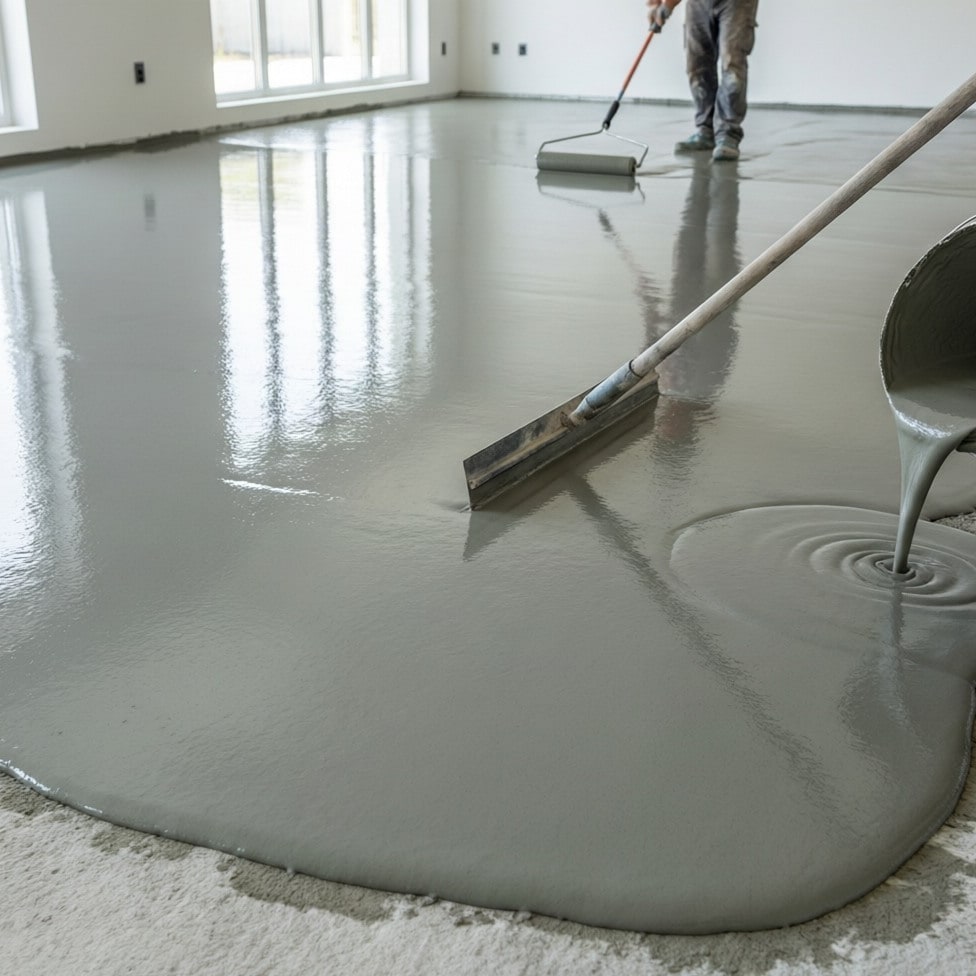
Level, topcoat, and detail the thresholdsDay 3, then 7 d
2–3 mm self-levelling body, then the wear coat. Fit transition profiles at doors and undercut leaves where the new level binds them.
Need the full method statement for your site? Request it with the form below — we review your slab data before your crew starts.
Seamless surface with no grout lines to hold grease; the level change is handled at the doorway threshold.
Buries the tile grid and, with a fine texture, gives a surface that grips when wet.
No breaking, no skip, no noise complaint — the reason this system gets specified in occupied buildings.
Handles spills and a damp mop; stops old cracked or lifting tiles getting worse.
Fast out-of-hours renewal where closing for demolition is not an option.
Yes — provided the tiles are firmly bonded, level and degreased, and the glaze is mechanically abraded so the primer has something to bite. What you cannot do is roll resin straight onto a glossy tile and expect it to hold; that is where the peeling videos come from.
They will if you skip the levelling step. Grout is porous and moves differently from tile, so a thin film prints the grid within months. Filling the grid and applying a buffer/skim coat before the body is what makes the surface read as one plane.
Plan on 3–6 mm for a full over-tile build-up. That means doors get undercut, thresholds get a transition profile, and any step or ramp at the boundary has to be re-checked. It sounds minor and it is the single most common thing people forget to price.
No, and we will not pretend it is. On an abraded glaze we typically see pull-off around 1.5 MPa against 3 MPa+ on a prepared slab, and when an overlay fails it is usually at the glaze or the old tile adhesive rather than in the resin. For a large or commercial floor we ask for a pull-off test on a trial area first.
It can be. Tile backing and bitumen adhesives from before roughly 1980 may contain asbestos, and grinding them releases fibres. If the building is that age, get a survey first. Encapsulating an undisturbed floor is a legitimate approach; sanding or scarifying an untested one is not.
Over sound, fully bonded vinyl, usually yes after abrading and priming. Foam-backed vinyl and loose-laid sheet must come out completely — resin bonded to foam or to an adhesive film has no structural future.
It is manageable but it changes the detail. Switch the heating off 48 hours before and let the slab cool, keep it off for 7 days after, and expect the tile grid to be the weak point — which is why the buffer/skim coat matters more on a heated floor than anywhere else.
We supply the system, the build-up and installation guidance, and we have installed for contractors on request. For an over-tile job, tell us the existing floor type, the room's use and a photo of a tap-tested area — we will confirm whether it is a coating job or a lifting job before you buy.
Your project has conditions we cannot see from here? Send the slab report and drawings — our engineers answer with a written specification.
Dongguan Friway Hydraulic Control Technology Co., Ltd.
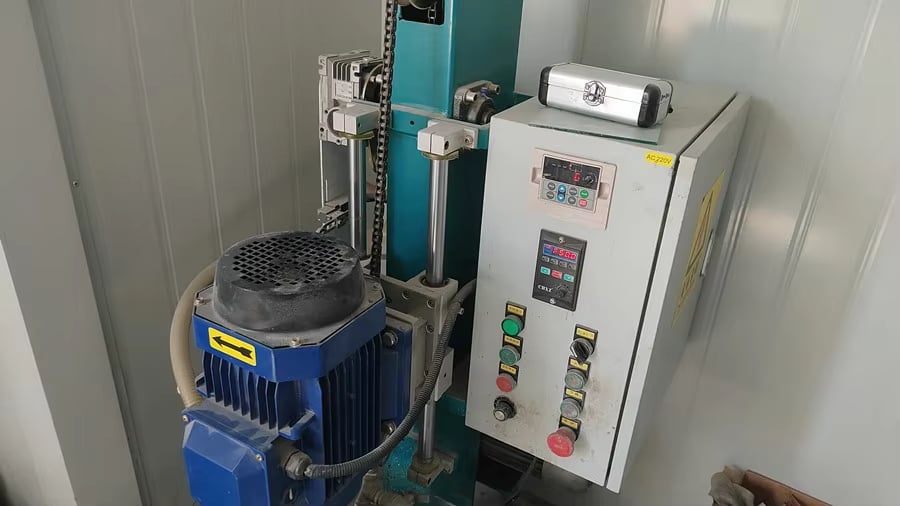
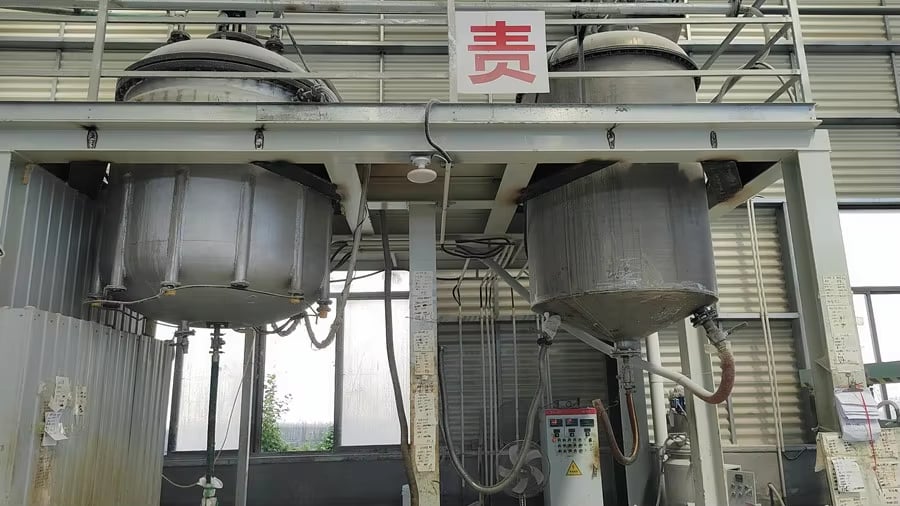
Every batch of Epoxy Floor Over Existing Tiles is produced in our own facility by a team that integrates R&D, production, sales and technical service. Advanced equipment, batch-level lab testing and a complete quality system mean consistent quality — from the first sample to the last pallet.
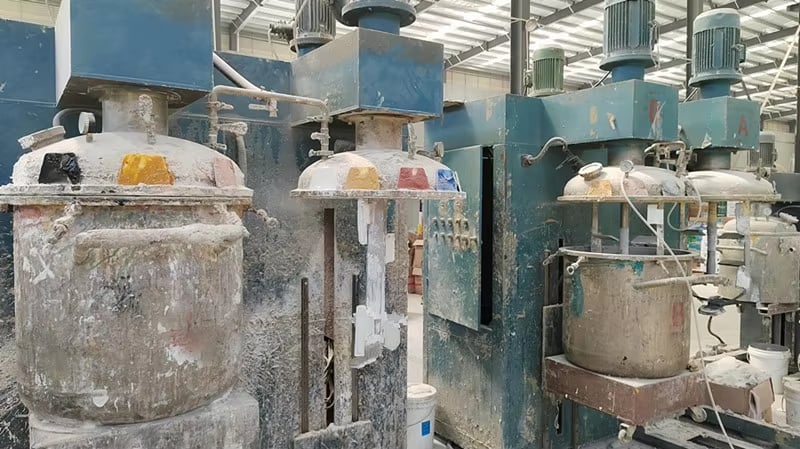 Mixing Lines
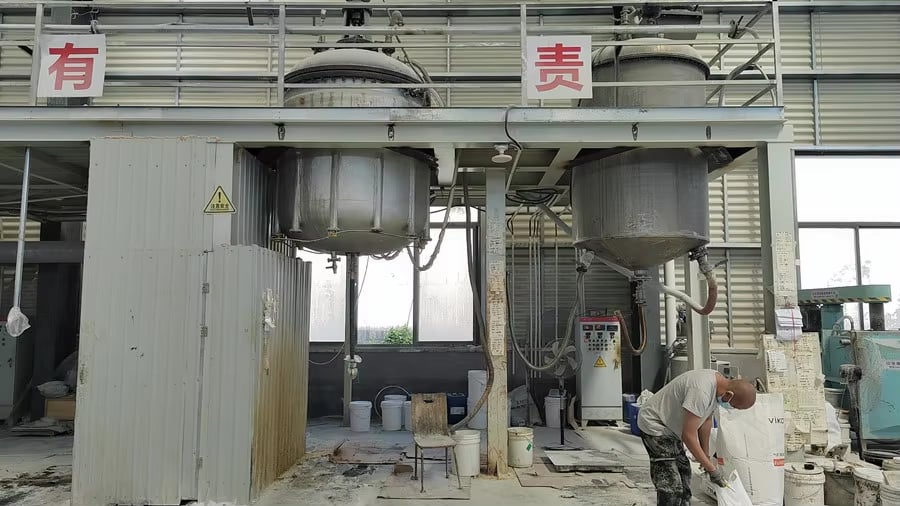 Reactor Kettles
 Dispersing Equipment
 Mixing & Control
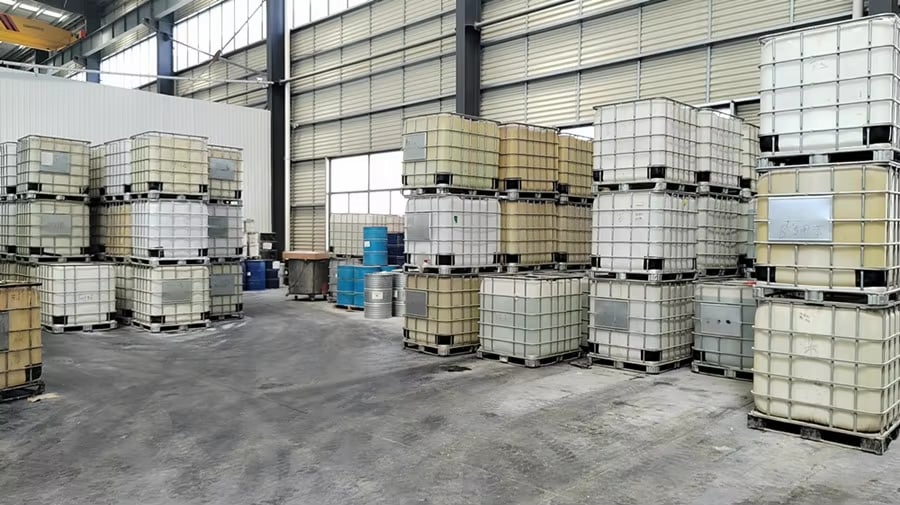 Raw-Material Store
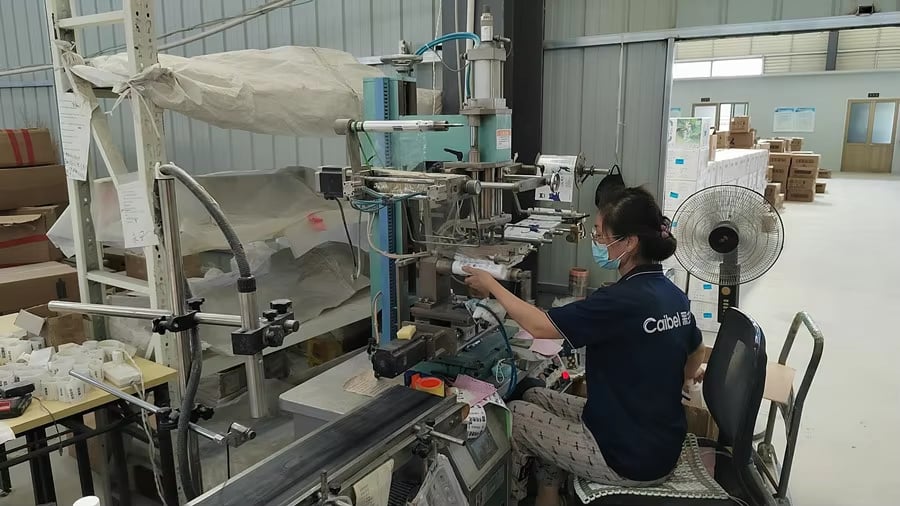 Labelling
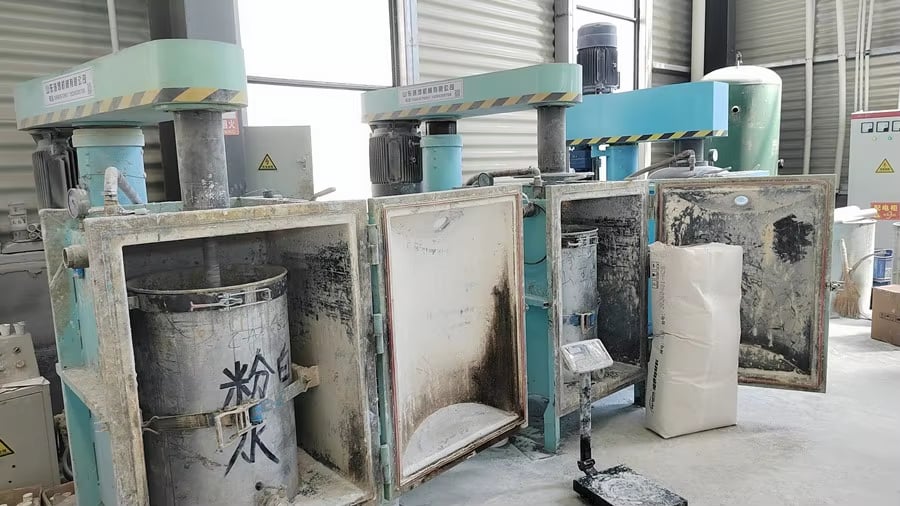 Vacuum Mixing
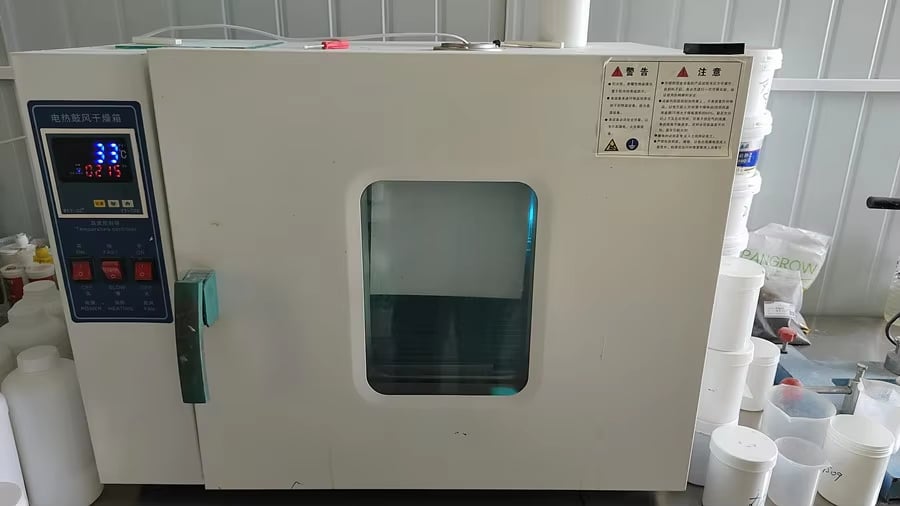 QC Drying Oven
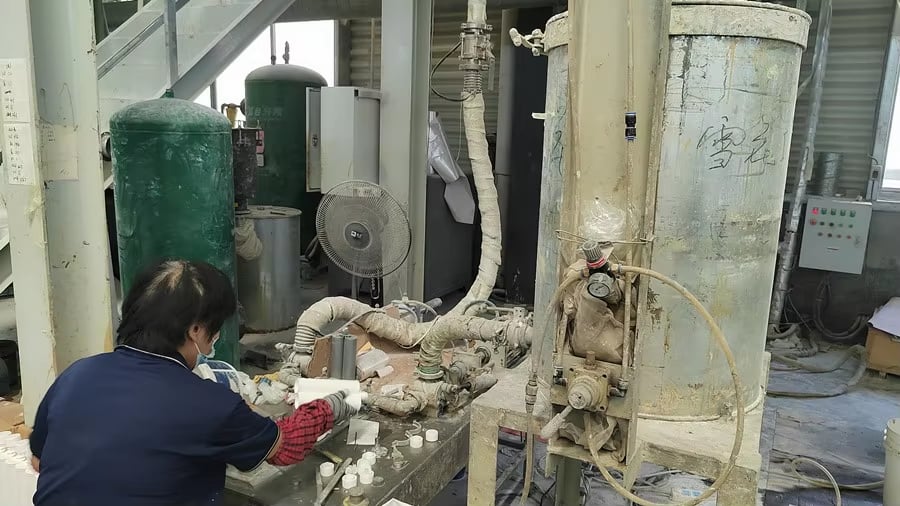 Filling & Capping


Questions about production, certificates or MOQ?
Ask Our TeamThis product line is verified by third-party laboratories. The marks shown above are the ones we publish as images; the documents behind them — certificate copies, batch-specific test reports, the CE Declaration of Conformity — are issued on request. A scanned badge proves nothing about your slab; the report behind it does.
Get a Free Quote
Send the floor area, substrate condition and what the room has to take. We reply with the system build-up, coverage estimate and an FOB quotation — usually within 24 hours.