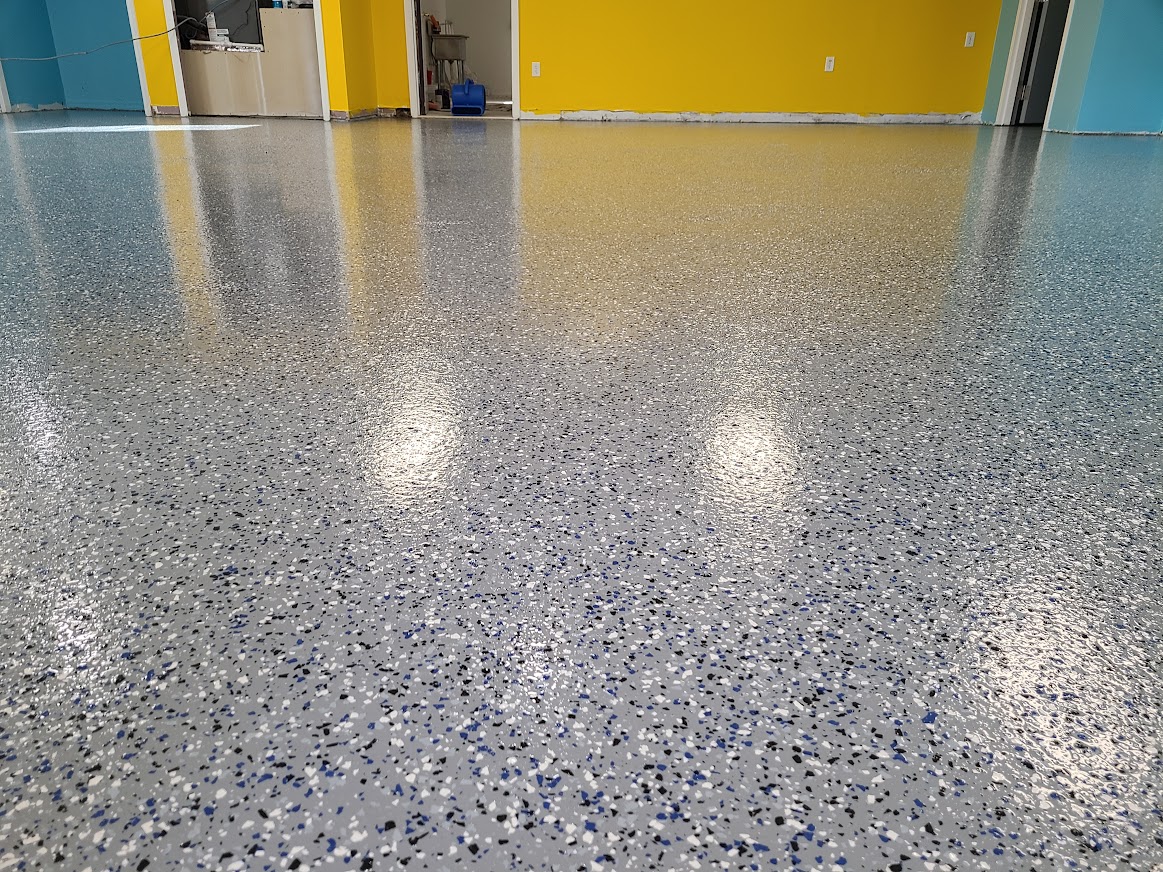
Home gym and training area
Dust-free under dropped weights with a rubber mat, and a satin film that stays grippy when a workout makes the room humid.
SKU: FW-SLF-BSM
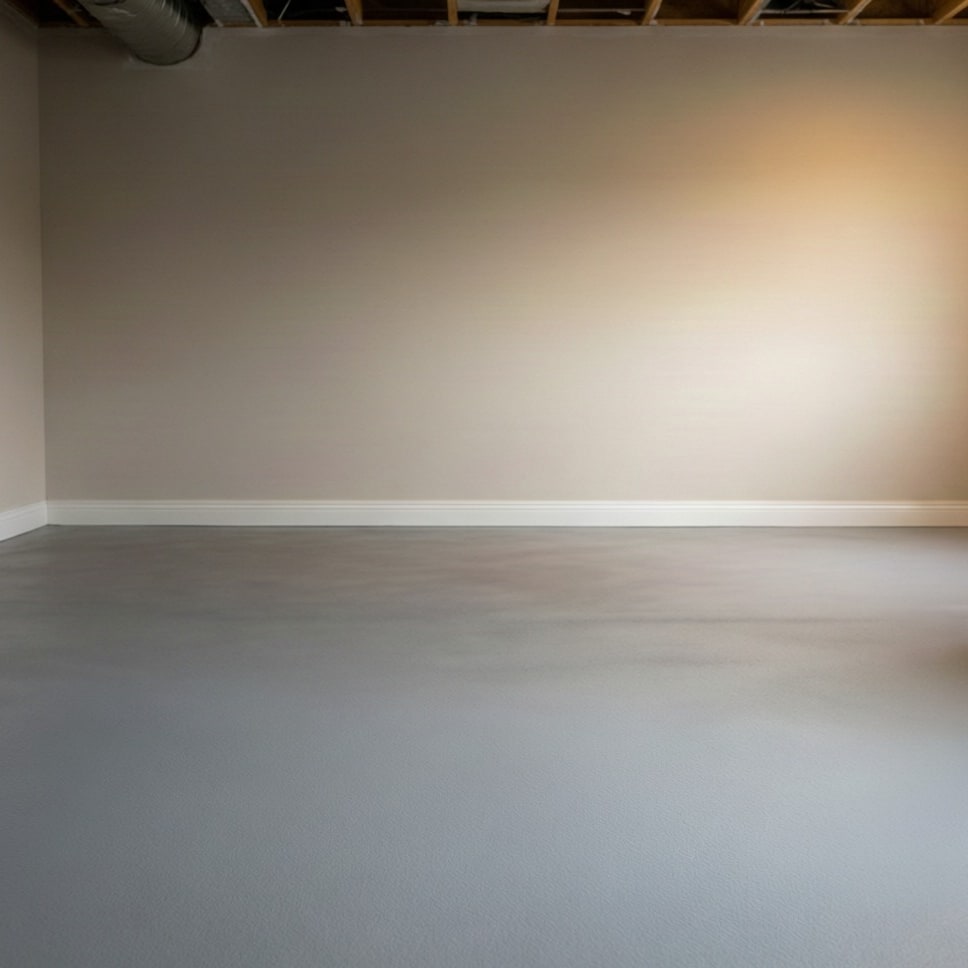
A below-grade basement floor specified from the moisture test outward: vapour-tolerant primer, 2 mm seamless self-levelling body, satin topcoat. Walk-on in 8–12 hours.
Key Parameters
Standard pack: 20 kg/set (A: 15 kg + B: 5 kg). Reply within 24 hours. Custom RAL colours and OEM packaging available.
System line:Self-Leveling Epoxy > Epoxy Self-Leveling
A below-grade basement floor specified for vapour first and looks second — moisture-tested slab, vapour-tolerant primer, seamless grey finish, walk-on the same day.
A below-grade system specified around a moisture reading: 2 mm seamless body at 3.4 kg/m² of system, satin finish, mixed A:B = 3:1 from a 20 kg set (15 kg resin + 5 kg hardener). It carries 80 Shore D, 65 MPa compressive, 9 MPa tensile and 3 MPa adhesion, with a Taber loss of ≤0.03 g (CS-17, 1000 cycles) and a French A+ indoor-emission classification. 30 minutes of pot life, walk-on at about 10 hours, full cure at 7 days.
Below-grade slabs are usually poured without a working vapour barrier, so a basement floor is specified from the moisture test outward rather than from the colour chart. We gate the build-up on a CM reading, an MVER or an in-situ RH value, then use a moisture-tolerant primer and a satin finish that stays walkable when the slab sweats in summer.
An epoxy floor is a wearing surface, not a tanking system — if liquid water comes through, the slab is dealt with first. That distinction is worth reading twice. A vapour-tolerant primer keeps a damp-driven build from lifting; nothing you coat from above stops hydrostatic pressure through a crack, and a floor installed to solve a water problem will fail as a water problem, in the middle of a room, at the worst weather of the year.
If the reading does not pass, the answer is not a tougher resin. It is a different build, a longer wait, or no build — and we would rather lose the order than seal a wet slab under a film. A coated basement is less vapour-open than a bare one, so a slab that was tolerable in winter can be a problem in August. Taping a square metre of polyethylene down for a day costs almost nothing, and it is the test most often skipped; a dark patch or beads under the film means the slab is not ready.
A cold basement is a separate schedule question. Cure stalls in a low-teens room, so a January job is planned in days rather than hours, and the walk-on figure above is a warm-room figure.
If the slab is badly out of level, a cementitious underlayment is the usual way to get there first. It stays a preparation layer here, though: the resin only goes on once the reading has come down, and the skim has to be ground and primed rather than buried under a closed film. Send the moisture reading if you have one, the age of the slab, whether there was ever a damp-proof membrane, and what the room is used for — those four decide the build.
Basements fail for one reason that garages do not: the slab is below grade, usually poured without a working vapour barrier, and it is woken up by a coating only when the moisture behind it has somewhere to go. Hydrostatic vapour pressure builds under a sealed film, and the first you hear about it is blistering or peeling along the perimeter. That is why we specify a basement floor from the moisture test outward, not from the colour chart.
So the build-up differs from our garage system in three places. The primer is a moisture-tolerant epoxy (or a water-based epoxy) that lets the slab breathe while it wets the surface. The finish is a satin rather than a mirror gloss, because a below-grade slab sits below the dew point in summer and sweats — a high-gloss film turns that condensation into a slip hazard. And we do not claim to stop water: an epoxy floor is a wearing surface, not a tanking system. If liquid water comes through, the slab has to be dealt with first.
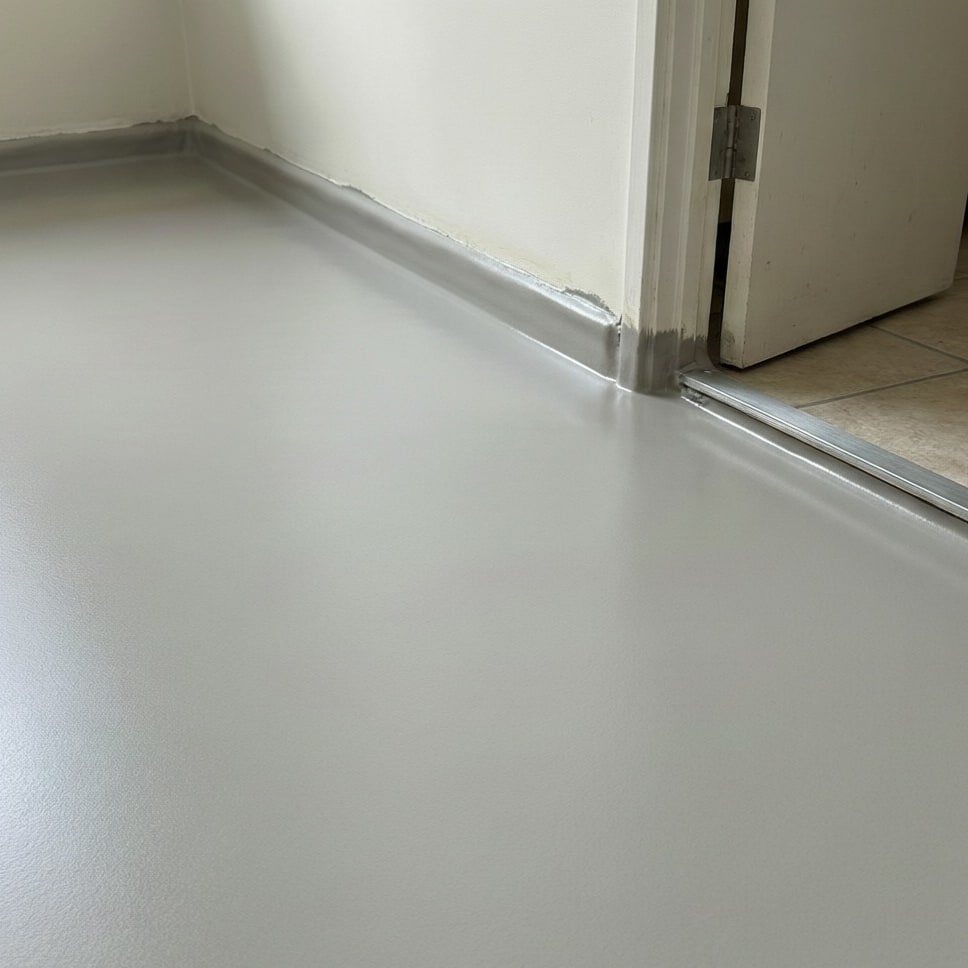
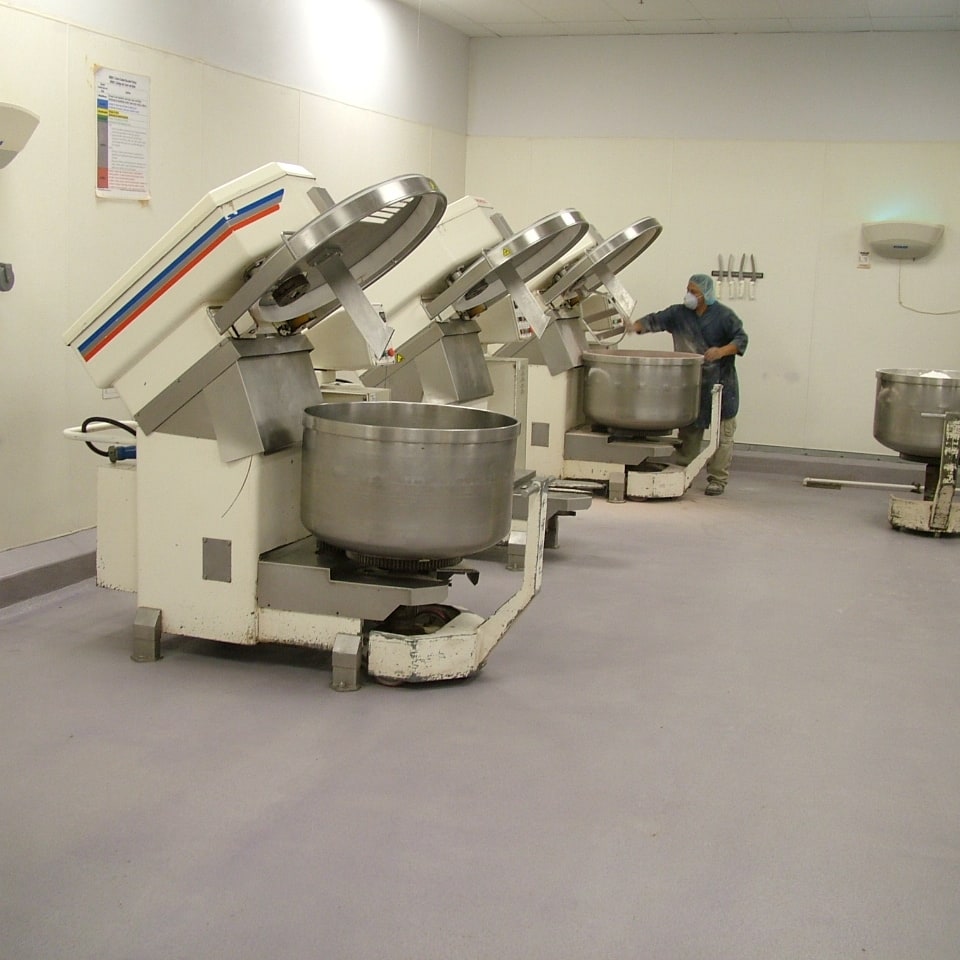
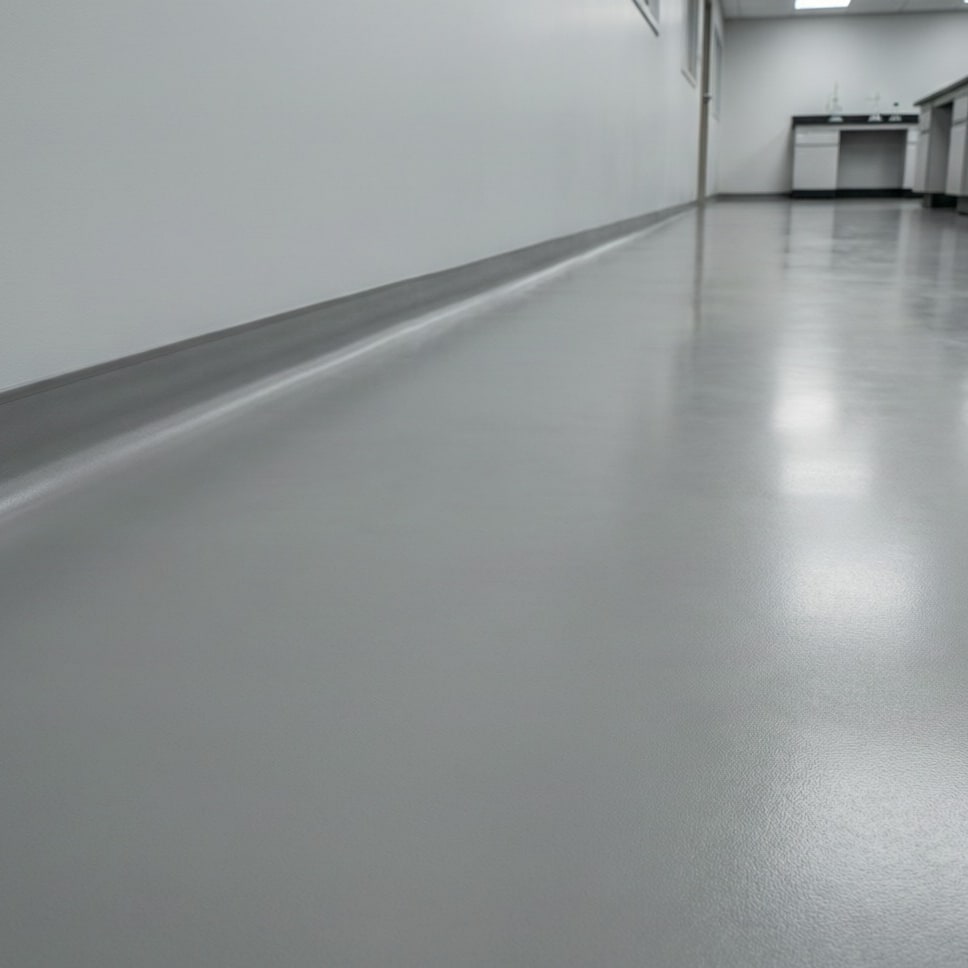
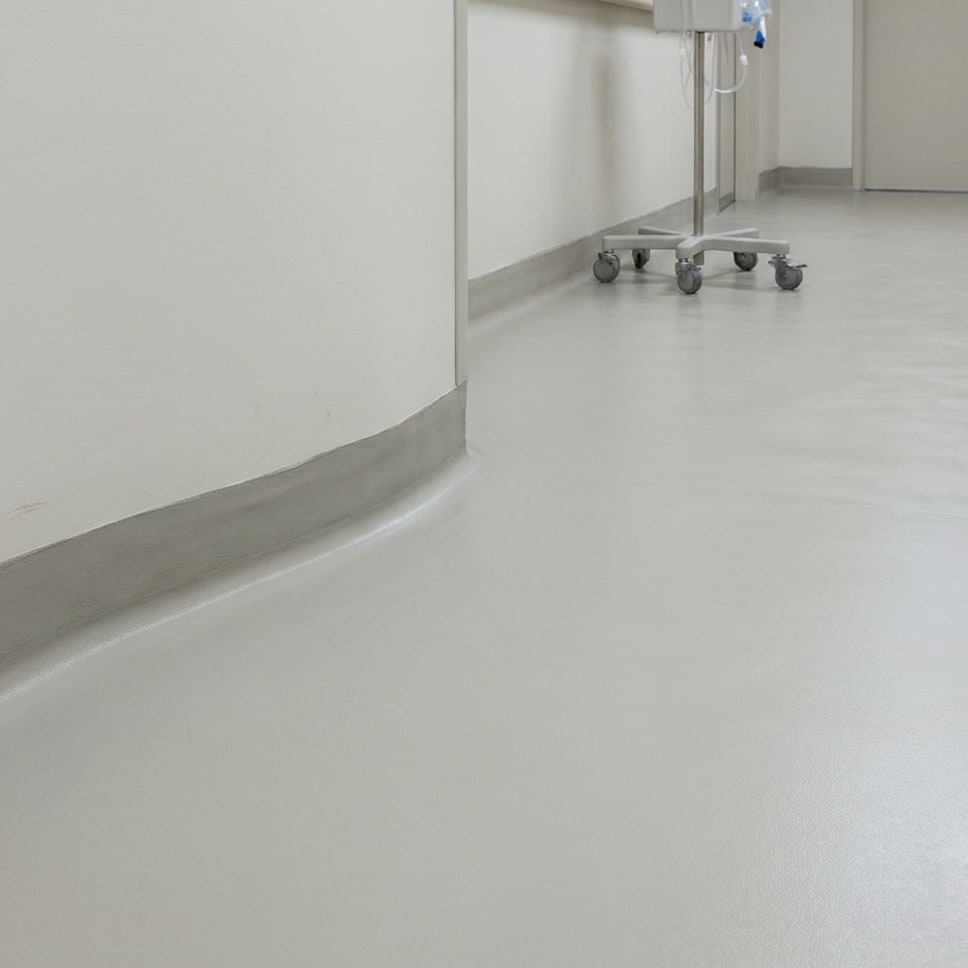
What you do get is the part that matters day to day: a seamless, dust-free floor with no joints to trap grit, wipe-clean, tolerant of a damp mop, and available in a neutral grey that reads well under warm basement lighting rather than the cold institutional look of a hospital floor.
| Prep | Diamond grindOpen the pores; remove laitance, old sealer and any curing compound |
|---|---|
| Repair | As neededCracks to 3 mm filled with thixotropic epoxy; honeycombing patched |
| Primer | 0.25–0.4 kg/m²Moisture-tolerant epoxy primer — the step that decides whether a basement floor lasts |
| Body | 2 mm self-levelling≈ 3.4 kg/m² mixed, pigmented epoxy, squeegee-poured and spiked |
| Topcoat | 0.15–0.2 kg/m²Satin polyurethane or epoxy — chosen for slip behaviour when damp, not for show |
Custom RAL matching available — we ship a physical sample card before production.
| Brand | Friway |
|---|---|
| SKU | FW-SLF-BSM |
| Category | Self-Leveling Epoxy > Epoxy Self-Leveling |
| Finish | Satin |
| Coverage | 3.4 kg/m² |
| Thickness | 2 mm |
| Mix Ratio | A:B = 3:1 |
| Pot Life | 30 min |
| Walk-on Time | 10 h |
| Full Cure | 168 h |
| Hardness | 80 Shore D |
| Adhesion | 3 MPa |
| Compressive Strength | 65 MPa |
| Tensile Strength | 9 MPa |
| Abrasion Resistance | ≤0.03 g (Taber CS-17, 1000 cycles) |
| Package | 20 kg/set (A: 15 kg + B: 5 kg) |
| Warranty | 5 years |
| Slab moisture (gate) | ≤ 4 % CMASTM F2659 / carbide method; below grade we test, we do not assume |
|---|---|
| Vapour emission | ≤ 4 lb / 1000 ft² / 24 hASTM F1869 calcium chloride — the number US contractors ask for |
| In-situ RH | ≤ 75 %ASTM F2170, probe at 40 % of slab depth |
| Simple field test | Tape 1 m² polyethylene, 24 hDarkening or beads under the film means the slab is not ready |
| New slab age | ≥ 28 daysAnd no plastic sheeting left on the surface trapping moisture |
| Ambient | 10–30 °C, RH ≤ 80 %Slab at least 3 °C above dew point — the usual cause of blushing in summer |
| Walk-on | 8–12 h at 20 °CLonger in a cold basement; below 10 °C cure stalls |
| Return to service | 24 h light / 7 d fullRugs, mats and appliance feet only after full cure |
| Bond strength | ≥ 3.0 MPaTypically concrete failure before bond failure on a ground slab |
|---|---|
| Hardness | 78–82 Shore DEnough for furniture, gym mats and shelving; not a forklift floor |
| Abrasion | ≤ 0.03 gTaber CS-17, 1000 cycles |
| Vapour tolerance | Yes, with the moisture-tolerant primerBreathable build-up; we do not seal a wet slab under a film |
| Slip when damp | Satin / fine textureWe do not publish an R class without a ramp test on your build |
| Water ingress | Not a waterproofing layerStops dust and spills, not hydrostatic pressure through cracks |
Figures are typical values measured in our laboratory. Substrate, climate and workmanship affect the result — we confirm the final specification in writing before your order.
We release documents as editable originals on request (batch-specific data is not in a generic PDF). One click sends your request with this product attached.
Two-component sets palletised for export, shipped fromDongguan, Guangdong, China by Dongguan Friway Hydraulic Control Technology Co., Ltd..
| Set composition | 20 kg/set (A: 15 kg + B: 5 kg) |
|---|---|
| Net weight / set | 20 kg |
| Pallet configuration | 24 sets (480 kg net) per 1200 × 1000 mm pallet, stretch-wrapped with corner boards |
| 20 ft container | ≈ 480 sets |
| 40 ft HQ | ≈ 960 sets |
| Shelf life | 12 months from fill date |
| Storage | Dry, ventilated store, 5–30 °C; protect from frost and direct sunlight. Keep sealed — Part B absorbs moisture from air. |
Counted from confirmed deposit and approved colour. FOBShenzhen or Guangzhou; CIF and DDP quoted on request.
| Order quantity | Lead time | Notes |
|---|---|---|
| Sample (≤ 2 sets) | 2–4 days | courier freight collect via DHL / UPS / FedEx, shipping at your cost; 5–7 days door to door |
| 1–49 sets | 5–7 days | Stock colours first; standard export packing included |
| 50–199 sets | 10–12 days | Includes batch mixing and in-house QC record per batch |
| 200–999 sets | 15–20 days | Production slot reserved after 30% deposit |
| FCL / 1000+ sets | 22–28 days | Confirmed against the shipping schedule; FOB Shenzhen or Guangzhou |
RAL / Pantone reference or a physical sample; we send a wet film for approval before batch production.
Your logo and language on the pails and carton; artwork in AI/PDF. Blank labelling available below this MOQ.
Pail size, carton printing, palletising and shipping marks per your export requirement.
Formulation adjustment (gloss, cure speed, aggregate, conductivity range) with TDS and CoA issued under your brand.
Company-level documents we can issue for this system. We supply certificate copies and batch test reports on request rather than publishing them as images.
Test the slab before anything elseDay −3
CM reading or a 24-hour taped polyethylene square in three positions, one near the perimeter. If the slab fails, we stop and talk about a breathable water-based system or dehumidification — not about colour.
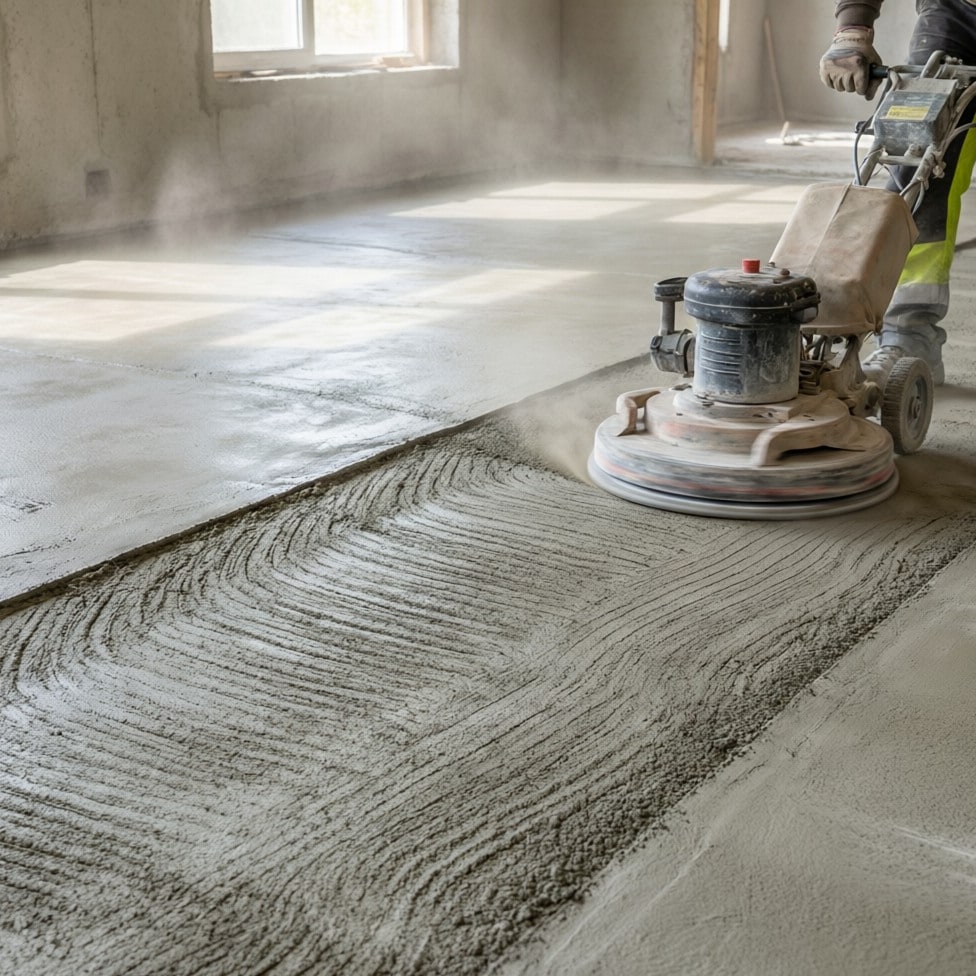
Diamond-grind and vacuumDay 1, 3–4 h
16–24 grit diamond segments open the pores and remove laitance and any old sealer. Acid etching is not acceptable below grade — it leaves salts in the slab.
Fill cracks and jointsDay 1, 1–2 h
Cracks to 3 mm are overfilled with thixotropic epoxy; movement joints stay movement joints and are covered with a flexible detail, never bridged.
Roll the moisture-tolerant primerDay 1, then 12–16 h
Wet edge to wet edge, 0.25–0.4 kg/m². This is the coat that decides the life of a basement floor, so it is never skipped to save a day.
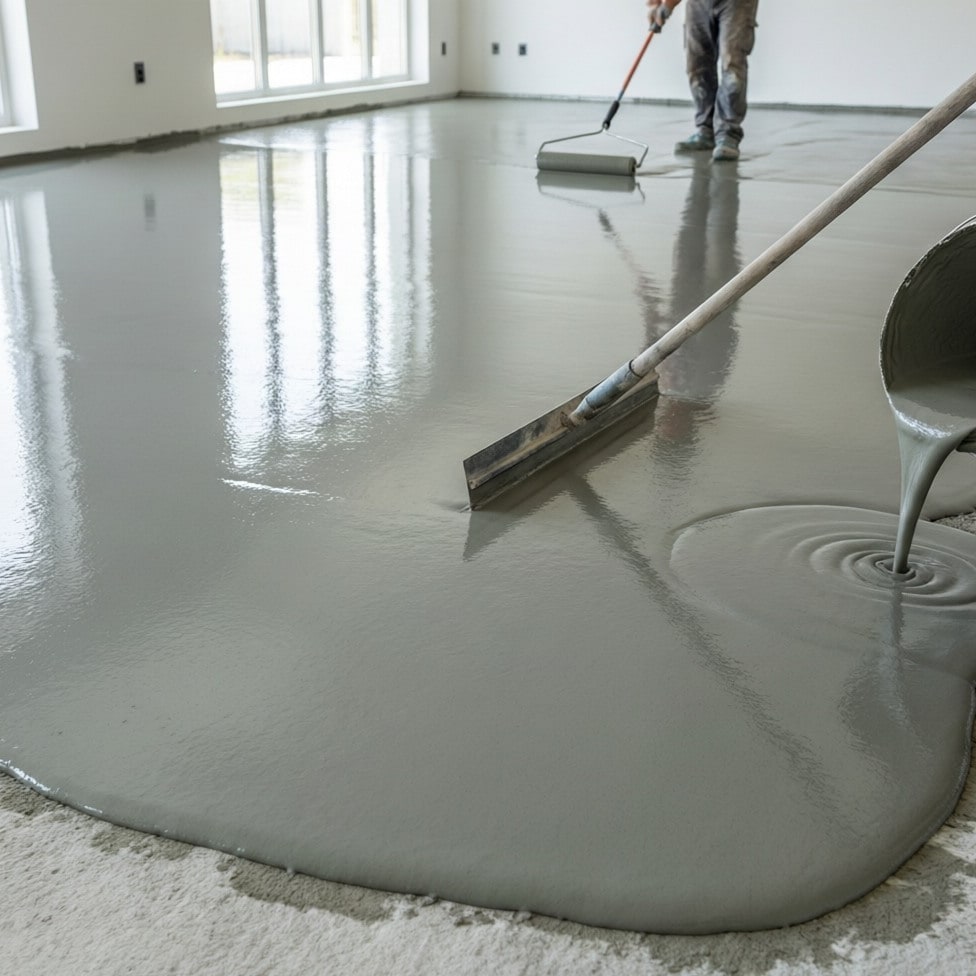
Pour the self-levelling bodyDay 2, 2–3 h
3.4 kg/m² mixed, gauge with a notched squeegee, back-roll and spike-shoe to release air. Basements are cold, so open time is longer and the pour must not be rushed.
Satin topcoat and cureDay 3, then 7 d
A low-sheen coat at 0.15–0.2 kg/m² for slip behaviour when damp. Walk-on the same evening; nothing sits on the floor for 24 hours, and full chemical resistance takes 7 days.
Need the full method statement for your site? Request it with the form below — we review your slab data before your crew starts.
Dust-free under dropped weights with a rubber mat, and a satin film that stays grippy when a workout makes the room humid.
No joints to trap grit underfoot, and a neutral grey that keeps its tone under warm 3000 K lighting instead of going blue.
Stops concrete dusting on boxes and shelving; spills from a water heater or freezer mop up without staining.
Seamless upstands at the wall base, so a leak reaches the drain rather than soaking into a joint.
Sealed surface that tolerates periodic damp mopping; we keep the build-up breathable so the walls can still dry inward.
Not on a slab that is actively wet, and not without a test. We ask for a CM reading (≤ 4 %), an MVER (≤ 4 lb / 1000 ft² / 24 h) or in-situ RH (≤ 75 %), or a 24-hour taped polyethylene check in three spots. Inside those limits we use a moisture-tolerant primer and a breathable build-up. Outside them the answer is dehumidification or a vapour-permeable water-based system, not a standard epoxy film.
No, and anyone selling it as a waterproofing layer is overselling. Epoxy seals the surface against dust and spills; it does not stop hydrostatic pressure. Water that comes up through cracks or the perimeter will find its way under the film and lift it. Fix the water, then coat.
A below-grade slab usually sits below the summer dew point, so it sweats. Under a mirror-gloss film that condensation looks like a wet floor and feels slippery. A satin or fine-textured finish hides it and keeps real grip; it also hides roller marks and the small scuffs that a storage room collects.
Walk-on in 8–12 hours at 20 °C. Light furniture and equipment in 24 hours. Rugs, rubber mats and appliance feet only after 7 days, because the film needs full cure before something sits on it and traps moisture against the surface.
Our floors are near-zero-VOC, two-component systems with no solvent to flash off. Ventilate during application and for 24 hours after; the room is normally usable the next day. If the basement has no mechanical ventilation, we schedule the job so the doors stay open overnight.
A coating is not a radon mitigation system and we do not sell it as one. Dense epoxy films do reduce surface exhalation, but the only reliable answer to a high radon reading is sub-slab depressurisation. If you have not tested, test before you enclose the room.
Over old epoxy or a cured film, no — it has to be mechanically removed by grinding, or the new layer bonds to the weak one. Over water-based basement paint, sometimes: full removal is the specification, and we will tell you honestly whether the job is a strip or a re-slab conversation.
Material for a 2 mm self-levelling build-up with moisture-tolerant primer and satin topcoat is typically 3.6–4.0 kg/m², so a 40 m² basement takes about 6–7 sets. Send us the slab age, the moisture reading and your country and we will quote the exact build-up rather than a range.
Your project has conditions we cannot see from here? Send the slab report and drawings — our engineers answer with a written specification.
Dongguan Friway Hydraulic Control Technology Co., Ltd.
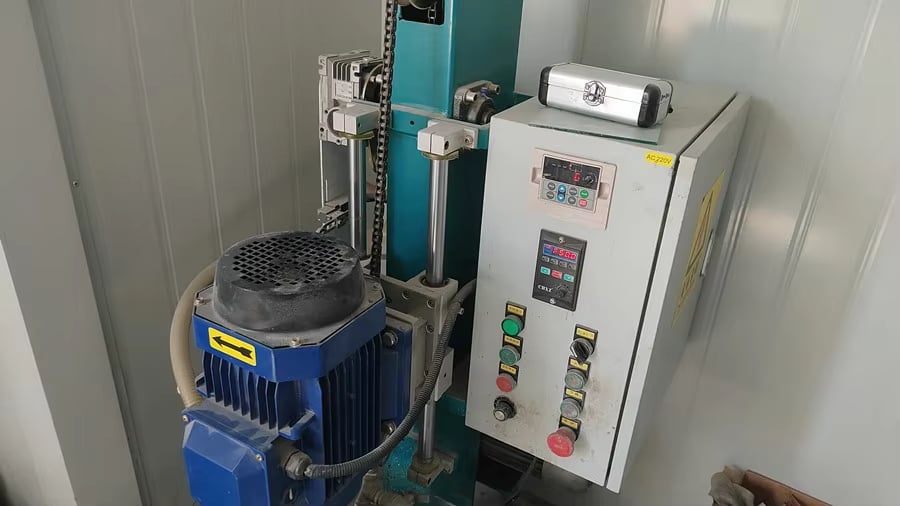
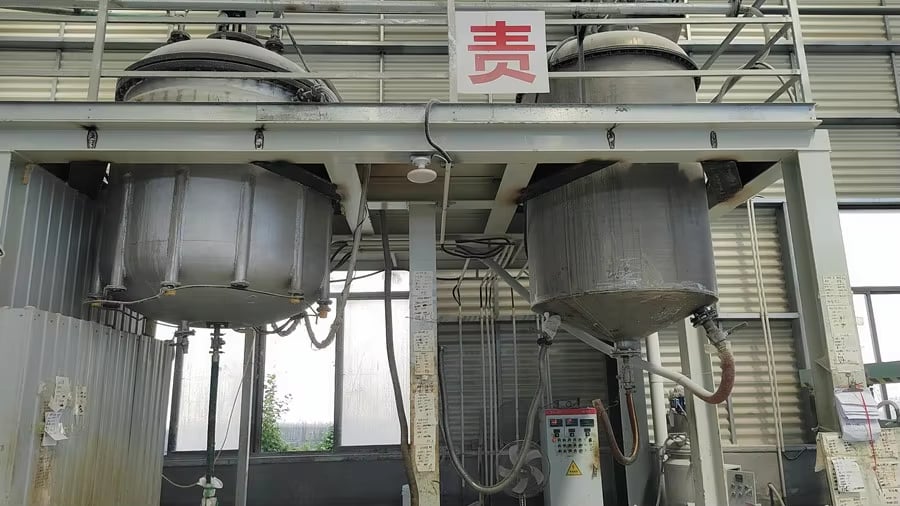
Every batch of Basement Epoxy Floor System is produced in our own facility by a team that integrates R&D, production, sales and technical service. Advanced equipment, batch-level lab testing and a complete quality system mean consistent quality — from the first sample to the last pallet.
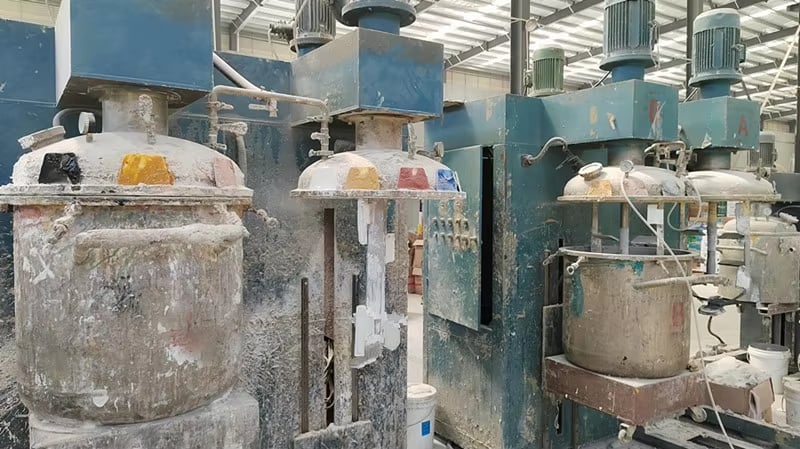 Mixing Lines
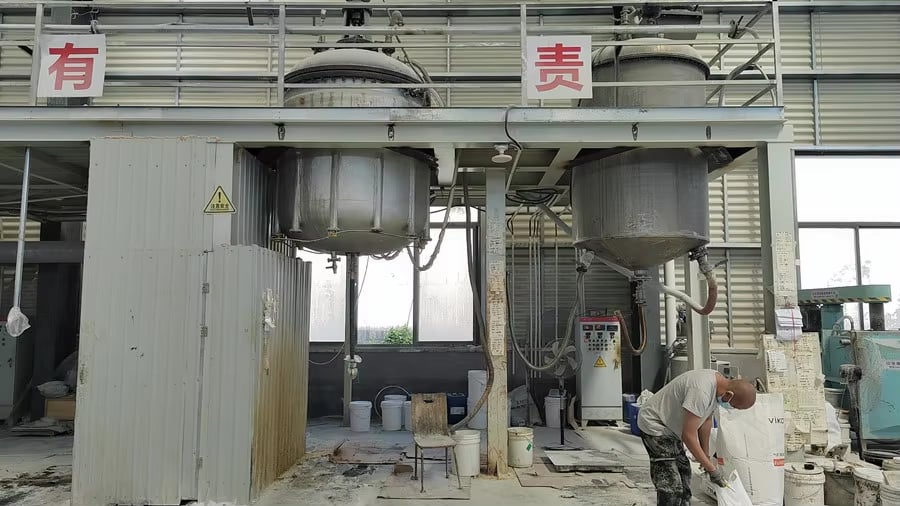 Reactor Kettles
 Dispersing Equipment
 Mixing & Control
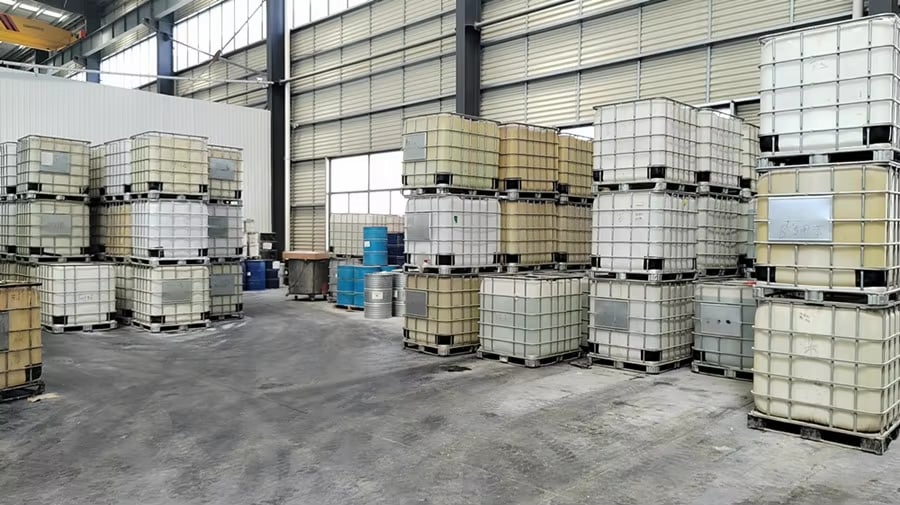 Raw-Material Store
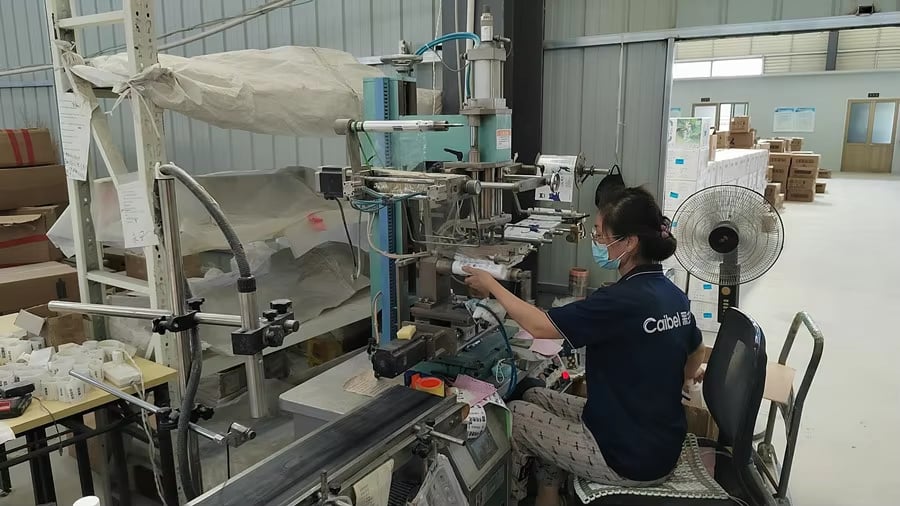 Labelling
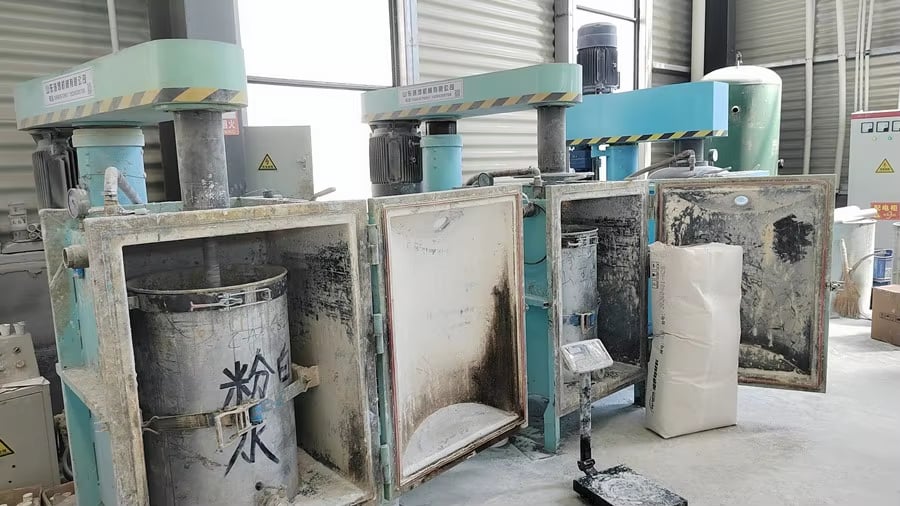 Vacuum Mixing
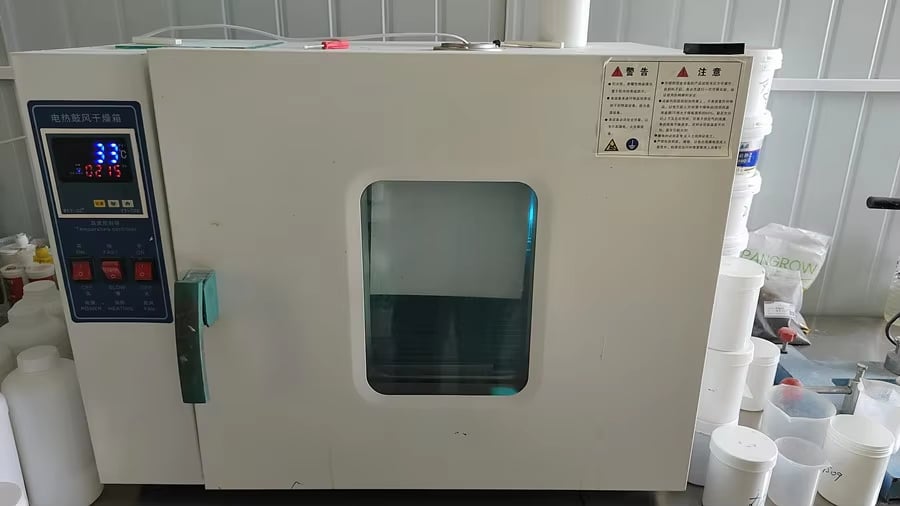 QC Drying Oven
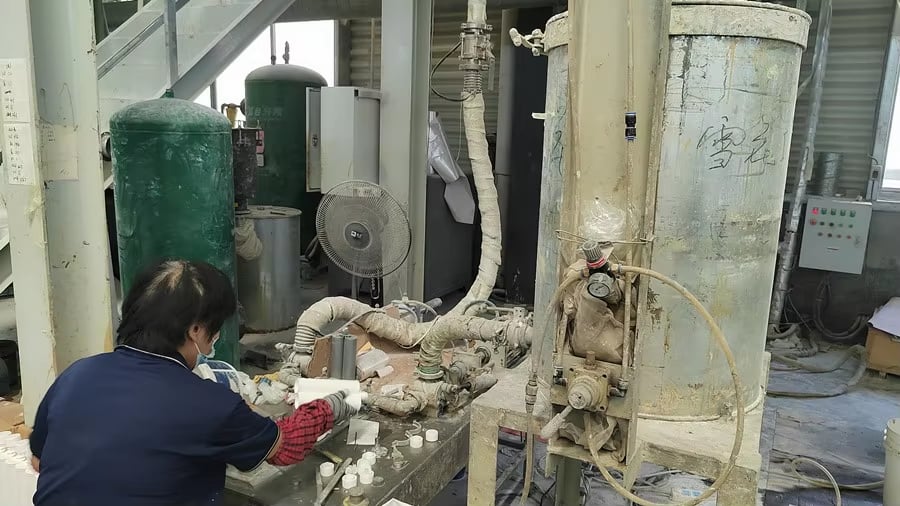 Filling & Capping


Questions about production, certificates or MOQ?
Ask Our TeamThis product line is verified by third-party laboratories. The marks shown above are the ones we publish as images; the documents behind them — certificate copies, batch-specific test reports, the CE Declaration of Conformity — are issued on request. A scanned badge proves nothing about your slab; the report behind it does.
Get a Free Quote
Send the floor area, substrate condition and what the room has to take. We reply with the system build-up, coverage estimate and an FOB quotation — usually within 24 hours.