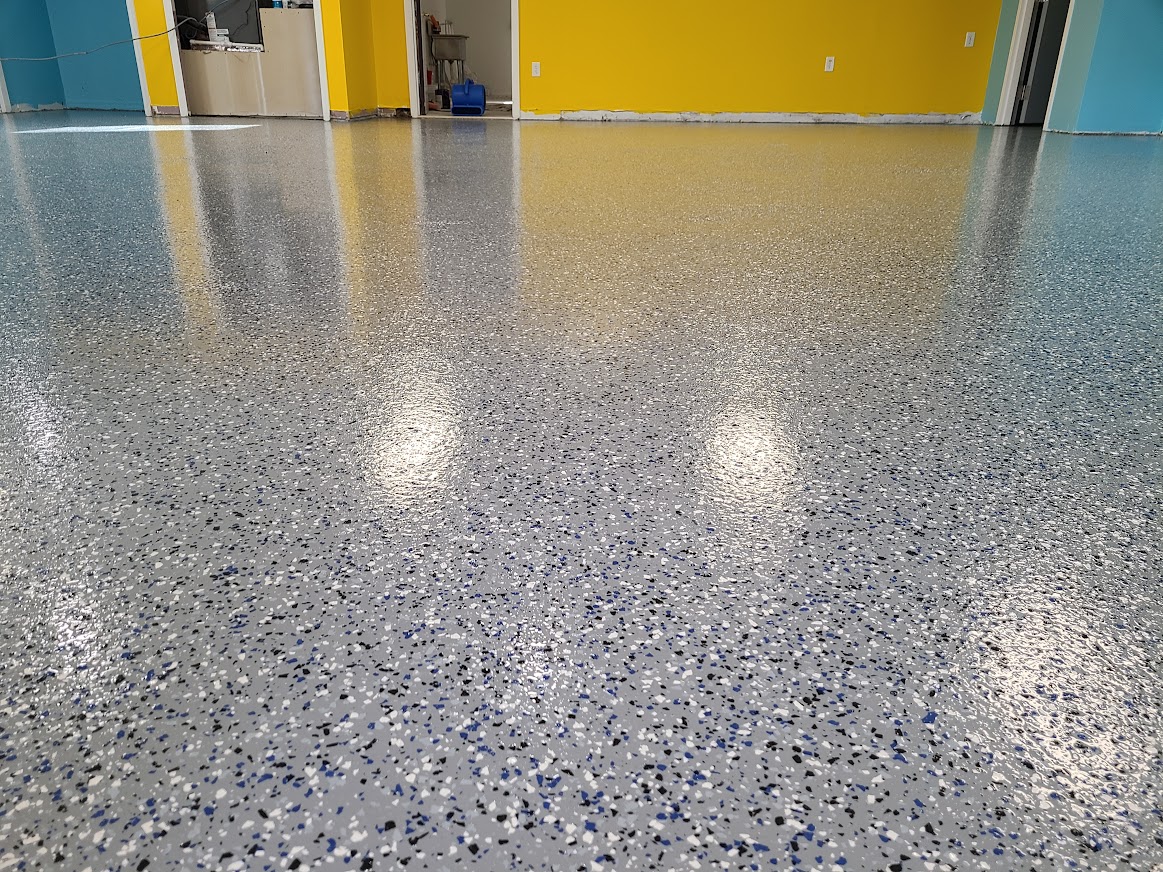
Wards, corridors and outpatient areas
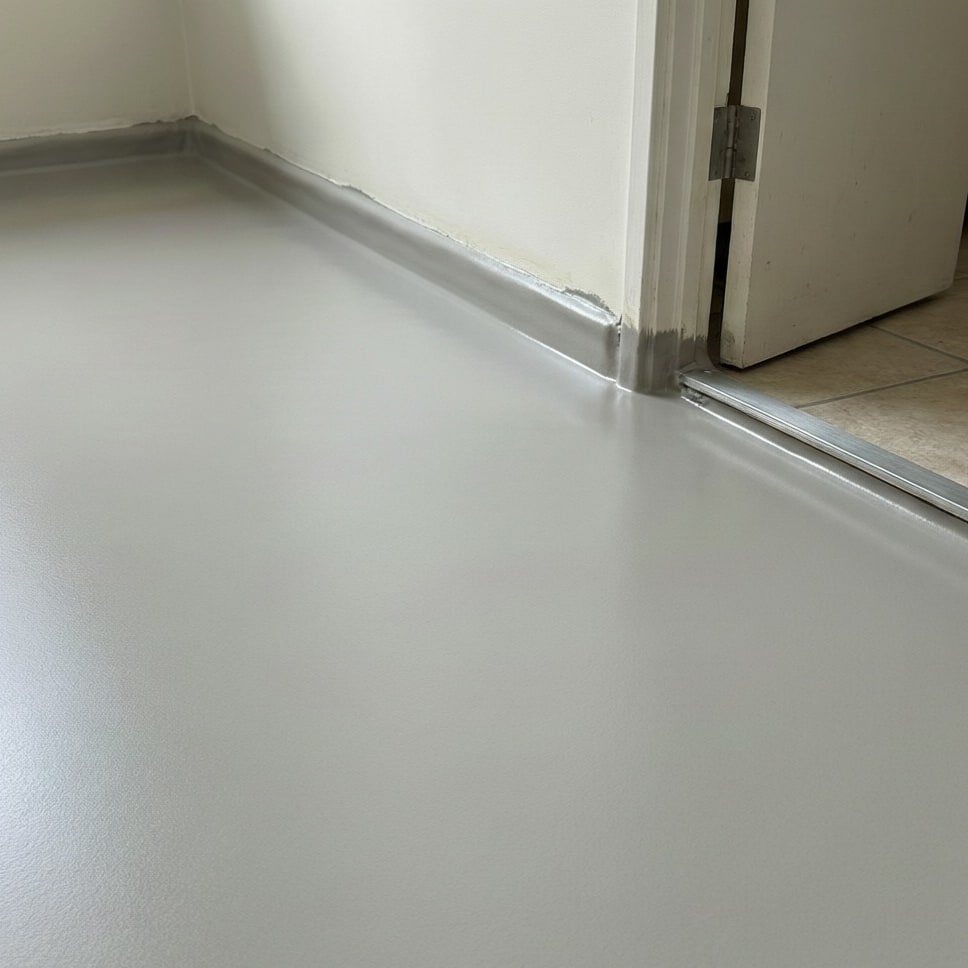
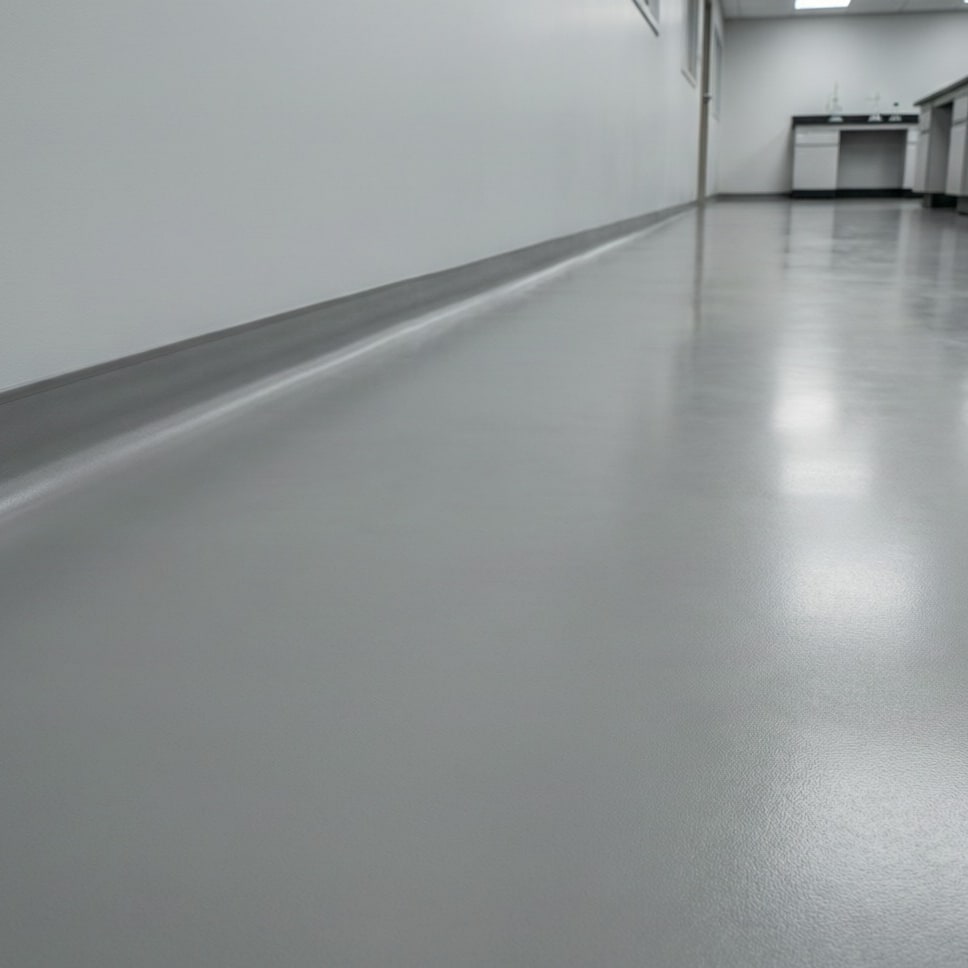
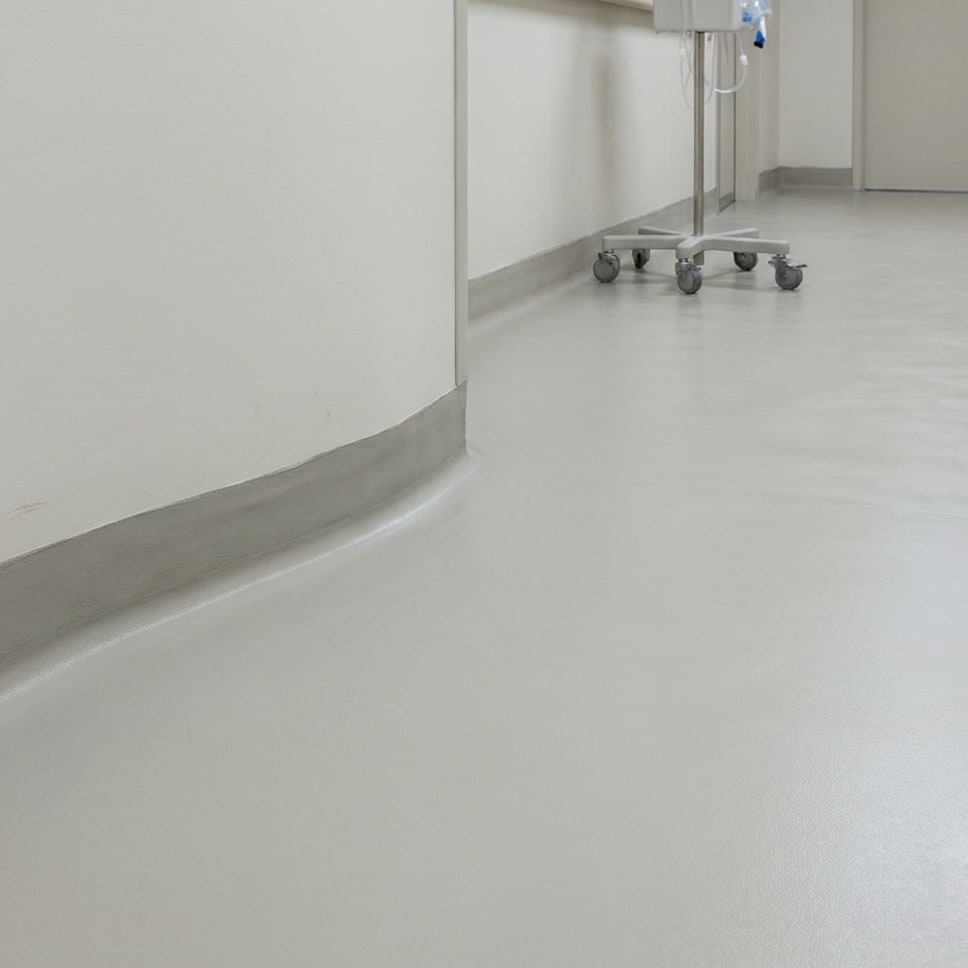
The coved junction and the absence of seams are what the infection-control audit looks at, not the colour card.
SKU: FW-SLF-HSP
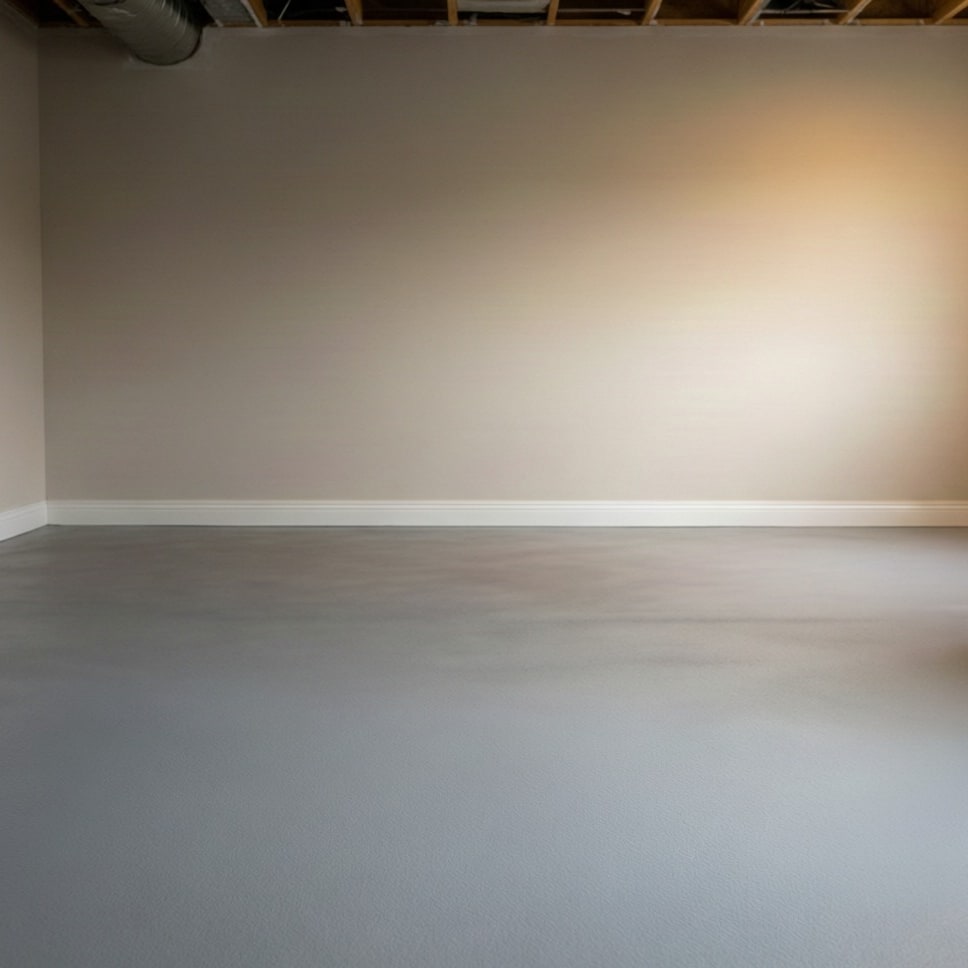
A seamless, low-satin resin floor with a continuous coved upstand — no grout, no skirting gap and no joint for soil to hide in, and a surface that survives a daily disinfectant regime.
Key Parameters
Standard pack: 20 kg/set (A: 15 kg + B: 5 kg). Reply within 24 hours. Custom RAL colours and OEM packaging available.
System line:Self-Leveling Epoxy > Epoxy Self-Leveling
A seamless, low-satin resin floor with a continuous coved upstand — no joints, no skirting gap and no grout line for soil and moisture to hide in, and a surface that survives a daily disinfectant regime.
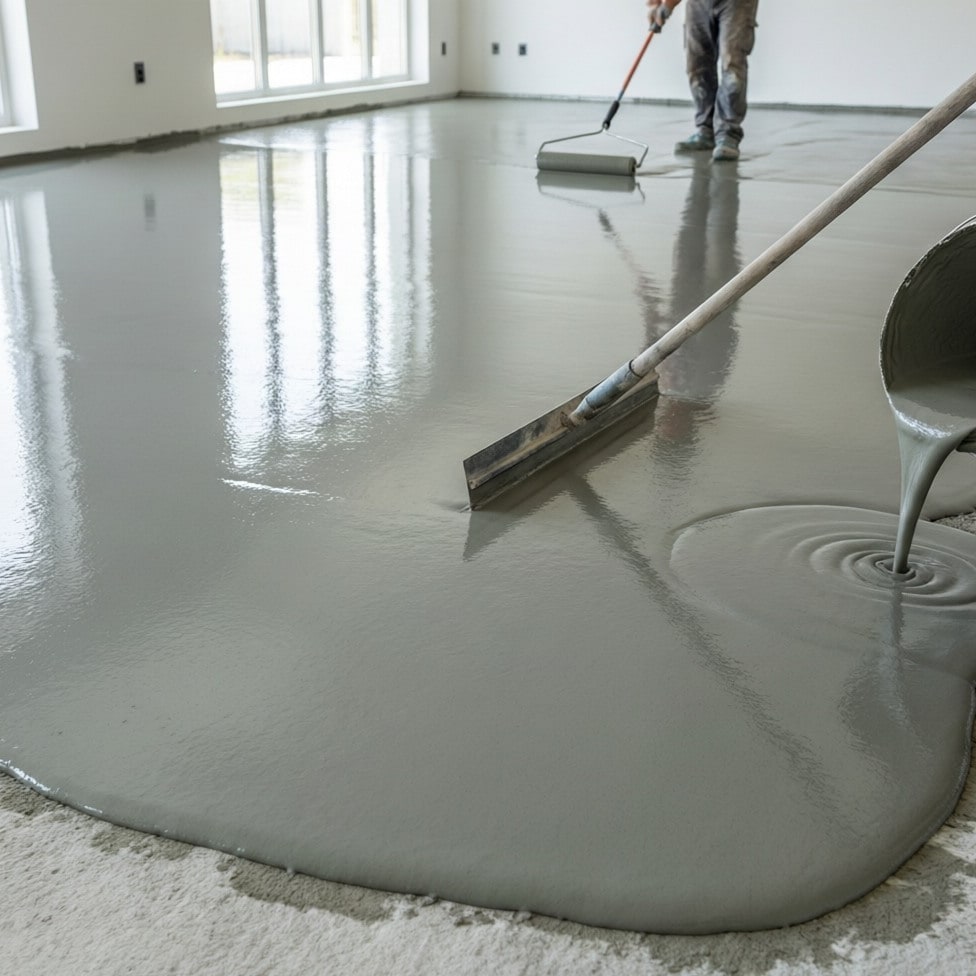
A poured, low-satin resin floor with a continuous coved upstand: 2.2 kg/m² per mm built to 3 mm, mixed A:B = 4:1 from a 20 kg set (15 kg resin + 5 kg hardener). It holds >80 Shore D with 80 MPa compressive and 3 MPa adhesion, wears at ≤0.03 g on the Taber plate, and carries a French A+ indoor-emission classification. Walk-on at about 10 hours and full cure at 7 days — which is also the point at which a full disinfectant regime can start. The window in between is what governs when beds and trolleys can be rolled in, and it is on the Technical Specs tab.
Tiles have grout, vinyl sheet has welded seams and a cut edge at the wall, and a skirting profile leaves a shadow gap above the floor. All of them survive a mop without being clean, because the mop goes over the surface and the soil stays in the line. A poured resin floor runs from the middle of the room up the wall in one continuous surface, with nothing left to seal. That is the whole argument, and it is why the specification here is written around the perimeter detail rather than around the colour.
What we do not claim is that the floor is sterile or self-sanitising. A resin film does not kill anything; it removes the places organisms hide and gives you a surface that takes day-to-day detergents without deteriorating. Those are different claims, and only one of them is true.
The cove is not an accessory on this system; it is the reason the floor can be signed off, so it is specified with the pour and not quoted afterwards. What does change the price is sequencing: a department that has to stay in service gets closed and released room by room, which costs labour days, and the cure windows above are what govern that schedule. Hard castors and a bed trolley arriving on day two will mark a film that has not cured, and that mark is permanent — it is a scheduling problem, not a material failure.
This is not a heavy-traffic industrial topping: a loading aisle with wheel loads wants a full-broadcast build, not a 3 mm poured sheet. And a bay that is hosed down with standing water needs a drainage detail and a texture discussion before the resin, not after it. Send the room list, the cleaning chemicals with their dilutions, and the dates the department has to stay open — those three things decide the specification more than the colour does.
In a clinical space the floor is not judged on how hard it is but on how much of it you can actually clean. A tiled floor has grout lines, a vinyl sheet has welded seams and a cut edge at the wall, and a skirting profile has a shadow gap above the floor. Each of those is a place where soil, moisture and biofilm stay behind after the mop has gone over them. A poured resin floor removes the question: it is one continuous surface from the middle of the room up the wall, with nothing to seal.
So the detail that matters most on this page is the cove. Before the body coat goes down, a mortar fillet is formed at the wall base and the resin is run up it in a continuous radius of about 50–75 mm, returning into the same material as the floor. Same colour, same finish, no bead, no cap profile, no joint. It is the single difference between a floor that can be disinfected and one that can only be wiped.
What we do not claim: epoxy is not antibacterial and we do not sell it as one. Nothing about a resin film kills organisms; what it does is give them nowhere to accumulate and take a disinfectant without deteriorating. That distinction matters when a specification is being checked, and we would rather be the supplier that states it plainly.
| Prep | Grind + vacuumRemove old adhesive, cut-back residue and any vinyl left behind; CSP 2–4 |
|---|---|
| Repair | As neededCracks routed and filled; slab joints tracked and filled |
| Cove fillet | 50–75 mm radiusEpoxy mortar fillet formed at the wall base before the body coat — this is the step that makes the floor cleanable |
| Primer | 0.25–0.4 kg/m²High-solids epoxy primer, rolled wet-on-wet across the fillet and slab |
| Body | 2–3 mm self-levelling≈ 2.2 kg/m² per mm, squeegee-poured and spiked |
| Topcoat | 0.12–0.18 kg/m²Low-satin wear coat chosen for disinfectant and cleaning-chemical resistance |
Custom RAL matching available — we ship a physical sample card before production.
| Brand | Friway |
|---|---|
| SKU | FW-SLF-HSP |
| Category | Self-Leveling Epoxy > Epoxy Self-Leveling |
| Finish | Matte / low-satin |
| Coverage | 2.2 kg/m²/mm |
| Thickness | 3 mm |
| Mix Ratio | A:B = 4:1 |
| Pot Life | 30 min |
| Walk-on Time | 10 h |
| Full Cure | 168 h |
| Hardness | >80 Shore D |
| Adhesion | 3 MPa |
| Compressive Strength | 80 MPa |
| Abrasion Resistance | ≤0.03 g (Taber CS-17, 1000 cycles) |
| Package | 20 kg/set (A: 15 kg + B: 5 kg) |
| Warranty | 5 years |
| Substrate | ≥ C25 concrete, ≥ 28 daysOr a sound, dry cement screed; old tiles only after full removal of loose and foam-backed layers |
|---|---|
| Slab moisture | ≤ 4 % CMBasement and ground floors are tested before we quote |
| Ambient | 10–25 °C, RH ≤ 75 %Keep the HVAC running — a cold slab under a warm room crosses the dew point and blushes the film |
| Pot life | 30 min at 20 °CPlan one room or one bay per mix |
| Walk-on | 8–12 hStocking-foot traffic only, and only after the topcoat has set |
| Beds and trolleys | 48–72 hHard castors earlier than this will mark the film permanently |
| Full chemical cure | 7 daysStart the full disinfectant regime only after this |
| Compressive strength | 80 MPaSelf-levelling build at 7 d / 20 °C |
|---|---|
| Bond | ≥ 3.0 MPaConcrete failure on a profiled slab |
| Hardness | > 80 Shore DBed and trolley castors; not a heavy-plant floor |
| Abrasion | ≤ 0.03 gTaber CS-17, 1000 cycles |
| Disinfectants | Good resistance to quats, alcohols and phenolicsHypochlorite can discolour a gloss film — see the cleaning note |
| Antistatic option | 1×10⁶–10⁹ Ω dissipativeOr 1×10⁴–10⁶ Ω conductive, with an earthed copper grid in the build-up |
| Cleanability | Seamless, no joints to sealNot an antibacterial surface — it does not kill organisms |
Figures are typical values measured in our laboratory. Substrate, climate and workmanship affect the result — we confirm the final specification in writing before your order.
We release documents as editable originals on request (batch-specific data is not in a generic PDF). One click sends your request with this product attached.
Two-component sets palletised for export, shipped fromDongguan, Guangdong, China by Dongguan Friway Hydraulic Control Technology Co., Ltd..
| Set composition | 20 kg/set (A: 15 kg + B: 5 kg) |
|---|---|
| Net weight / set | 20 kg |
| Pallet configuration | 24 sets (480 kg net) per 1200 × 1000 mm pallet, stretch-wrapped with corner boards |
| 20 ft container | ≈ 480 sets |
| 40 ft HQ | ≈ 960 sets |
| Shelf life | 12 months from fill date |
| Storage | Dry, ventilated store, 5–30 °C; protect from frost and direct sunlight. Keep sealed — Part B absorbs moisture from air. |
Counted from confirmed deposit and approved colour. FOBShenzhen or Guangzhou; CIF and DDP quoted on request.
| Order quantity | Lead time | Notes |
|---|---|---|
| Sample (≤ 2 sets) | 2–4 days | courier freight collect via DHL / UPS / FedEx, shipping at your cost; 5–7 days door to door |
| 1–49 sets | 5–7 days | Stock colours first; standard export packing included |
| 50–199 sets | 10–12 days | Includes batch mixing and in-house QC record per batch |
| 200–999 sets | 15–20 days | Production slot reserved after 30% deposit |
| FCL / 1000+ sets | 22–28 days | Confirmed against the shipping schedule; FOB Shenzhen or Guangzhou |
RAL / Pantone reference or a physical sample; we send a wet film for approval before batch production.
Your logo and language on the pails and carton; artwork in AI/PDF. Blank labelling available below this MOQ.
Pail size, carton printing, palletising and shipping marks per your export requirement.
Formulation adjustment (gloss, cure speed, aggregate, conductivity range) with TDS and CoA issued under your brand.
Company-level documents we can issue for this system. We supply certificate copies and batch test reports on request rather than publishing them as images.
Survey, and agree the phasingWeek −2
Room by room: which bays can be closed, the overnight window, the protection route, and where the waste and services run. In a live facility the sequence is the specification.
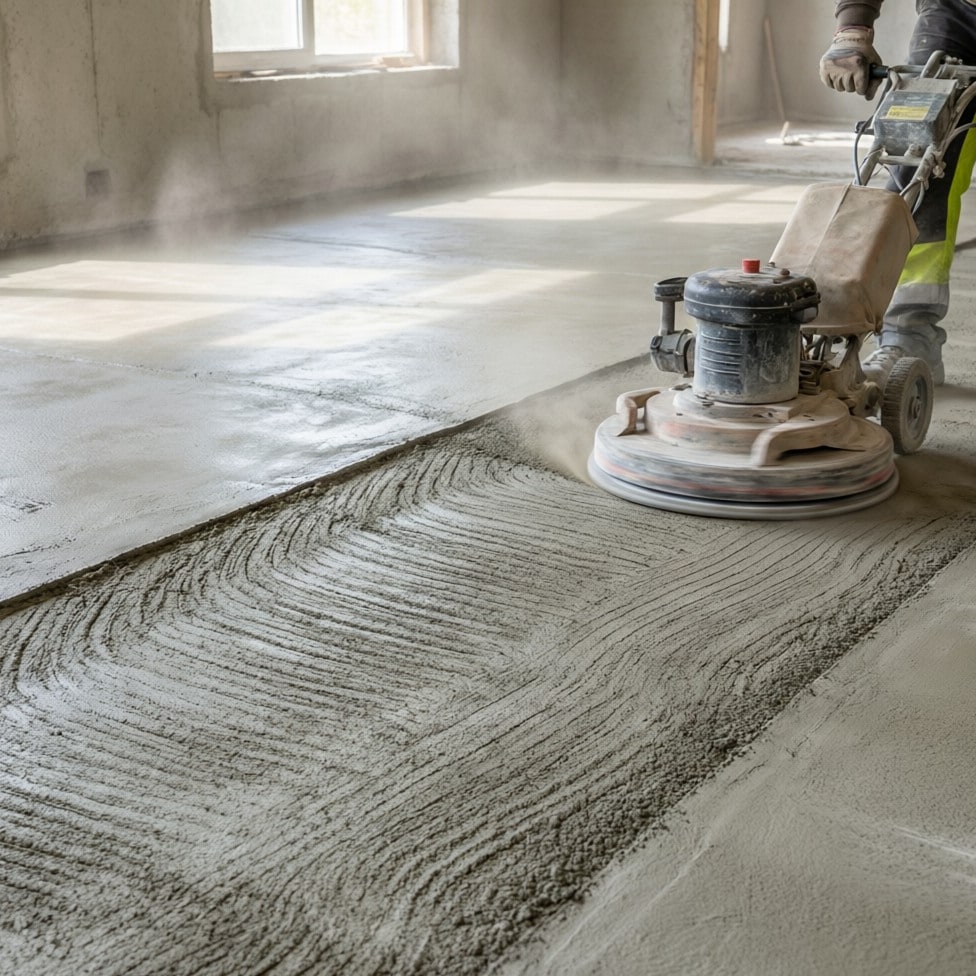
Strip and grindDay 1, 4–6 h per 200 m²
Old vinyl, adhesive and foam-backed residue come up completely — resin bonded to adhesive will fail. Then diamond-grind to CSP 2–4 and vacuum.
Repair and track the jointsDay 1–2
Cracks routed and filled; slab joints carried through the resin as filled joints, not bridged.
Form the cove filletDay 2, then overnight
Epoxy mortar pressed into the wall base at a 50–75 mm radius, done before the body so the upstand is continuous with the floor and not applied on top of it.
Prime and pourDay 3, 2–3 h per bay
Primer at 0.25–0.4 kg/m² across fillet and slab, then 2–3 mm self-levelling gauge-spread and spiked. One bay per shift, no cold joints across a doorway.
Topcoat and release in stagesDay 4, then 7 d
Low-satin wear coat, then closed and signed off room by room. Beds and trolleys from 48–72 h, full disinfectant regime from day 7.
Need the full method statement for your site? Request it with the form below — we review your slab data before your crew starts.
The coved junction and the absence of seams are what the infection-control audit looks at, not the colour card.
Antistatic build with an earthed copper grid, for electrosurgery and to keep charge away from imaging equipment.
Seamless surface that tolerates repeated spills and wipe-down; benches and wall junctions are detailed the same way.
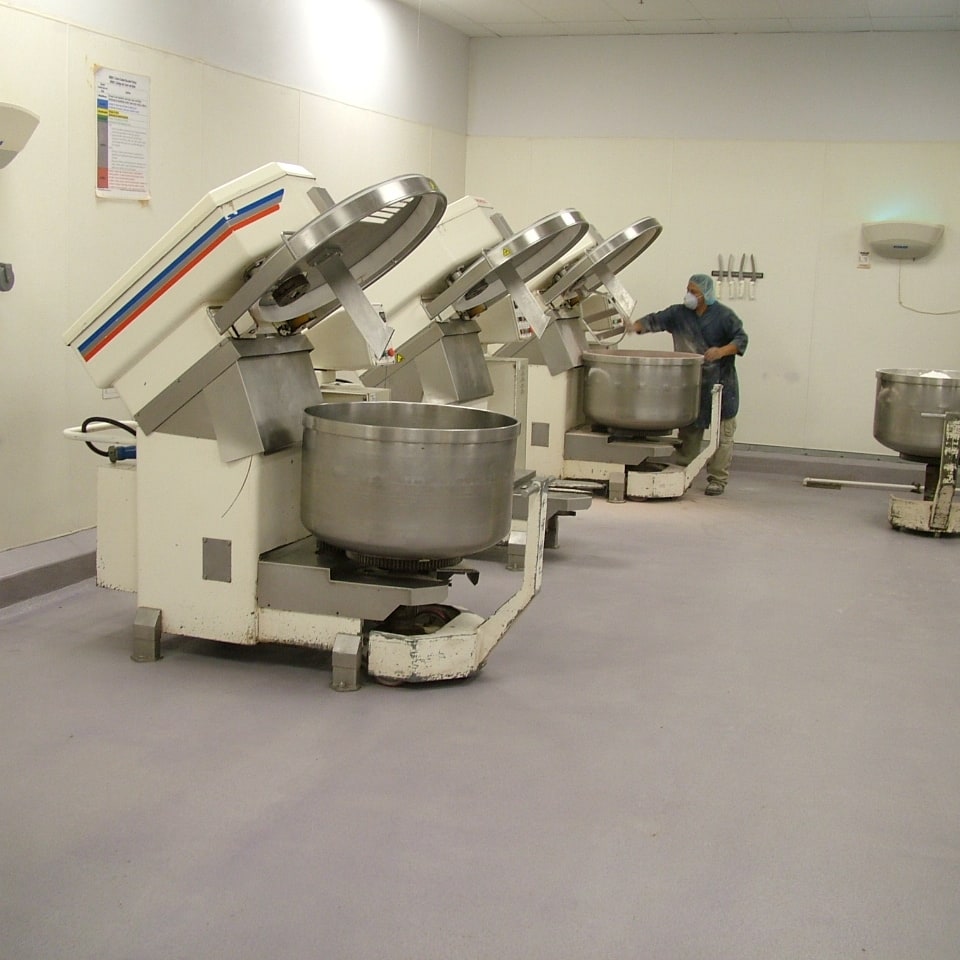
Dust-free, non-shedding floor; the antistatic option protects packaging and powder handling.
Low-satin in pale greys: reflects light for a bright room without the glare of a mirror finish.
No, and we will not write that it is. A resin film does not kill organisms. What it does is remove the places bacteria accumulate — no grout, no seam, no skirting gap — and give you a surface that takes a disinfectant without breaking down. That is the real, and large, benefit; calling it antibacterial would be a claim we cannot test for.
Yes — that is the point of this system. A mortar fillet is formed at the wall base at a 50–75 mm radius and the resin goes over it as one continuous surface, same colour and finish as the floor. No pre-formed skirting, no cap bead, no joint at the floor line.
Strong or standing sodium hypochlorite will dull and can discolour a gloss film; that is chemistry, not a quality problem. The fix is a low-satin topcoat, controlled dilution, a defined contact time and a clean-water rinse. Send us your cleaning regime and we will confirm resistance in writing before you specify.
Usually yes — electrosurgery and imaging equipment are the reason. We build a dissipative floor at 1×10⁶–10⁹ Ω, or a conductive build at 1×10⁴–10⁶ Ω, with an earthed copper grid in the lay-up. Resistance is measured on the finished build and reported; we do not publish a standard number we have not tested to.
Yes, bay by bay, normally overnight. Our systems are near-zero-VOC two-component resins with no solvent flash-off, so odour is low and the room can be released once the film has set, with ventilation running. Dust control during grinding and a defined protection route are what make it practical.
Walk-on in 8–12 hours, beds and trolleys at 48–72 hours, and the full disinfectant regime only after 7 days when the film has fully cured. Early castor loading leaves permanent marks and early chemicals dull the surface.
Those are hot-water and thermal-shock environments, and the correct answer there is a polyurethane cement mortar system. We do not manufacture it, so we will tell you that in the quotation instead of letting you find out after handover.
Pale neutrals: signal white and light greys make cleaning failures visible, which is the point in a treatment room. Mid grey hides trolley traffic in a corridor. We match RAL or Pantone, and we recommend keeping the cove the same colour as the floor rather than contrasting it.
Your project has conditions we cannot see from here? Send the slab report and drawings — our engineers answer with a written specification.
Dongguan Friway Hydraulic Control Technology Co., Ltd.
Every batch of Hospital & Clinic Seamless Epoxy Floor is produced in our own facility by a team that integrates R&D, production, sales and technical service. Advanced equipment, batch-level lab testing and a complete quality system mean consistent quality — from the first sample to the last pallet.
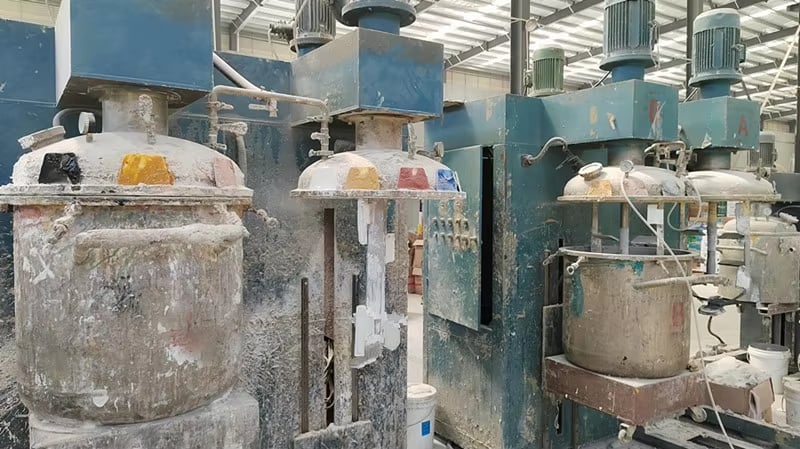 Mixing Lines
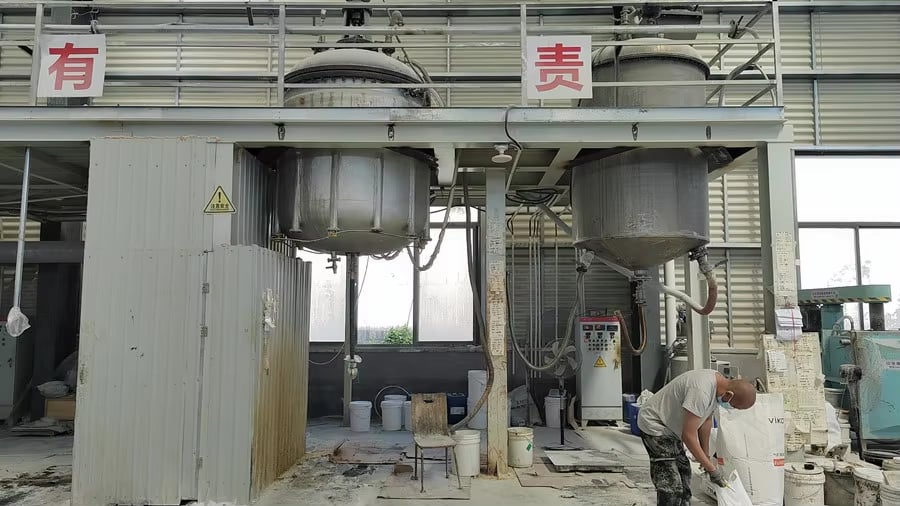 Reactor Kettles
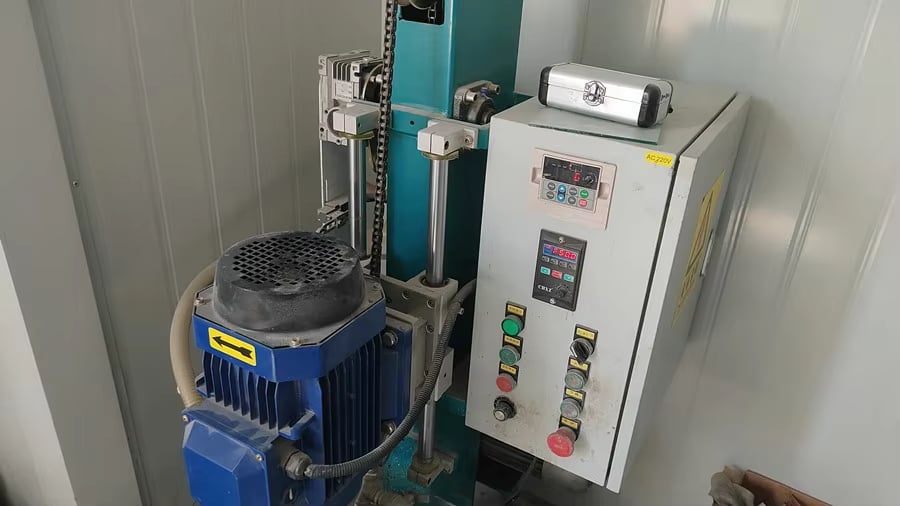 Dispersing Equipment
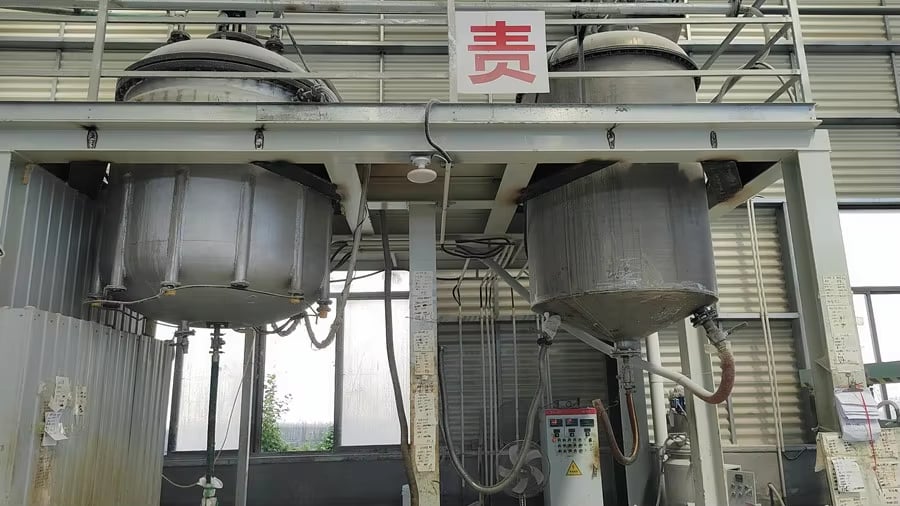 Mixing & Control
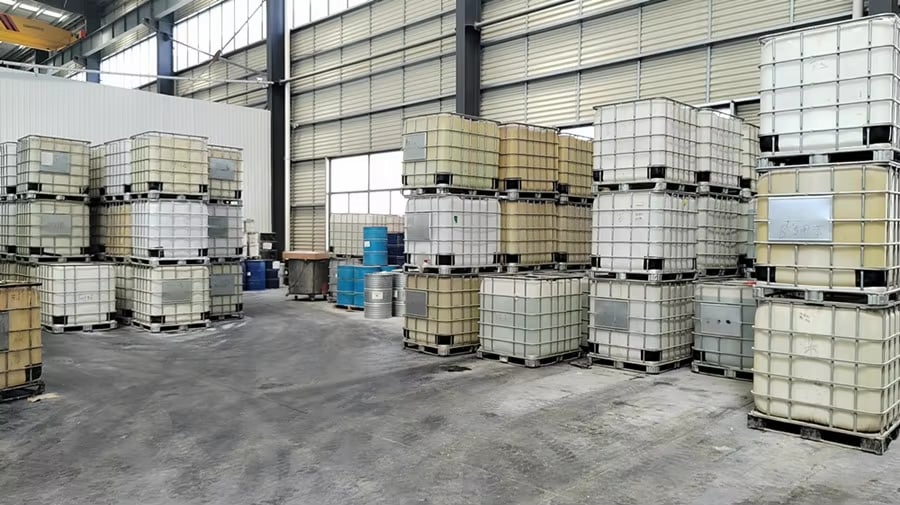 Raw-Material Store
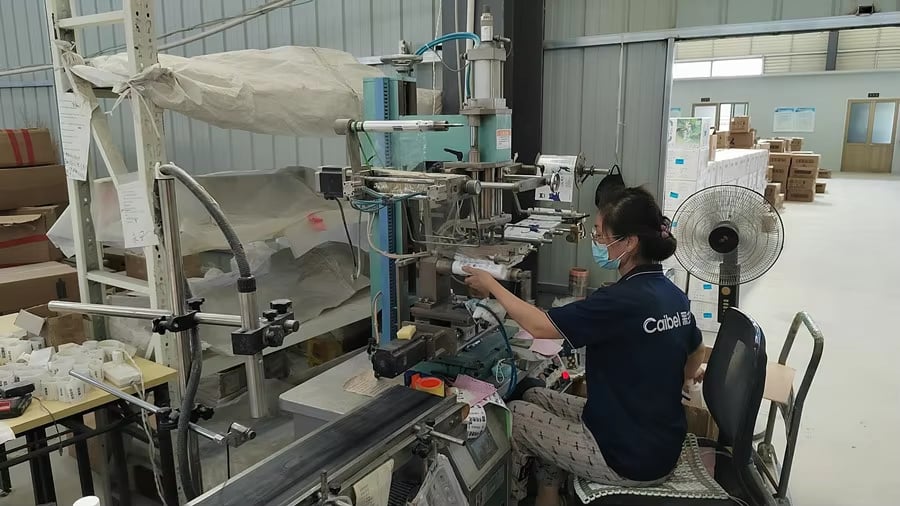 Labelling
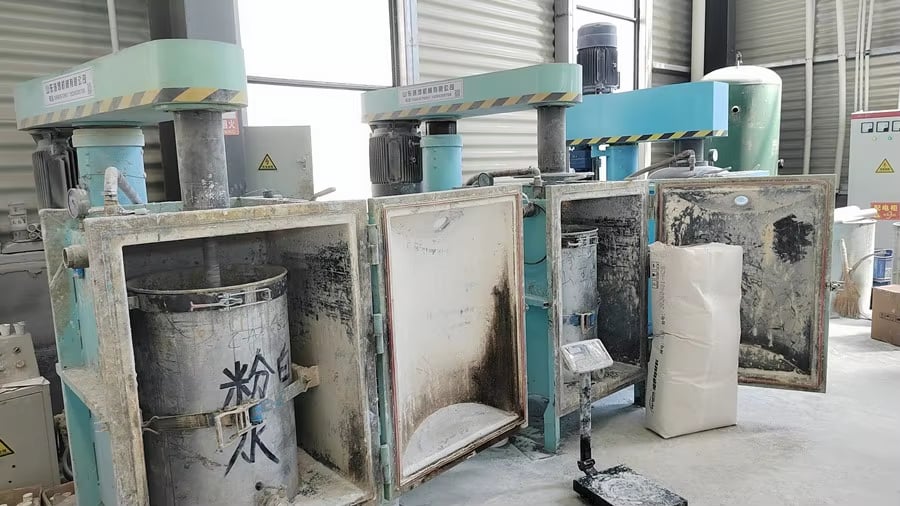 Vacuum Mixing
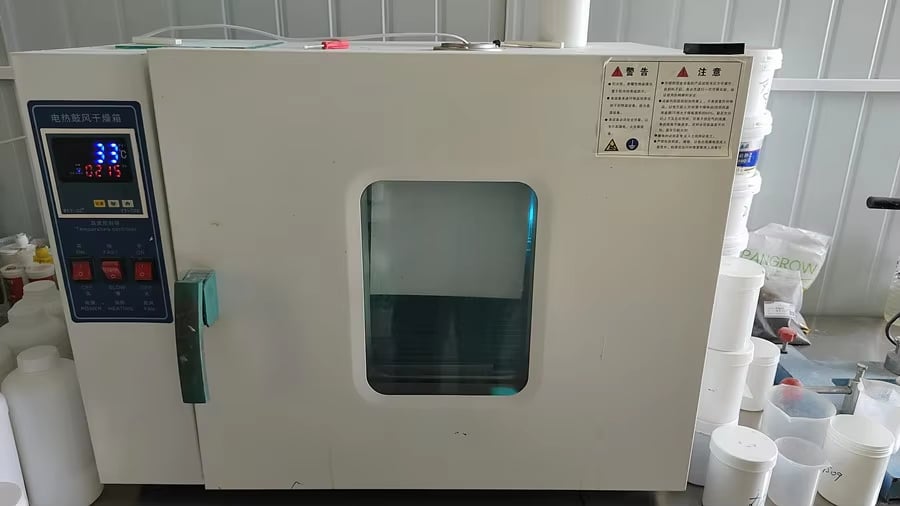 QC Drying Oven
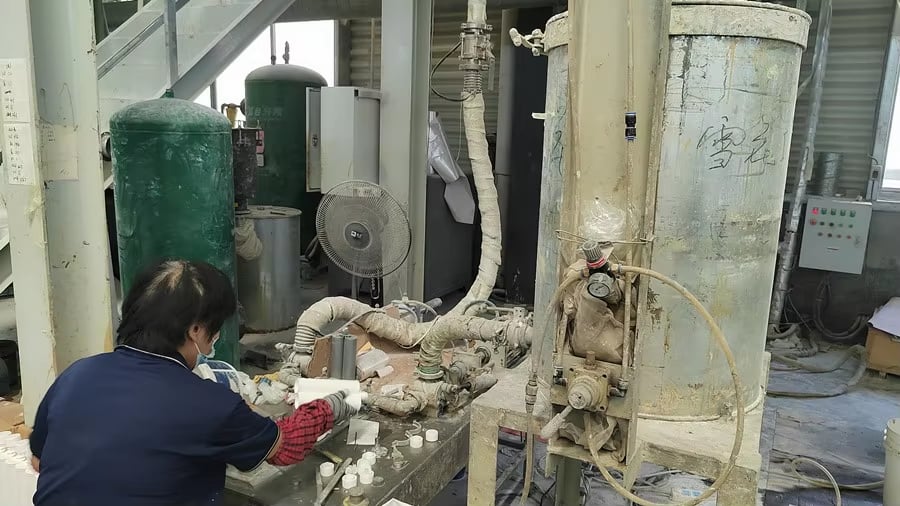 Filling & Capping


Questions about production, certificates or MOQ?
Ask Our TeamThis product line is verified by third-party laboratories. The marks shown above are the ones we publish as images; the documents behind them — certificate copies, batch-specific test reports, the CE Declaration of Conformity — are issued on request. A scanned badge proves nothing about your slab; the report behind it does.
Get a Free Quote
Send the floor area, substrate condition and what the room has to take. We reply with the system build-up, coverage estimate and an FOB quotation — usually within 24 hours.