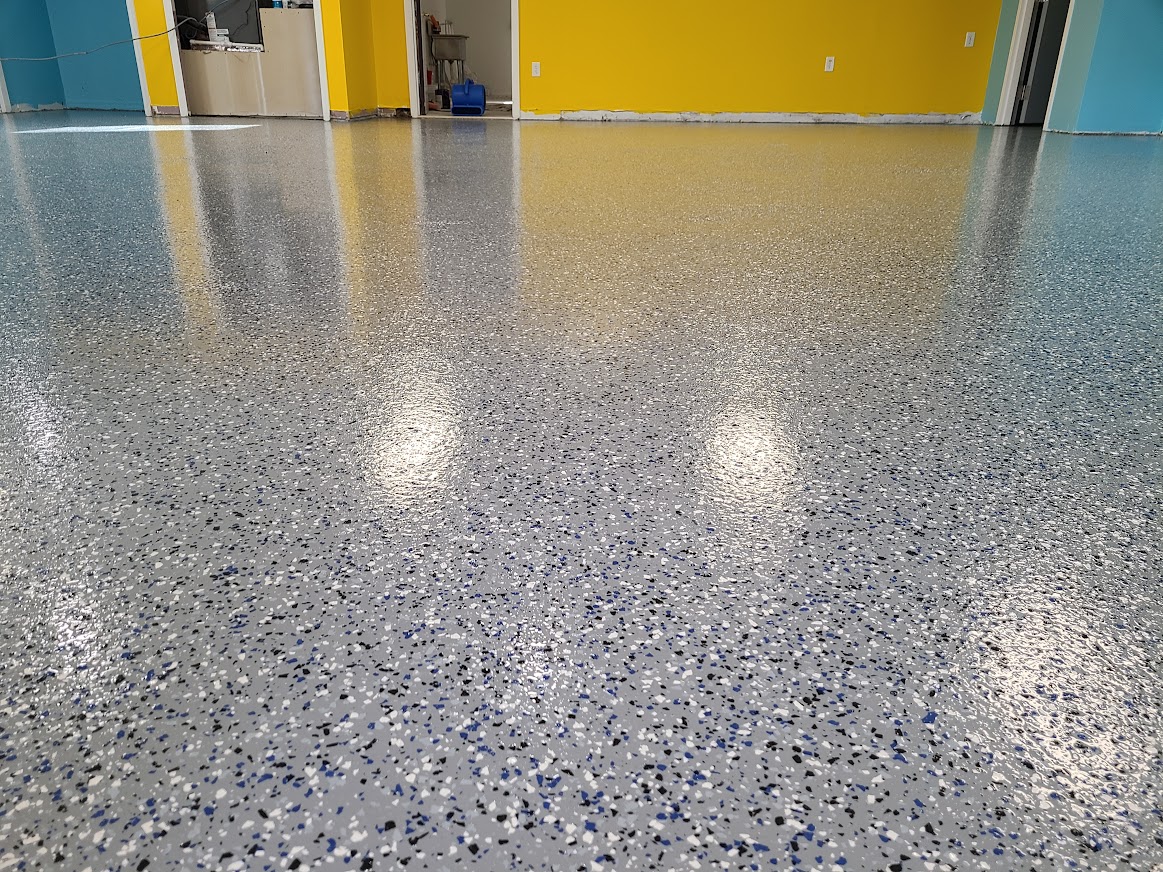
Teaching and general science laboratories
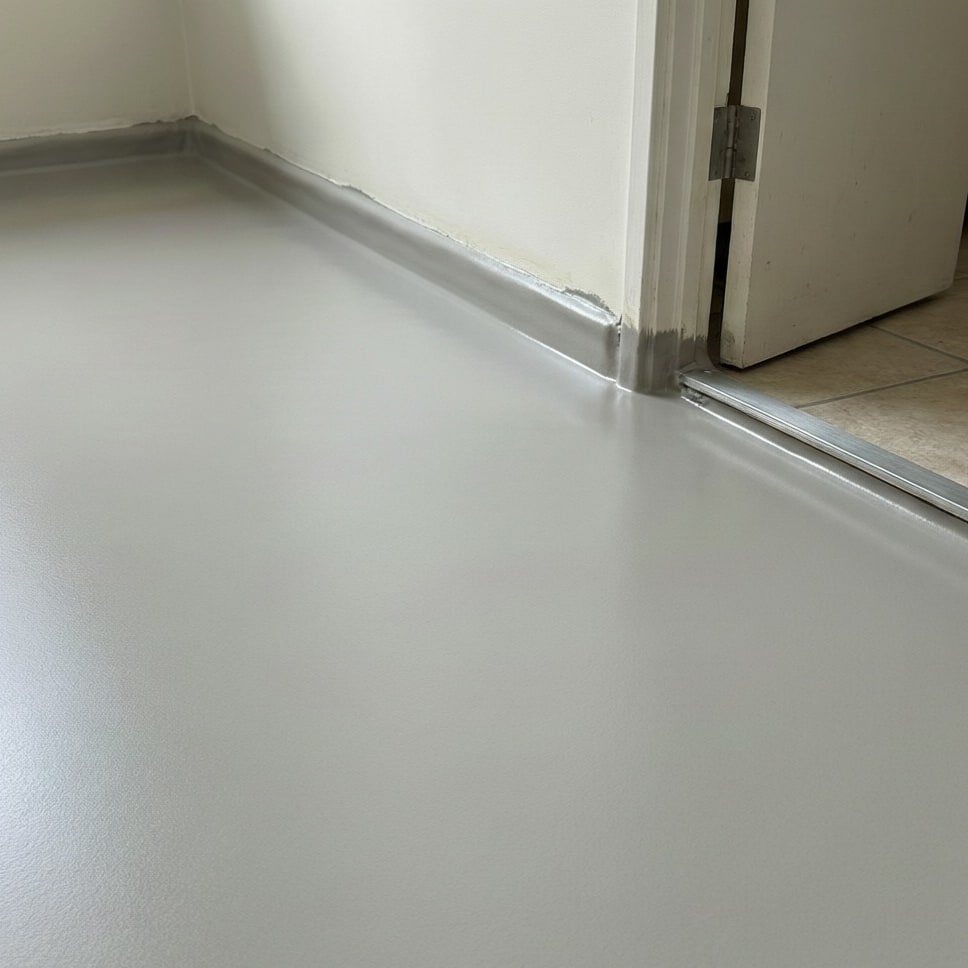
Dilute acids, salts and detergents, with the cove removing the dirty wall junction that is hard to keep clean.
SKU: FW-SLF-LAB
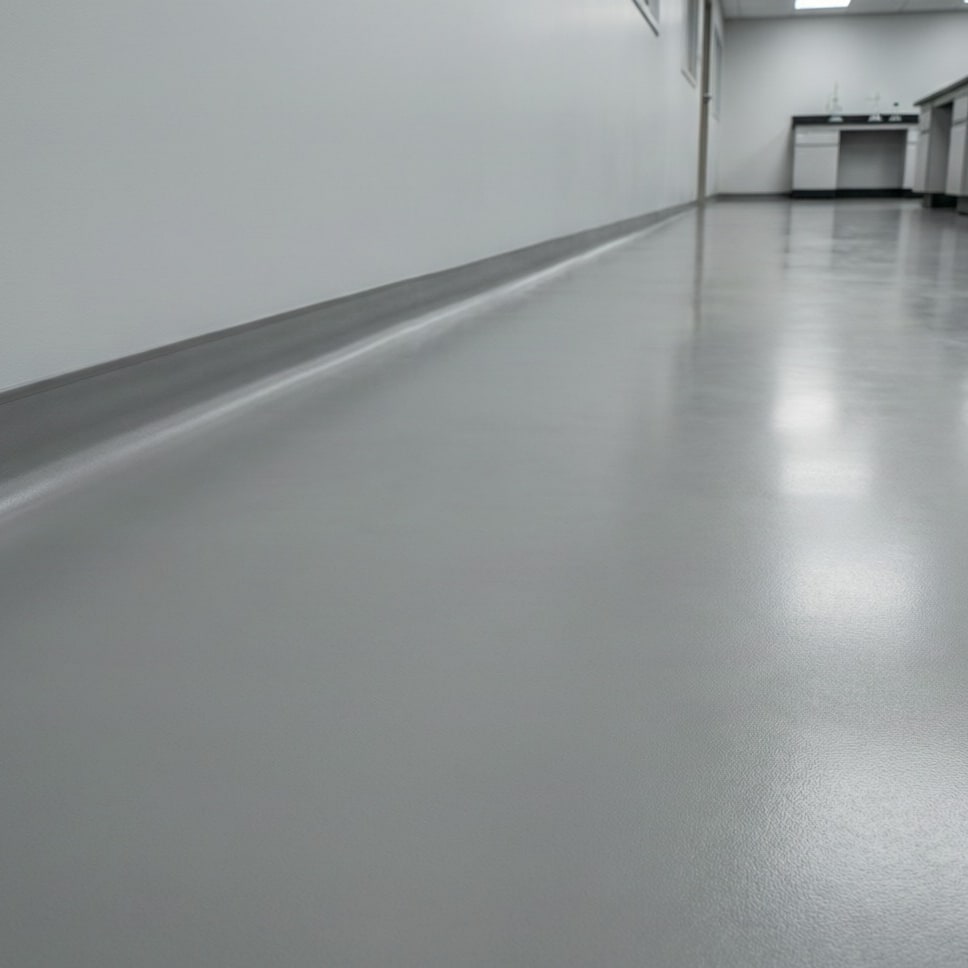
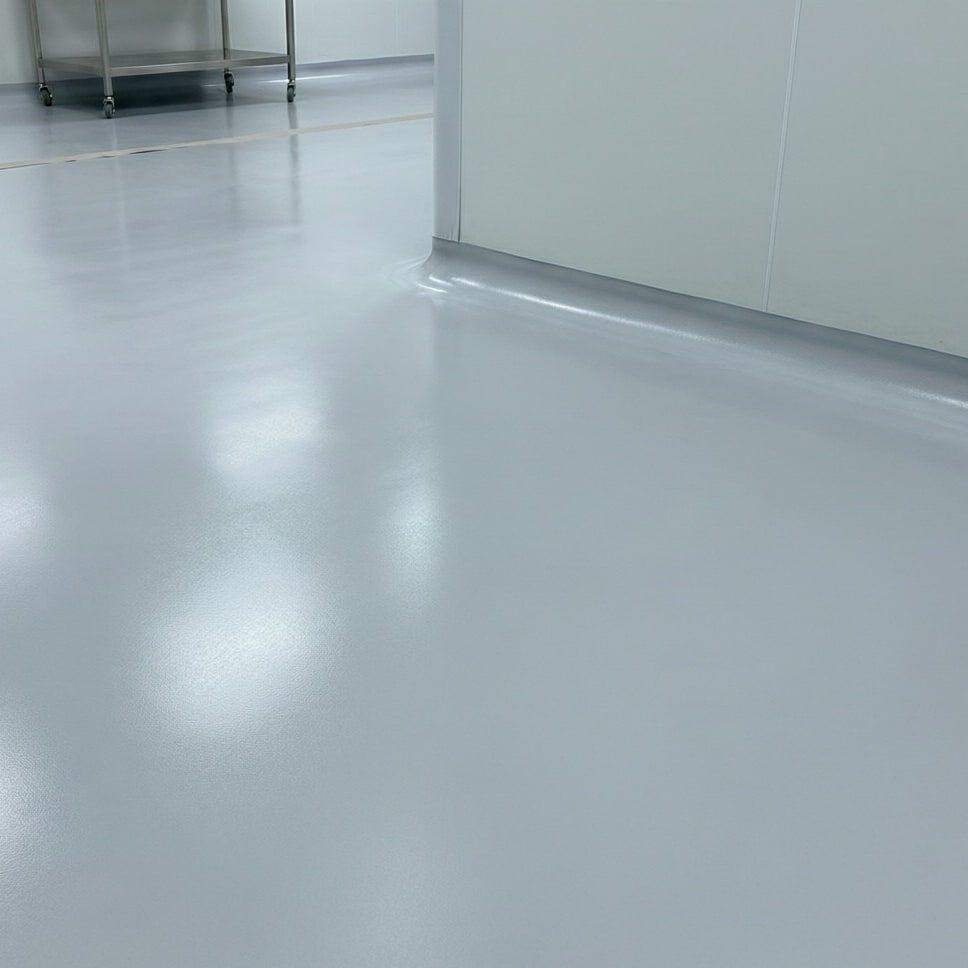
A seamless 2–3 mm epoxy floor for laboratories and QC suites: non-porous, coved at the wall base, and built for daily splash and wipe-down with detergents and dilute acids and alkalis.
Key Parameters
Standard pack: 20 kg/set (A: 15 kg + B: 5 kg). Reply within 24 hours. Custom RAL colours and OEM packaging available.
System line:Self-Leveling Epoxy > Epoxy Self-Leveling
A seamless 2–3 mm epoxy floor for laboratories and QC suites: non-porous, coved at the wall base, and built to take daily splash and wipe-down with detergents and dilute acids and alkalis without a joint to attack.
A seamless, cove-able resin floor for laboratories and QC suites: 3 mm poured at 2.2 kg/m² per mm, semi-gloss with a fine texture, mixed A:B = 4:1 by weight from a 20 kg set (15 kg resin + 5 kg hardener). It holds >80 Shore D and 78 MPa compressive with 3 MPa adhesion and a Taber loss of ≤0.03 g (CS-17, 750 g load, 500 revolutions). 35 minutes of pot life at 20 °C, walk-on at about 24 hours, return to full service at 7 days.
What destroys a laboratory floor is rarely a tipped drum — it is the cracked beaker at the sink that sits for twenty minutes, the mop bucket carrying more bleach than intended, and the junction where the floor meets the wall. A seamless resin floor with a coved upstand removes that last weak point, and a dense non-porous film gives you minutes before a spill has to be wiped.
We state our resistance as categories with contact time and a verdict, not as a reagent table we have not measured. Send us your actual chemical list and we confirm in writing which ones this floor is specified for. That is not a hedge: a generic resistance chart circulated between laboratories is usually drawn for a different resin, a different film thickness and a different cure age than the floor you are buying. What we need is the exposure — which reagent, what concentration, how long it stands, and how often — because a splash wiped within the hour and a pool left overnight are different specifications.
The same honesty applies to appearance. Bleach and sunlight change the colour of an epoxy film long before they change its strength, and a floor that has been promised as colour-stable in a room that is mopped with hypochlorite weekly will disappoint on schedule.
A room that needs static control is a different build — see our cleanroom and GMP antistatic system. A floor that has to survive a wash-down bay with hot water or a cold store is not an epoxy conversation at all. And an existing laboratory floor that is sound but does not want lifting can be overlaid rather than removed — the over-existing-tile system is the one specified for that. Send the room list, the reagent list with concentrations, the cleaning protocol and the dates the laboratory has to stay in service.
What actually destroys a laboratory floor is not a drum of acid tipped over it — it is the everyday: a beaker cracks at the sink and the spill sits there for twenty minutes, the mop bucket carries a stronger dose of bleach than anyone intended, and reagent dust and solvent vapour work at the one place the floor meets the wall. A seamless resin floor with a coved upstand removes that last weak point, and a dense non-porous film gives you minutes rather than hours before a spill has to be wiped up.
We are deliberately precise about what that means. Our systems show good typical resistance to dilute acids and alkalis, to inorganic salts, to detergents and to alcohols — with the judgement we can actually stand behind stated as: no blistering, no detachment, slight discolouration after seven days' immersion at 25 °C on a seven-day-cured film. That is a splash-and-wipe-down floor. It is not an acid-proof lining, and a floor that has to sit under concentrated reagents overnight is a vinyl-ester or phenolic job, which we do not make.
Discolouration is the honest caveat nobody puts on a brochure. Bleach, strong oxidisers and UV will change the colour of an epoxy film long before they change its bond. A dull patch is cosmetic; a lifted edge is not, and lifted edges are almost always about substrate moisture, a skipped primer or a movement joint that was bridged — which is what our build-up and our site checks are actually designed to control.
| Prep | Grind + vacuumCSP 2–4; remove old adhesive, sealers and any coating that will not take a bond |
|---|---|
| Repair | As neededCracks routed and filled; movement joints kept as joints with a flexible detail |
| Primer | 0.25–0.4 kg/m²High-solids epoxy into the open profile; the coat that decides whether the system lifts |
| Cove | R ≈ 50 mmMortar fillet at the wall base formed before the body, so floor and upstand are one material |
| Body | 2–3 mm self-levelling≈ 2.2 kg/m² per mm; nominal build-up, actual depends on slab level and profile |
| Topcoat | 0.12–0.2 kg/m²Chemical- and cleaning-agent-resistant wear coat; fine aggregate where sinks and wet areas sit |
Custom RAL matching available — we ship a physical sample card before production.
| Brand | Friway |
|---|---|
| SKU | FW-SLF-LAB |
| Category | Self-Leveling Epoxy > Epoxy Self-Leveling |
| Finish | Semi-gloss / fine texture |
| Coverage | 2.2 kg/m²/mm |
| Thickness | 3 mm |
| Mix Ratio | A:B = 4:1 (by weight) |
| Pot Life | 35 min |
| Walk-on Time | 24 h |
| Full Cure | 168 h |
| Hardness | >80 Shore D |
| Adhesion | 3 MPa |
| Compressive Strength | 78 MPa |
| Abrasion Resistance | ≤0.03 g (Taber CS-17, 750 g, 500 r) |
| Package | 20 kg/set (A: 15 kg + B: 5 kg) |
| Warranty | 3 years |
| Substrate | ≥ C25 concrete, ≥ 28 daysOr a sound, dry cement screed; moisture ≤ 4 % CM |
|---|---|
| Ambient | 10–25 °C, RH ≤ 75 %Slab 3 °C above dew point — run the HVAC during application |
| Mixing ratio | By weight, per TDSStated by weight because volume ratios drift with temperature and density |
| Surface dry | ≤ 4 h at 20 °C |
| Through dry | ≤ 24 h at 20 °C |
| Walk-on | 24 hStocking feet; hard-soled traffic and trolleys from 48–72 h |
| Return to full service | 7 daysChemical resistance develops with cure — the 7-day figure below is a 7-day-cured film |
| Shelf life | 12 monthsOriginal sealed containers, dry store 5–30 °C |
| Compressive strength | 78–80 MPaSelf-levelling build at 7 d / 20 °C |
|---|---|
| Bond | ≥ 3.0 MPaConcrete failure before bond failure on a profiled slab |
| Hardness | > 80 Shore D · ≥ 3H pencilBoth measured at 7-day cure |
| Abrasion | ≤ 0.03 gTaber CS-17 wheel, 750 g load, 500 revolutions |
| Dilute acids / alkalis | No blistering, no detachment, slight discolouration7 days' immersion at 25 °C on a 7-day-cured film; internal test |
| Salts, detergents, alcohols | Good resistance in daily useSplash and wipe-down exposure |
| Oils and fuels | Good resistance to spillageWipe within a few hours; standing diesel softens any epoxy film |
| Aggressive solvents | Limited — tell us before you specifyKetones, chlorinated solvents and concentrated oxidisers need a different resin |
Figures are typical values measured in our laboratory. Substrate, climate and workmanship affect the result — we confirm the final specification in writing before your order.
We release documents as editable originals on request (batch-specific data is not in a generic PDF). One click sends your request with this product attached.
Two-component sets palletised for export, shipped fromDongguan, Guangdong, China by Dongguan Friway Hydraulic Control Technology Co., Ltd..
| Set composition | 20 kg/set (A: 15 kg + B: 5 kg) |
|---|---|
| Net weight / set | 20 kg |
| Pallet configuration | 24 sets (480 kg net) per 1200 × 1000 mm pallet, stretch-wrapped with corner boards |
| 20 ft container | ≈ 480 sets |
| 40 ft HQ | ≈ 960 sets |
| Shelf life | 12 months from fill date |
| Storage | Dry, ventilated store, 5–30 °C; protect from frost and direct sunlight. Keep sealed — Part B absorbs moisture from air. |
Counted from confirmed deposit and approved colour. FOBShenzhen or Guangzhou; CIF and DDP quoted on request.
| Order quantity | Lead time | Notes |
|---|---|---|
| Sample (≤ 2 sets) | 2–4 days | courier freight collect via DHL / UPS / FedEx, shipping at your cost; 5–7 days door to door |
| 1–49 sets | 5–7 days | Stock colours first; standard export packing included |
| 50–199 sets | 10–12 days | Includes batch mixing and in-house QC record per batch |
| 200–999 sets | 15–20 days | Production slot reserved after 30% deposit |
| FCL / 1000+ sets | 22–28 days | Confirmed against the shipping schedule; FOB Shenzhen or Guangzhou |
RAL / Pantone reference or a physical sample; we send a wet film for approval before batch production.
Your logo and language on the pails and carton; artwork in AI/PDF. Blank labelling available below this MOQ.
Pail size, carton printing, palletising and shipping marks per your export requirement.
Formulation adjustment (gloss, cure speed, aggregate, conductivity range) with TDS and CoA issued under your brand.
Company-level documents we can issue for this system. We supply certificate copies and batch test reports on request rather than publishing them as images.
Get the actual exposure listWeek −2
Which reagents, which concentrations, how often they spill and how long they sit before someone wipes them. A teaching lab and an organic synthesis lab get different specifications — and sometimes a different product.
Test the slabDay −3
Moisture ≤ 4 % CM and a 24-hour taped polyethylene check near the sink and the external wall. Below-grade or poorly drained labs are where these floors fail.
Strip and grindDay 1, 3–5 h per 100 m²
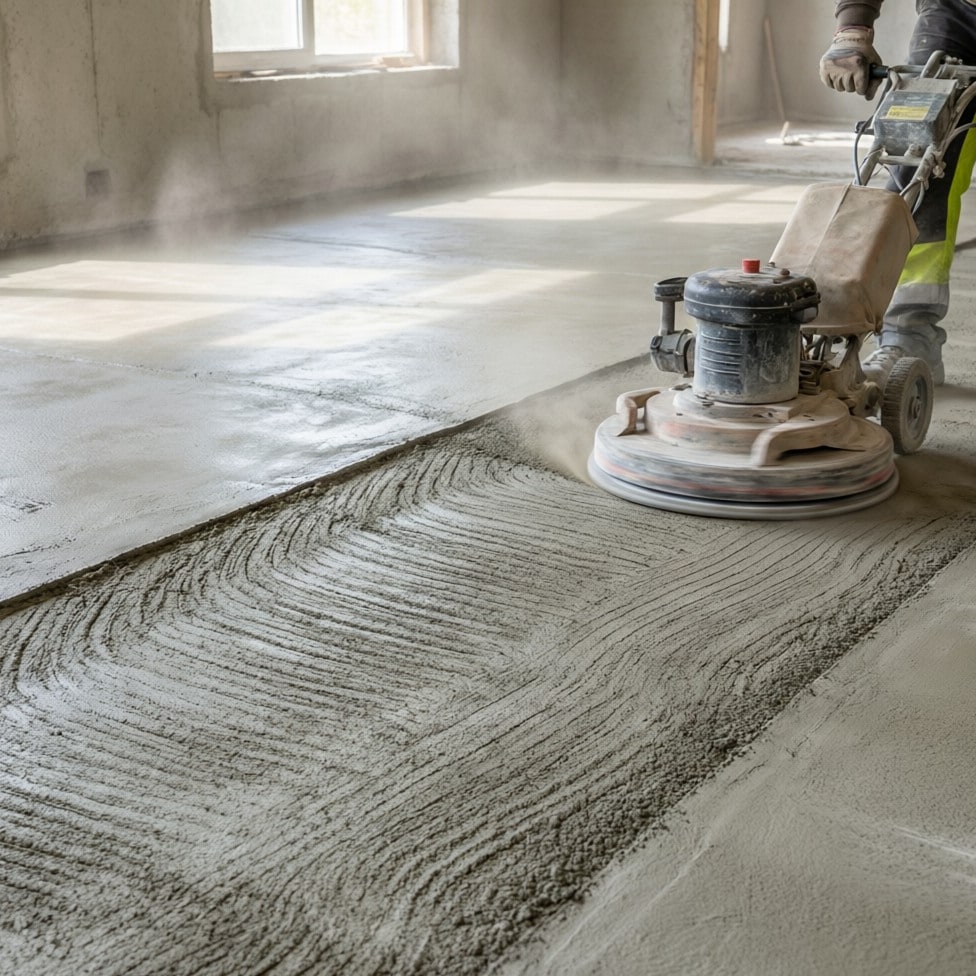
Old vinyl, adhesive and any failed coating come out completely; then diamond-grind to CSP 2–4 and vacuum to a dust-free surface.
Prime, then form the coveDay 1–2, then 12–16 h
Primer worked into the profile, then the mortar fillet at the wall base and around bench feet. The cove is built before the body so it is one continuous surface.
Pour the bodyDay 2–3, 2–3 h per bay
2–3 mm self-levelling gauge-spread and spiked. One bay or one bench run per shift — no cold joint across a doorway.
Topcoat and release by zoneDay 4, then 7 d
Wear coat with fine aggregate in the wet zones. Walk-on at 24 h, trolleys and heavy use at 72 h, and the full cleaning regime only after 7 days.
Need the full method statement for your site? Request it with the form below — we review your slab data before your crew starts.
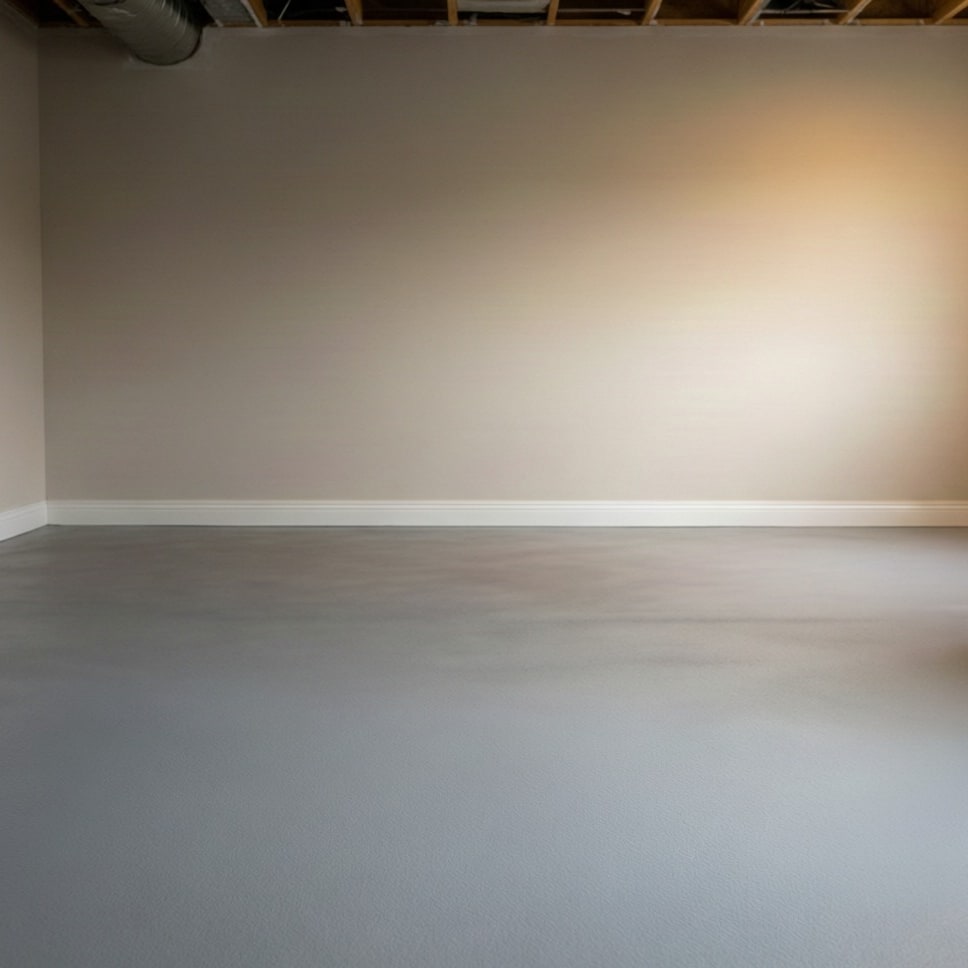
Dilute acids, salts and detergents, with the cove removing the dirty wall junction that is hard to keep clean.
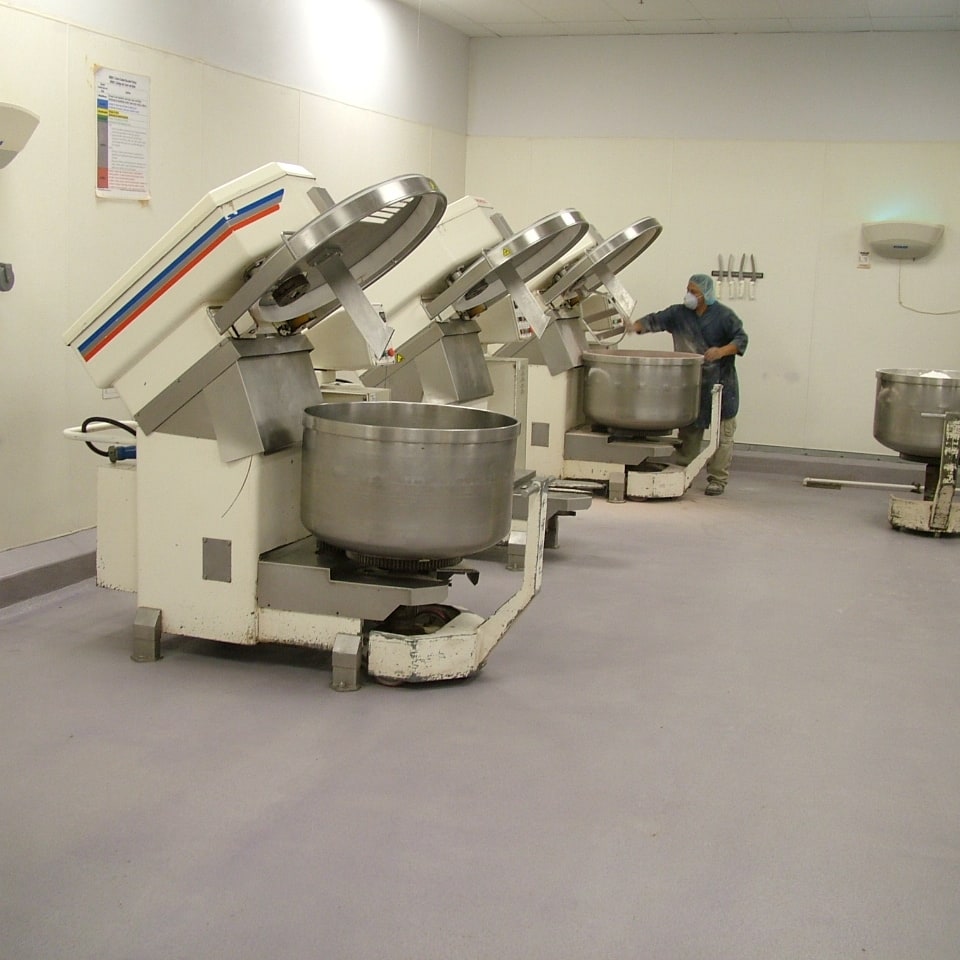
Dust-free seamless surface under benches; solvent spills are wiped, so the specification is built around wipe-up time.
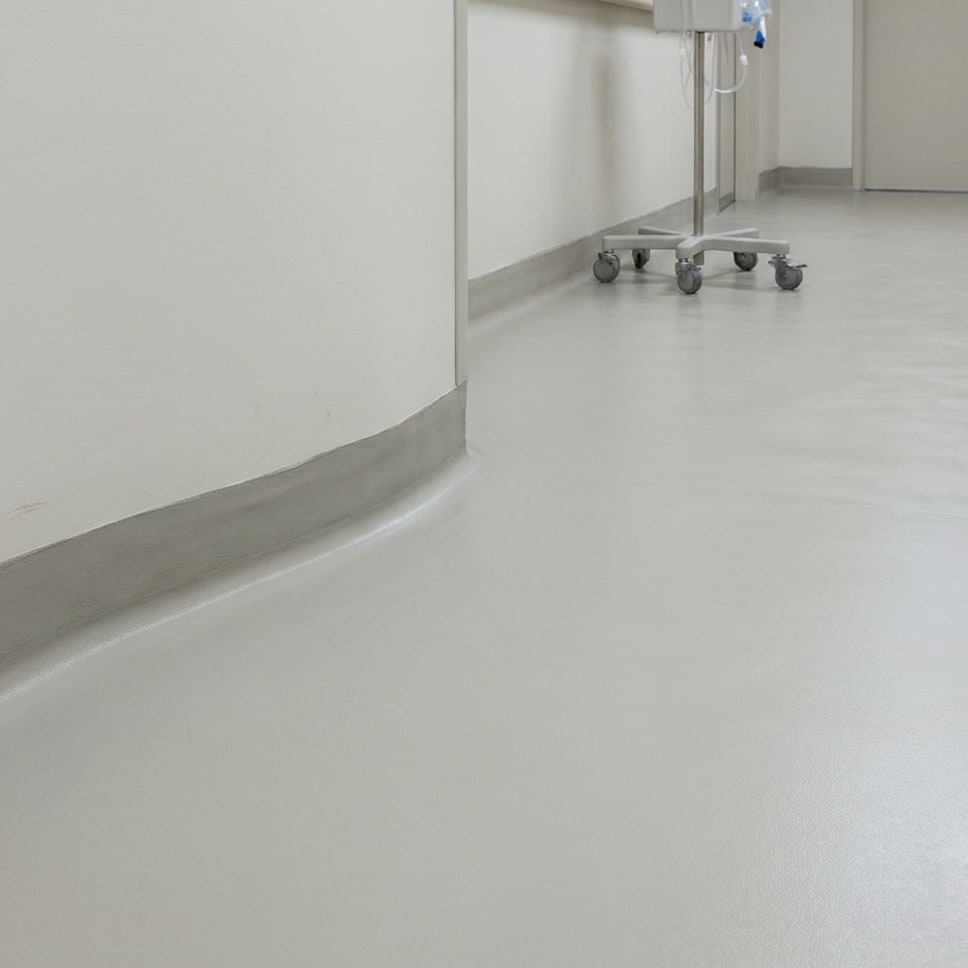
Takes a daily disinfectant regime; see the hospital system for the full coved cleanability detail.
Non-shedding and cleanable; antistatic build available as a separate system where powders or electronics demand it.
Oils and cutting fluids with light mechanical duty; fine texture at the sinks.
In daily laboratory use: dilute acids and alkalis, inorganic salts, detergents, alcohols, and oil or fuel spillage that gets wiped up. Our stated judgement is no blistering, no detachment and slight discolouration after seven days' immersion at 25 °C on a seven-day-cured film. What we will not do is publish a table of specific reagents at specific concentrations we have not tested — send us your reagent list and we will confirm in writing which ones this floor is specified for.
No, and any floor marketed as if it could is being sold on a misunderstanding. A dense epoxy film gives you minutes to hours of protection so a spill does not reach the slab; that is the real benefit. Concentrated acid or alkali left overnight will mark and can attack the film, and a lab where that happens routinely needs a lining resin, not a coating.
Yes, eventually — bleach and other oxidisers, strong solvents and UV will change the colour of an epoxy film long before they affect its bond. Slight discolouration is cosmetic and we state it as the expected result in our own test record. If colour stability matters, we quote a UV-stable topcoat and a mid-tone so marks stay invisible.
Epoxy is not the right answer. Ketones and chlorinated solvents will soften, blister and de-gloss it. If your lab uses them routinely at the bench or on the floor, tell us at specification stage — we will say so plainly rather than let you find it after handover.
Not without a test. We specify texture by location — fine broadcast at sinks, wash-down and any wet zone, smooth semi-gloss elsewhere — and we will arrange a ramp test on your build if your project documentation requires one. A supplier quoting R11 on a floor they have never tested is guessing.
Yes — a mortar fillet at about 50 mm radius is formed at the wall base before the body coat, so floor and upstand are one continuous material. The same detail is carried around bench feet, pipework and the drain frame, which is where laboratory floors usually start failing.
Only if there is a reason — sensitive electronics, flammable vapours or powders. If there is, that is a different build-up with an earthed copper grid, and we specify and measure it as a system on the finished floor. See our cleanroom and electronics system page rather than adding an ESD line to a standard chemical-resistant specification.
Over fully bonded, non-foam-backed vinyl after full removal of any wax or dressing and mechanical abrasion, usually yes. Loose-laid, foam-backed or asbestos-containing floor tile must come out or be surveyed first — a laboratory in an older building is exactly where that matters. See the renovation-over-tiles system for the full conditions.
We work bay by bay. Walk-on at 24 hours, benches and trolleys back at 72 hours, and the full cleaning regime from day 7 at 20 °C. The build-up is near-zero-VOC with no solvent flash-off, so the room is usable once the film has set with ventilation running.
Your project has conditions we cannot see from here? Send the slab report and drawings — our engineers answer with a written specification.
Dongguan Friway Hydraulic Control Technology Co., Ltd.
Every batch of Laboratory Chemical-Resistant Epoxy Floor System is produced in our own facility by a team that integrates R&D, production, sales and technical service. Advanced equipment, batch-level lab testing and a complete quality system mean consistent quality — from the first sample to the last pallet.
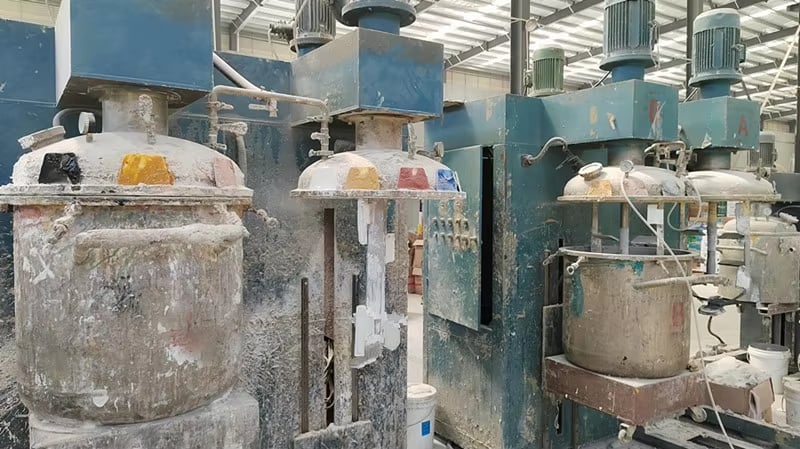 Mixing Lines
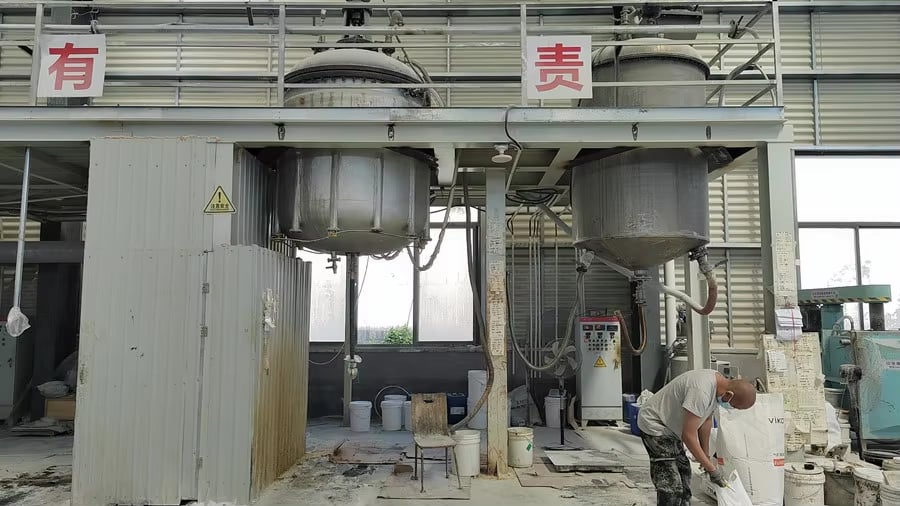 Reactor Kettles
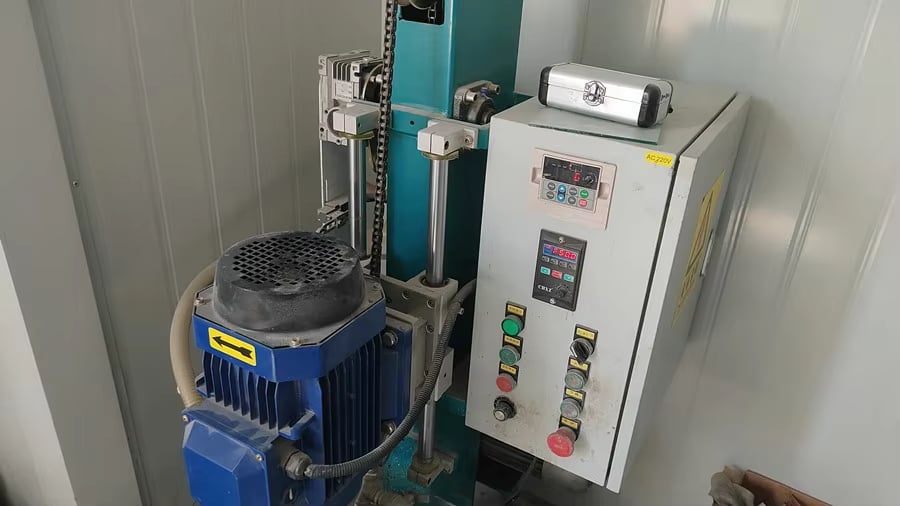 Dispersing Equipment
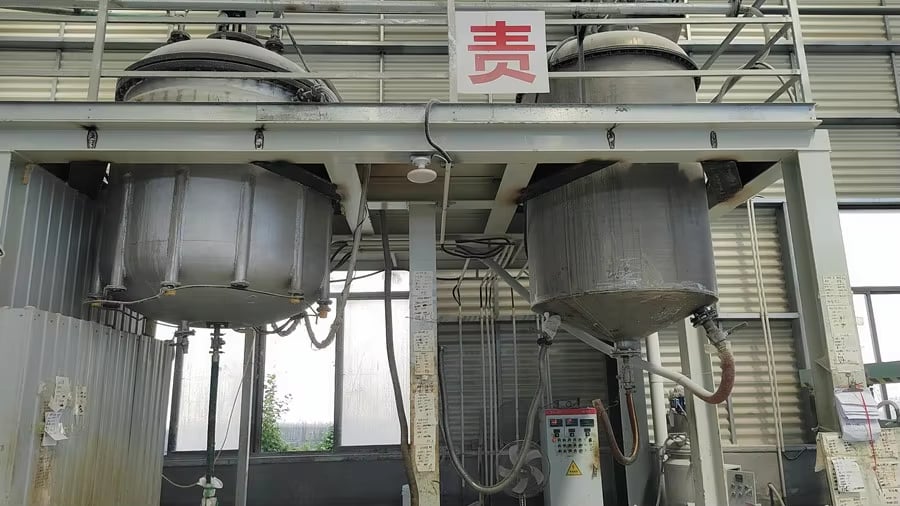 Mixing & Control
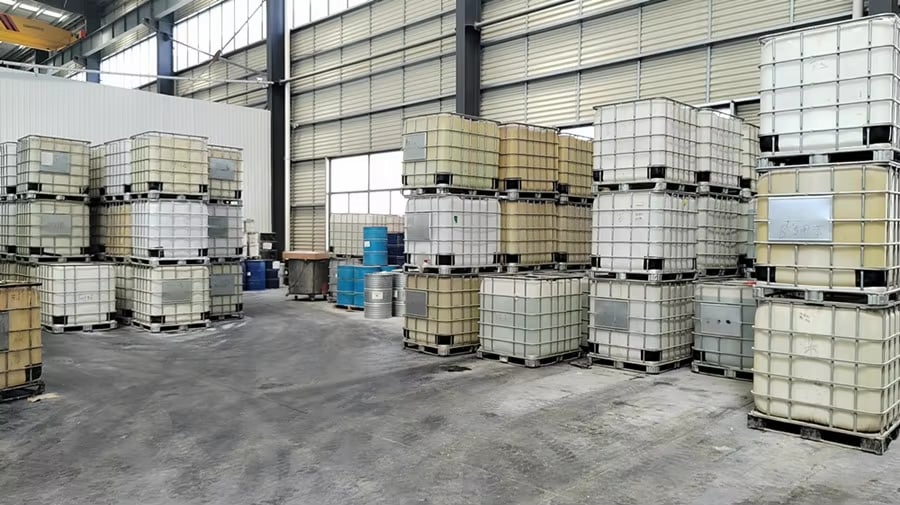 Raw-Material Store
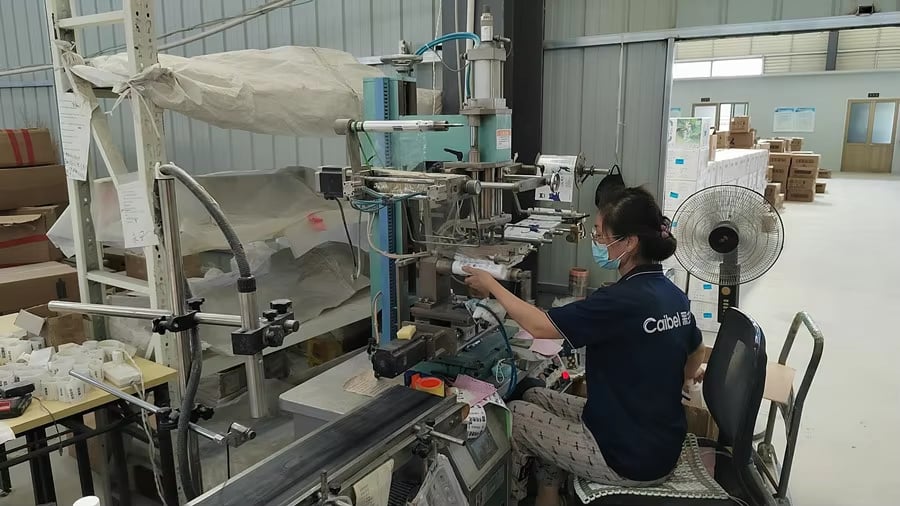 Labelling
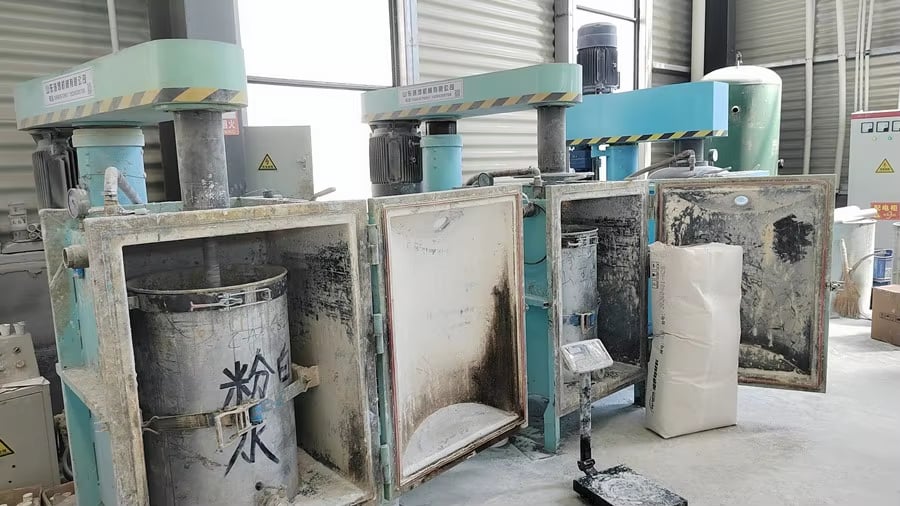 Vacuum Mixing
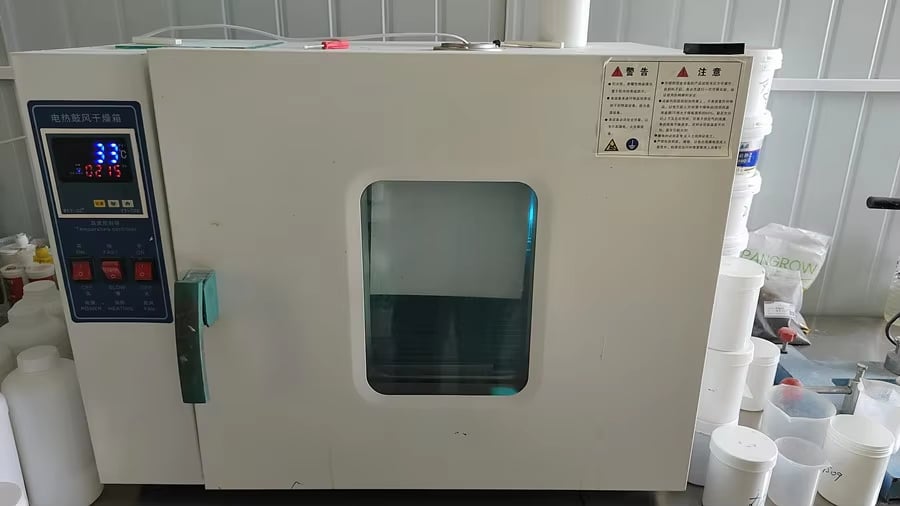 QC Drying Oven
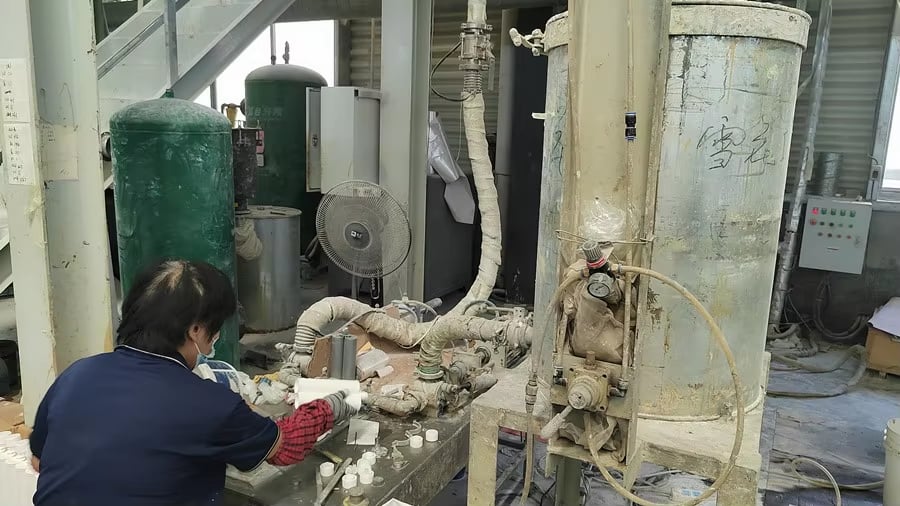 Filling & Capping


Questions about production, certificates or MOQ?
Ask Our TeamThis product line is verified by third-party laboratories. The marks shown above are the ones we publish as images; the documents behind them — certificate copies, batch-specific test reports, the CE Declaration of Conformity — are issued on request. A scanned badge proves nothing about your slab; the report behind it does.
Get a Free Quote
Send the floor area, substrate condition and what the room has to take. We reply with the system build-up, coverage estimate and an FOB quotation — usually within 24 hours.