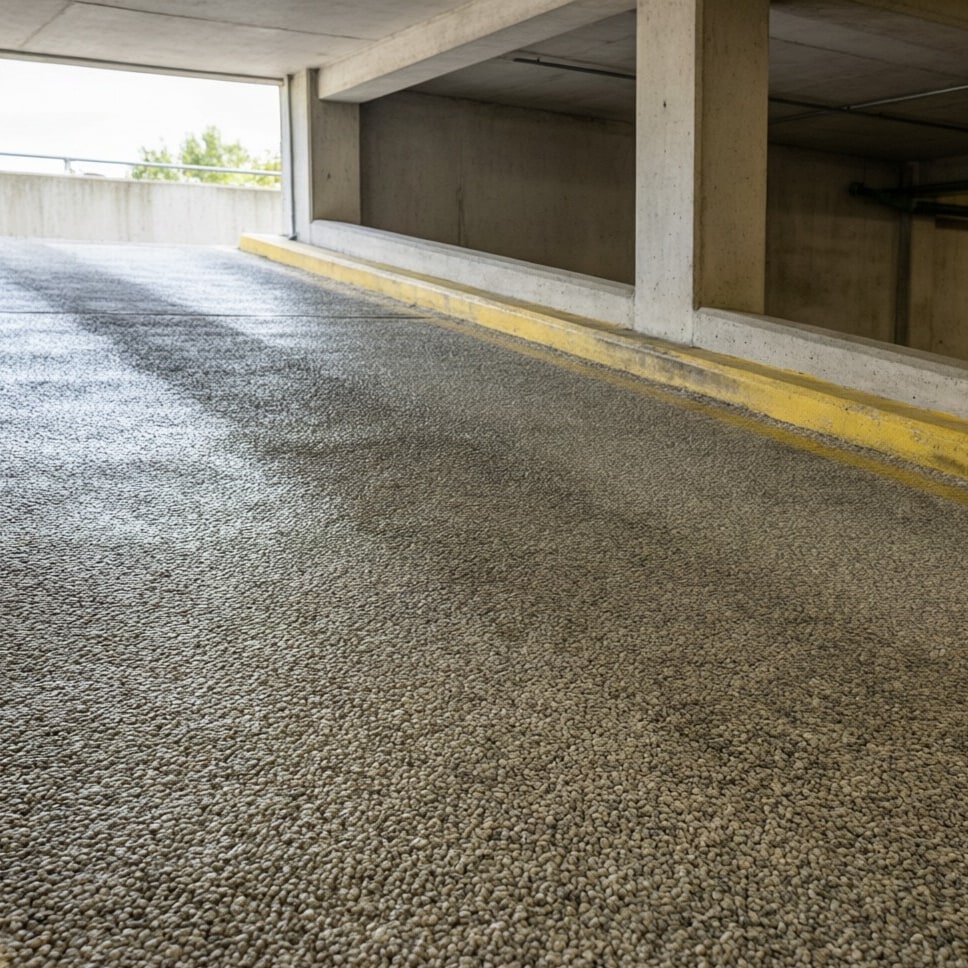
High-bay racking aisles
Cushion-tyre reach trucks and VNA trucks; the broadcast section handles the contact stress, the texture hides the scrub.
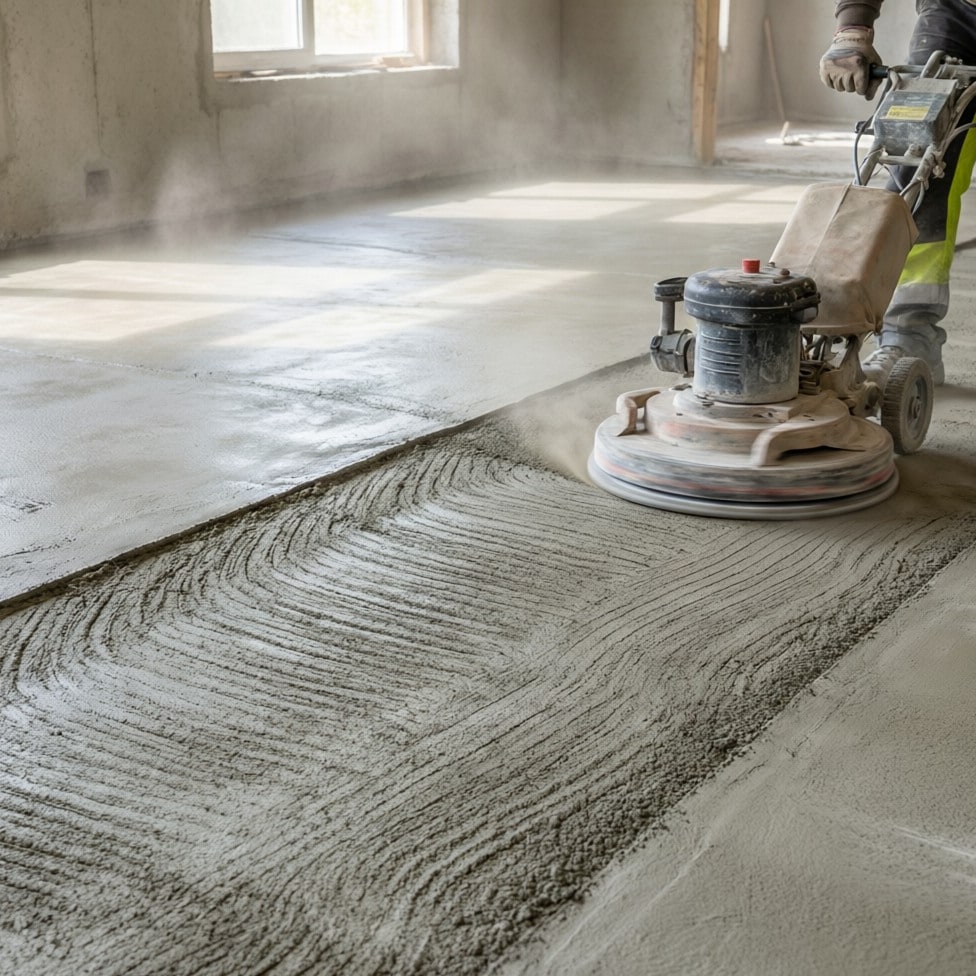
SKU: FW-ECS-WHS
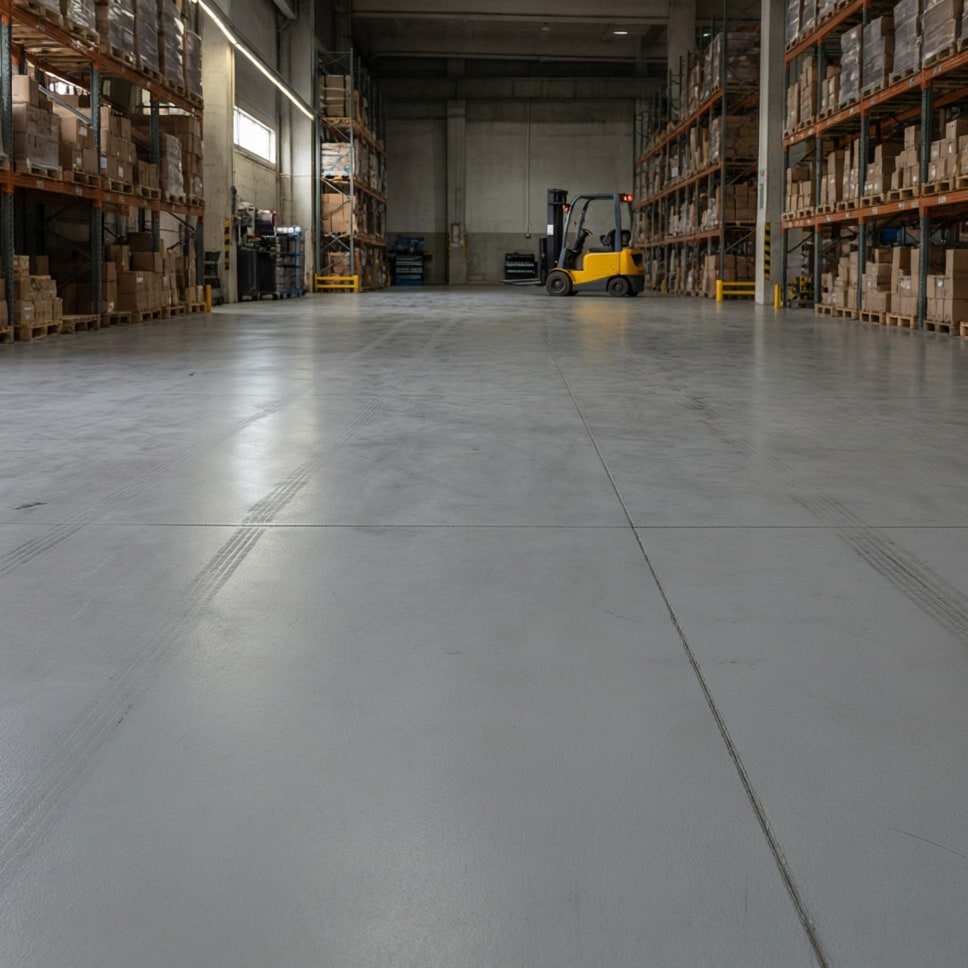
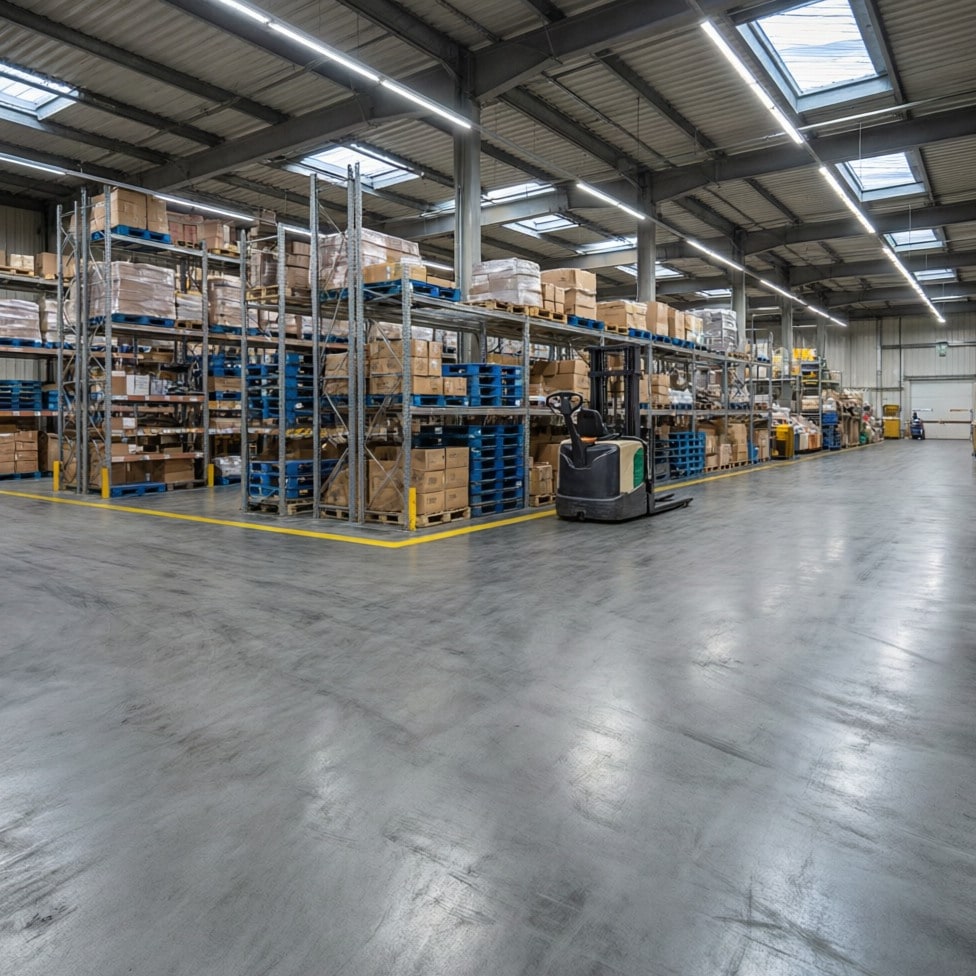
A 4–5 mm full-broadcast epoxy floor for cushion-tyre forklift traffic: distributes contact stress, resists steer-scrub, and details joints so they do not spall under wheels.
Key Parameters
Standard pack: 25 kg/set (A: 20 kg + B: 5 kg). Reply within 24 hours. Custom RAL colours and OEM packaging available.
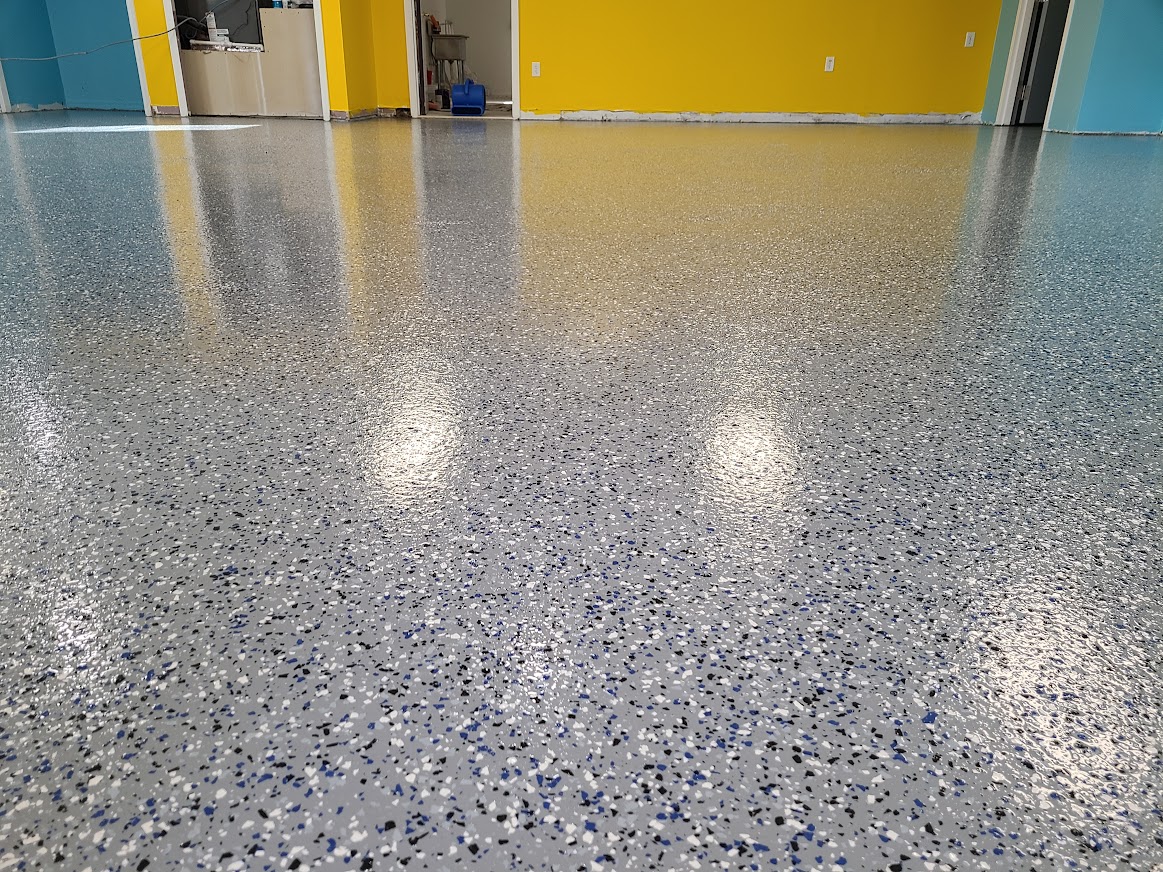
System line:Epoxy Colored Sand
A 4–5 mm full-broadcast epoxy floor built for cushion-tyre forklift traffic: high contact-stress resistance, dust-proof, and joint details that do not spall where wheels cross them.
A full-broadcast working floor for cushion-tyre forklift traffic: 4.5 mm built at 4.5 kg/m², semi-gloss with an open texture, mixed A:B = 2:1 out of a 25 kg set (20 kg resin + 5 kg hardener). It carries >85 Shore D, 78 MPa compressive and 3.5 MPa adhesion to prepared concrete, with a Taber loss of ≤0.02 g (CS-17, 1000 cycles). 35 minutes of pot life at 20 °C, walk-on at about 10 hours, and full cure at 7 days before a tyre goes back on it — the window in between is on the Technical Specs tab, and it is what decides when a pallet truck can run.
A warehouse floor is not heavy because of total weight — a loaded counterbalance truck puts 70–80 % of it through two front tyres, and a cushion or solid tyre runs a contact stress an order of magnitude above a car tyre. The resin is squeezed, sheared and polished in the wheel path, and it fails where the wheels turn: the corner of an aisle, the mouth of a dock, the apron where a ramp starts. That is why we specify a build-up rather than a coating here. A thin wear film can survive the load and still be polished to a mirror in the traffic lane within a year, and a polished floor in a racking aisle is a grip problem before it is an appearance problem.
This is an interior build. It carries no weather-resistance claim, so an open deck or a ramp that sees rain and de-icing salt belongs on our parking deck and ramp system, which is detailed for wet tyres, falls and movement joints. It is also specified for concrete only: over existing tile, the joint pattern has to be dealt with as a build detail rather than assumed away. And steel-wheel traffic, which is a different contact geometry again, should be raised at specification stage rather than discovered at handover.
Truck type and axle load, tyre type, the aisle layout including turning radii, dock and ramp aprons, and the slab condition with its joint positions. Wheel paths are where the build is thickest and where the texture is opened up; a floor plan is worth more to us than a square metre count.
A warehouse floor is not a 'heavy' floor because of the total weight on it — a loaded counterbalance truck may put 70–80 % of that weight through two front tyres, and a cushion or solid tyre carries a contact stress an order of magnitude above a car tyre. The damage mechanism is therefore local: the resin is squeezed, sheared and polished in the wheel path, and it fails where the wheels turn rather than where they roll straight.
So we specify a build-up rather than a coating. A full quartz/coloured-sand broadcast at 4–5 mm gives a thick, aggregate-rich section that distributes contact stress into the slab instead of relying on film strength, and the texture resists the steer-scrub that leaves black rubber transfer on a smooth gloss floor. The topcoat is a wear layer you can re-coat on a 4–6 year cycle without stopping operations, which is how warehouse floors are actually kept alive.
Two honest limits, stated before you order. First, resin is not a structural slab: an under-thickened or poorly dowelled slab will crack and the crack will telegraph through any coating we sell. Second, steel-wheel traffic, cold rooms below 0 °C and steam-cleaned bays are outside what epoxy should be specified for — those call for a polyurethane cement mortar system, which we do not manufacture. We will tell you which of the two you need rather than sell you the wrong one.
| Prep | Diamond grind + vacuumCSP 3–5 profile; remove curing compounds, laitance and any existing sealer |
|---|---|
| Repair | As neededCracks routed and filled; spalled joint edges rebuilt with epoxy mortar patch |
| Primer | 0.3–0.5 kg/m²High-solids epoxy penetrating primer, wet-on-wet into the profiled slab |
| Body | 4–5 mm≈ 4.5 kg/m² epoxy binder with full quartz / coloured-sand broadcast, excess swept after cure |
| Topcoat | 0.15–0.25 kg/m²Wear-grade epoxy or PU topcoat; fine grain in the topcoat where docks get wet |
Custom RAL matching available — we ship a physical sample card before production.
| Brand | Friway |
|---|---|
| SKU | FW-ECS-WHS |
| Category | Epoxy Colored Sand |
| Finish | Semi-gloss, textured |
| Coverage | 4.5 kg/m² |
| Thickness | 4.5 mm |
| Mix Ratio | A:B = 2:1 |
| Pot Life | 35 min |
| Walk-on Time | 10 h |
| Full Cure | 168 h |
| Hardness | >85 Shore D |
| Adhesion | 3.5 MPa |
| Compressive Strength | 78 MPa |
| Abrasion Resistance | ≤0.02 g (Taber CS-17, 1000 cycles) |
| Package | 25 kg/set (A: 20 kg + B: 5 kg) |
| Warranty | 5 years |
| Substrate strength | ≥ C25 (≥ 30 MPa)The slab carries the load; the resin carries the wear |
|---|---|
| Slab moisture | ≤ 4 % CMNew slabs ≥ 28 days; ground-floor slabs without a DPM are tested first |
| Ambient during application | 10–30 °C, RH ≤ 80 %Slab 3 °C above dew point |
| Pot life | 30–40 min at 20 °CBatch into the area you can close in one pass |
| Walk-on | 8–12 h at 20 °C |
| Light pallet truck | 48 hManual trucks and foot traffic only |
| Forklift / wheel-on | 7 daysFull cure before tyre loading — early entry leaves permanent marks |
| Compressive strength | 75–78 MPaTypical of the broadcast section at 7 d / 20 °C |
|---|---|
| Bond | ≥ 3.5 MPaConcrete failure before bond failure on a profiled slab |
| Hardness | > 85 Shore DResists indentation from rack legs and static point loads |
| Abrasion | ≤ 0.02 gTaber CS-17, 1000 cycles |
| Slip resistance | Medium-to-coarse broadcast textureSet by grain size; formal ramp testing on your build on request |
| Fuel / hydraulic oil | Good resistance to spillageWipe within a few hours; standing diesel attacks a gloss film |
| Not suitable for | Steel wheels, below 0 °C service, steam cleaningThose need PU cement mortar — we do not make it |
Figures are typical values measured in our laboratory. Substrate, climate and workmanship affect the result — we confirm the final specification in writing before your order.
We release documents as editable originals on request (batch-specific data is not in a generic PDF). One click sends your request with this product attached.
Two-component sets palletised for export, shipped fromDongguan, Guangdong, China by Dongguan Friway Hydraulic Control Technology Co., Ltd..
| Set composition | 25 kg/set (A: 20 kg + B: 5 kg) |
|---|---|
| Net weight / set | 25 kg |
| Pallet configuration | 20 sets (500 kg net) per 1200 × 1000 mm pallet, stretch-wrapped with corner boards |
| 20 ft container | ≈ 400 sets |
| 40 ft HQ | ≈ 800 sets |
| Shelf life | 12 months from fill date |
| Storage | Dry, ventilated store, 5–35 °C, keep away from direct sunlight; store Part A and Part B separately and reseal after use. |
Counted from confirmed deposit and approved colour. FOBShenzhen or Guangzhou; CIF and DDP quoted on request.
| Order quantity | Lead time | Notes |
|---|---|---|
| Sample (≤ 2 sets) | 2–4 days | courier freight collect via DHL / UPS / FedEx, shipping at your cost; 5–7 days door to door |
| 1–49 sets | 5–7 days | Stock colours first; standard export packing included |
| 50–199 sets | 10–12 days | Includes batch mixing and in-house QC record per batch |
| 200–999 sets | 15–20 days | Production slot reserved after 30% deposit |
| FCL / 1000+ sets | 22–28 days | Confirmed against the shipping schedule; FOB Shenzhen or Guangzhou |
RAL / Pantone reference or a physical sample; we send a wet film for approval before batch production.
Your logo and language on the pails and carton; artwork in AI/PDF. Blank labelling available below this MOQ.
Pail size, carton printing, palletising and shipping marks per your export requirement.
Formulation adjustment (gloss, cure speed, aggregate, conductivity range) with TDS and CoA issued under your brand.
Company-level documents we can issue for this system. We supply certificate copies and batch test reports on request rather than publishing them as images.
Survey the slab and the trafficDay −7
Truck type, tyre, axle load, turning radius, joint layout, dock-door salt exposure. This decides thickness more than any colour choice.
Test and grindDay 1, 4–6 h per 500 m²
Moisture reading plus CSP 3–5 diamond profile. Curing compound or old sealer must be removed entirely, not scored.
Treat the jointsDay 1–2
Sawn joints are filled and rebuilt; expansion joints stay movement joints with a flexible detail. Wheels crossing a spalled edge is the most common warehouse failure.
PrimeDay 2, then 12–16 h
0.3–0.5 kg/m² rolled wet-on-wet so the primer keys into the open profile rather than skinning over it.
Broadcast fullDay 3, 2–4 h per 500 m²
Binder at ≈ 4.5 kg/m² gauge-spread, then saturated aggregate broadcast and left until the resin cures under it. Excess aggregate is swept and reclaimed.
Seal and open in stagesDay 4, then 7 d
Topcoat at 0.15–0.25 kg/m². Aisles are closed off and released in lanes so operations keep running; full tyre loading at day 7.
Need the full method statement for your site? Request it with the form below — we review your slab data before your crew starts.
Cushion-tyre reach trucks and VNA trucks; the broadcast section handles the contact stress, the texture hides the scrub.
Wet, salted and braked-against. We add a coarser grain here and detail the joint edges for impact.
Dust control matters as much as wear — loose concrete dust contaminates labels, packaging and scanners.
Dropped tooling and metal swarf; the aggregate-rich section takes impact better than a sealed gloss film.
Light grey lifts reflectance for LED layouts and makes spills visible where they need wiping.
For cushion or solid-tyre trucks up to about 3 t gross, 4–5 mm full-broadcast. A 2 mm self-levelling film is fine for pedestrian and manual pallet-truck areas only — in a wheel path it will polish through. Steel wheels are a different problem again and epoxy is not the answer there.
That is rubber transfer (steer scrub): a loaded truck twisting its front tyres generates shear at rest, and a smooth gloss film gives the rubber somewhere to deposit. It is cosmetic, not a bond failure, and the fix is texture — a broadcast surface, or fine aggregate thrown into the topcoat.
Walk-on in 8–12 hours at 20 °C, manual pallet trucks from 48 hours, and powered tyres at 7 days. Getting on it early leaves permanent indentation and tyre marks — we hand over lane by lane so the aisle can keep working while the rest cures.
Yes — that is usually where the payback shows first in a warehouse. A sealed, dust-proof surface stops the capillary dusting that gets onto packaging and stock. If the slab is already dusting badly, we grind rather than roll, so the primer keys into sound concrete.
Not with epoxy, and we will not pretend otherwise. Sub-zero and thermally cycled floors need a polyurethane cement mortar system; we do not manufacture it. We will tell you that in the quotation rather than let you find out after installation.
No. A resin overlay is a wearing surface, not structural repair. Cracks telegraph through, and undowelled joints break out at the edges under wheels. We can rebuild joints and bridge hairline cracks, but movement has to be dealt with in the slab.
In continuous traffic, expect a topcoat refresh every 4–6 years and joint-edge touch-ups at 2–3 years. The broadcast body underneath normally outlives several topcoats, which is why we build thickness into the section rather than in the paint.
More than most buyers expect. Light grey raises floor reflectance and reduces lighting load in high-bay aisles; mid grey hides wheel marks best; charcoal shows dust and tyre pick-up. We also offer lane marking in the topcoat colour rather than painted lines that peel.
Your project has conditions we cannot see from here? Send the slab report and drawings — our engineers answer with a written specification.
Dongguan Friway Hydraulic Control Technology Co., Ltd.
Every batch of Warehouse & Forklift Traffic Epoxy Floor is produced in our own facility by a team that integrates R&D, production, sales and technical service. Advanced equipment, batch-level lab testing and a complete quality system mean consistent quality — from the first sample to the last pallet.
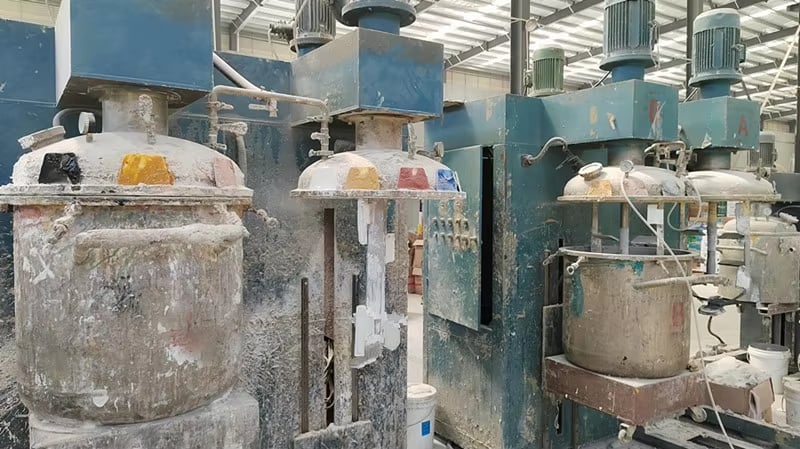 Mixing Lines
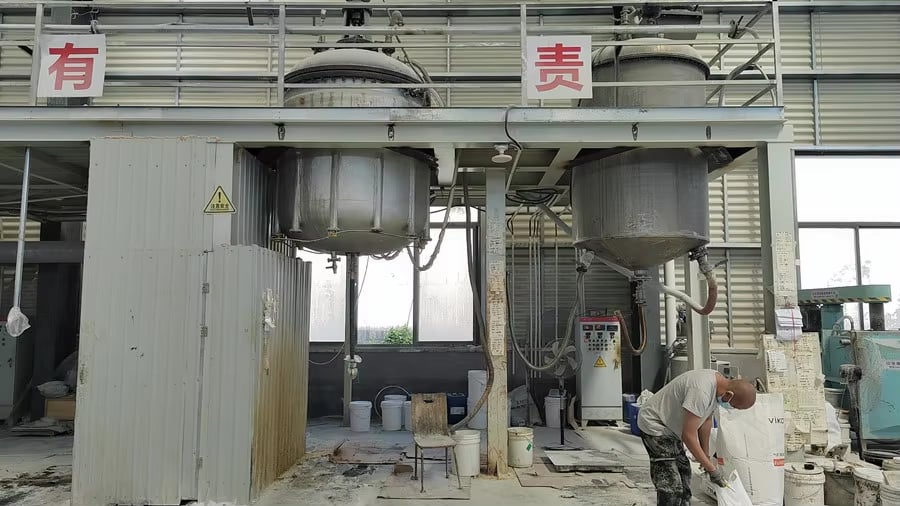 Reactor Kettles
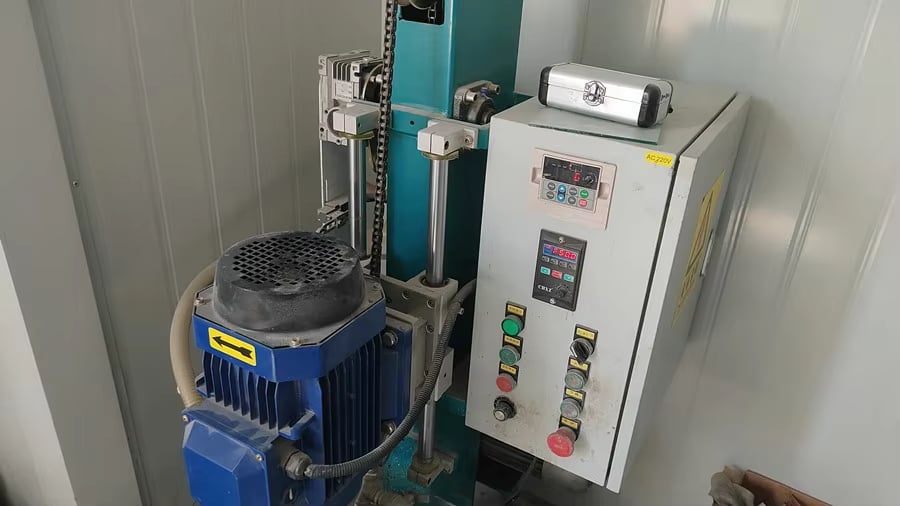 Dispersing Equipment
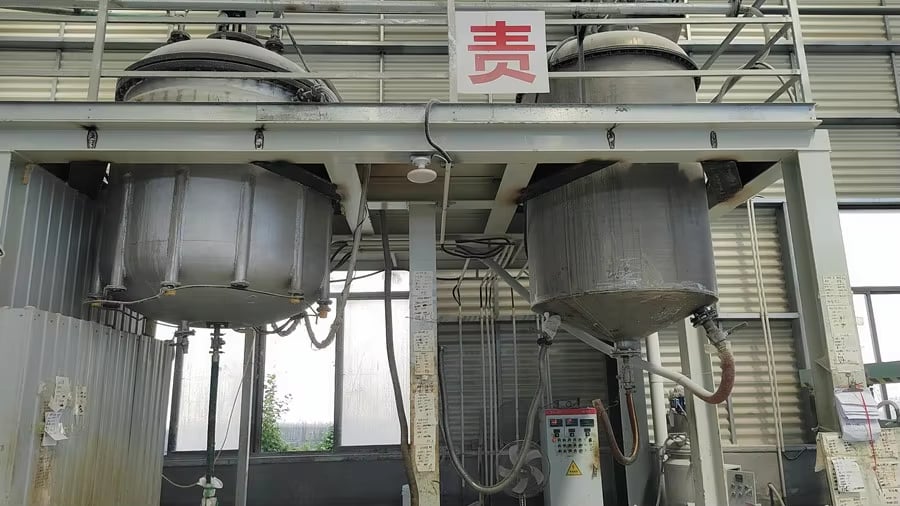 Mixing & Control
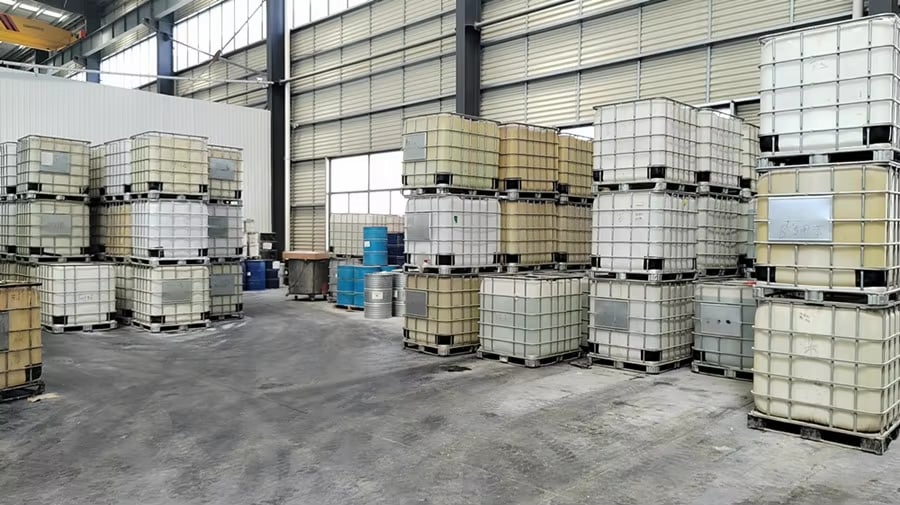 Raw-Material Store
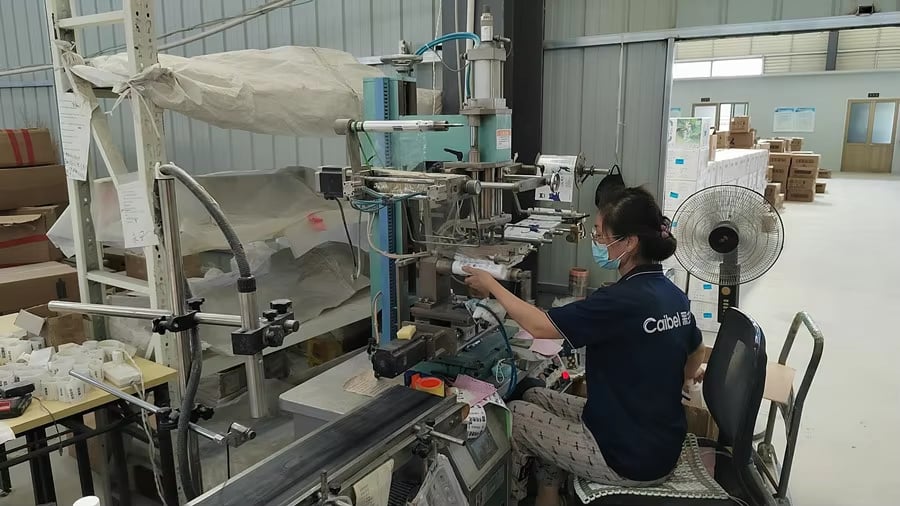 Labelling
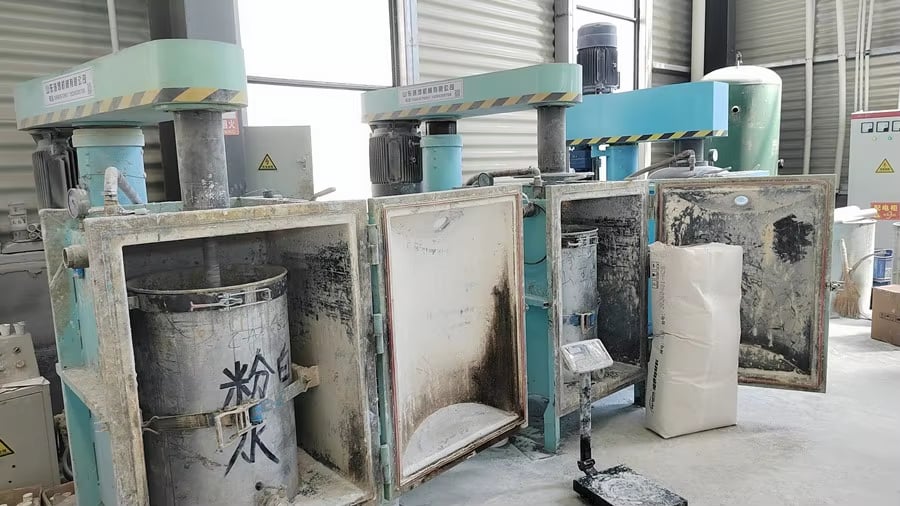 Vacuum Mixing
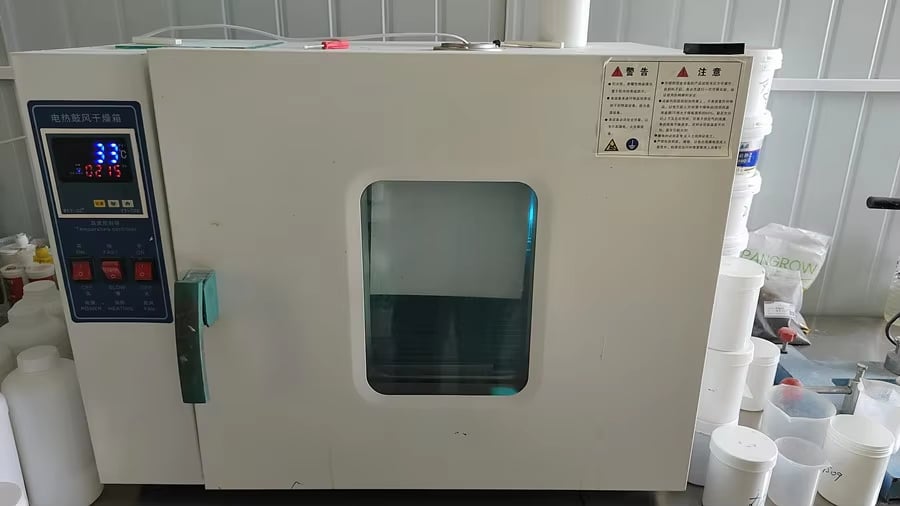 QC Drying Oven
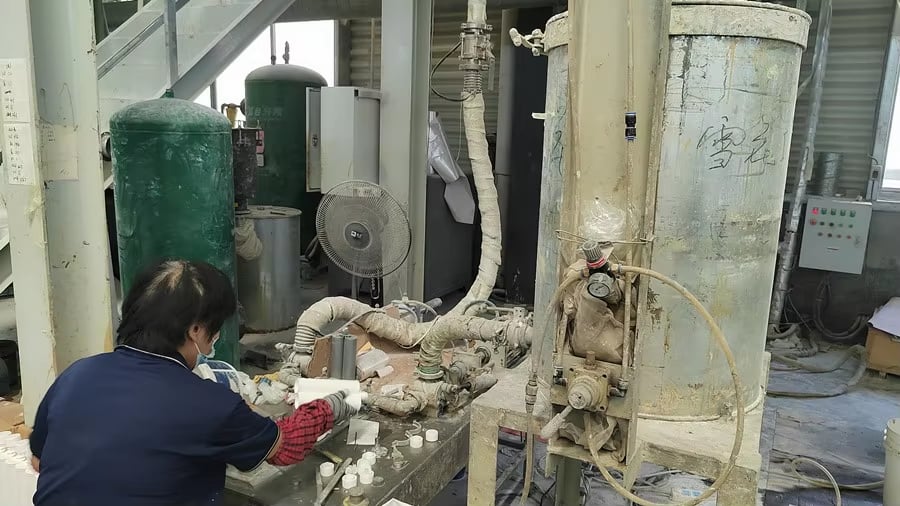 Filling & Capping


Questions about production, certificates or MOQ?
Ask Our TeamThis product line is verified by third-party laboratories. The marks shown above are the ones we publish as images; the documents behind them — certificate copies, batch-specific test reports, the CE Declaration of Conformity — are issued on request. A scanned badge proves nothing about your slab; the report behind it does.
Get a Free Quote
Send the floor area, substrate condition and what the room has to take. We reply with the system build-up, coverage estimate and an FOB quotation — usually within 24 hours.