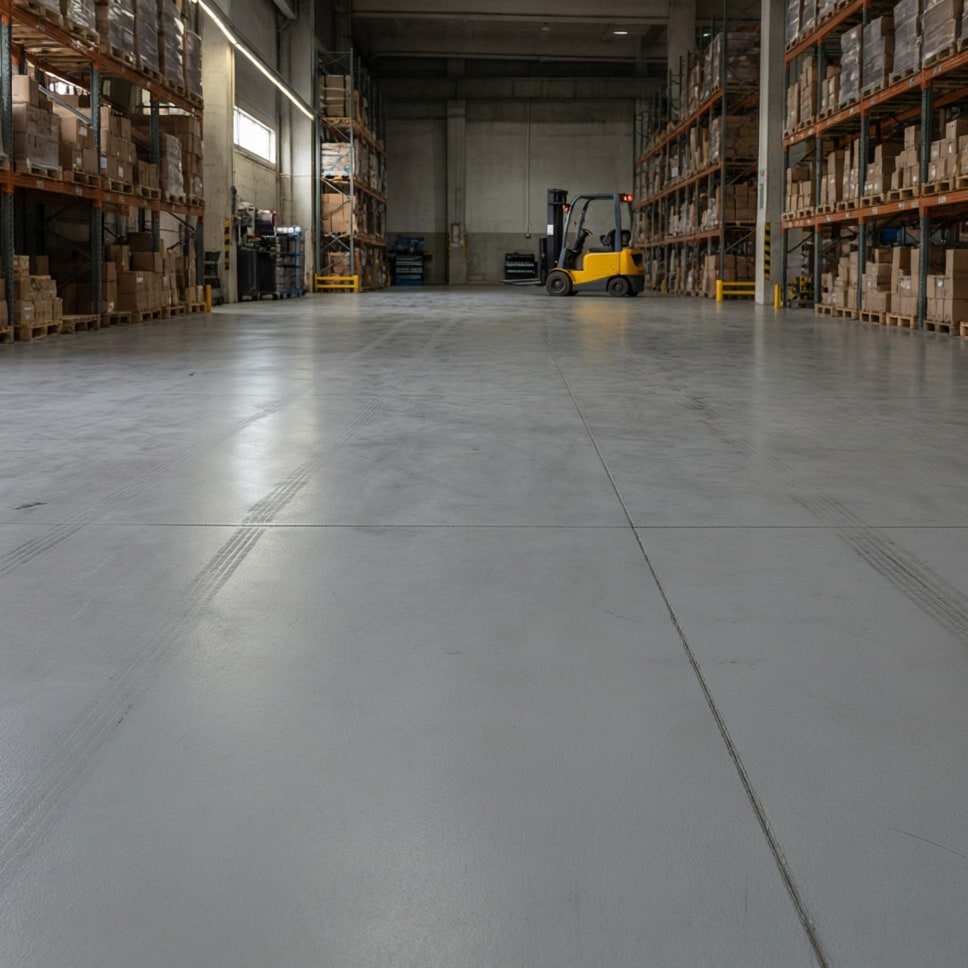
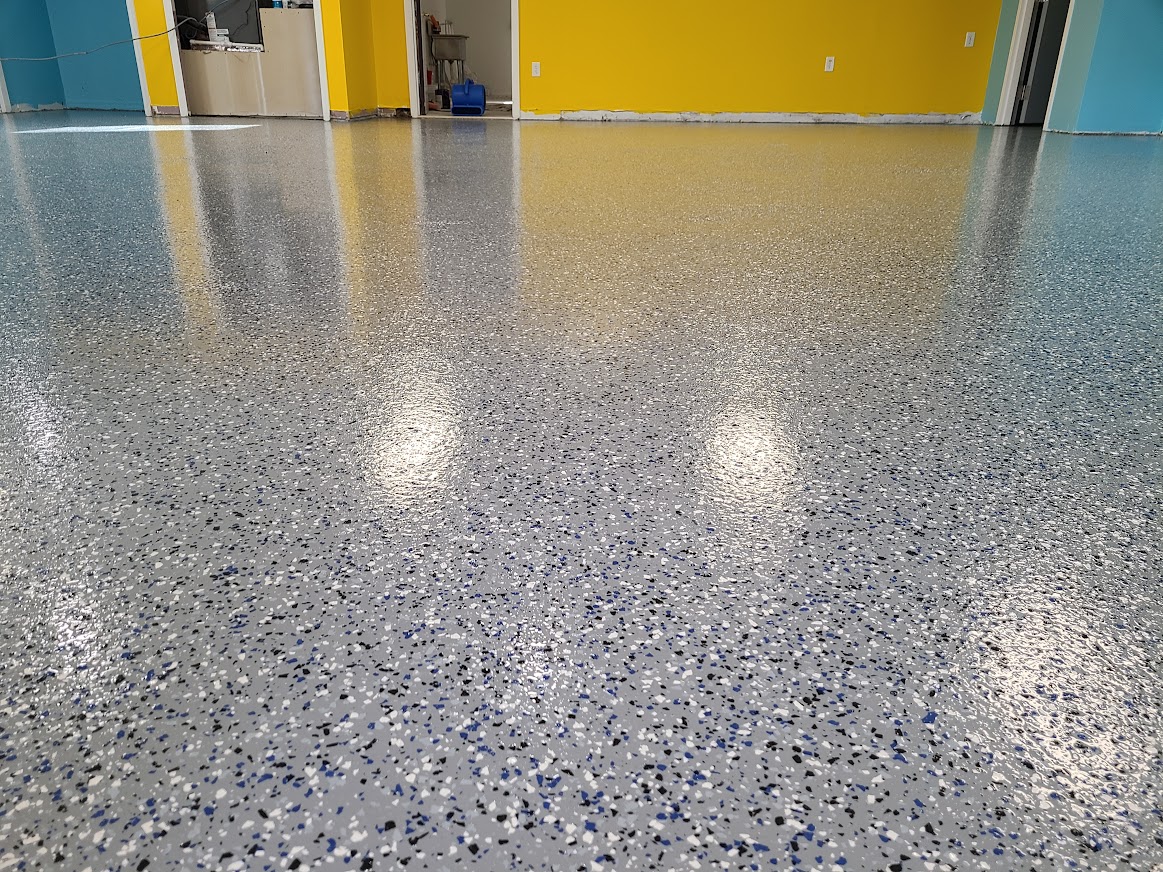
Multi-storey ramp lanes
Braking and accelerating zones; coarsest grade at the top of the slope and at the turn.
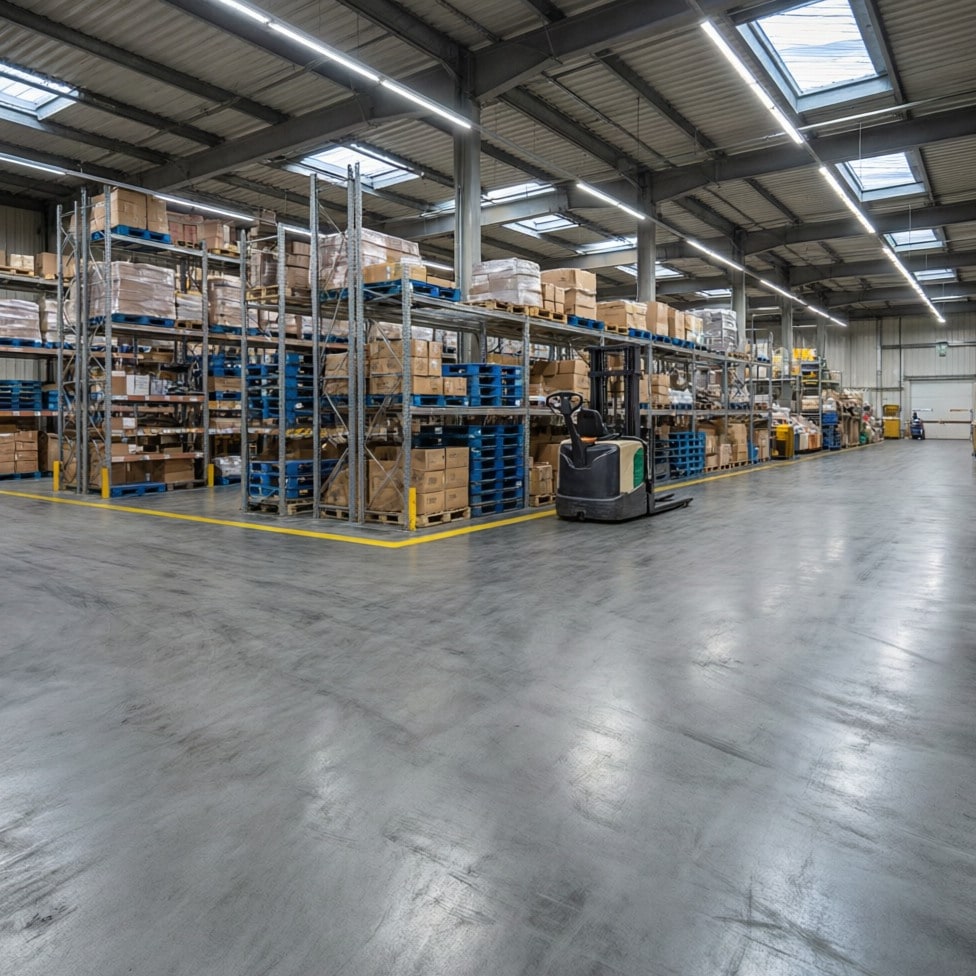
SKU: FW-ECS-PRK
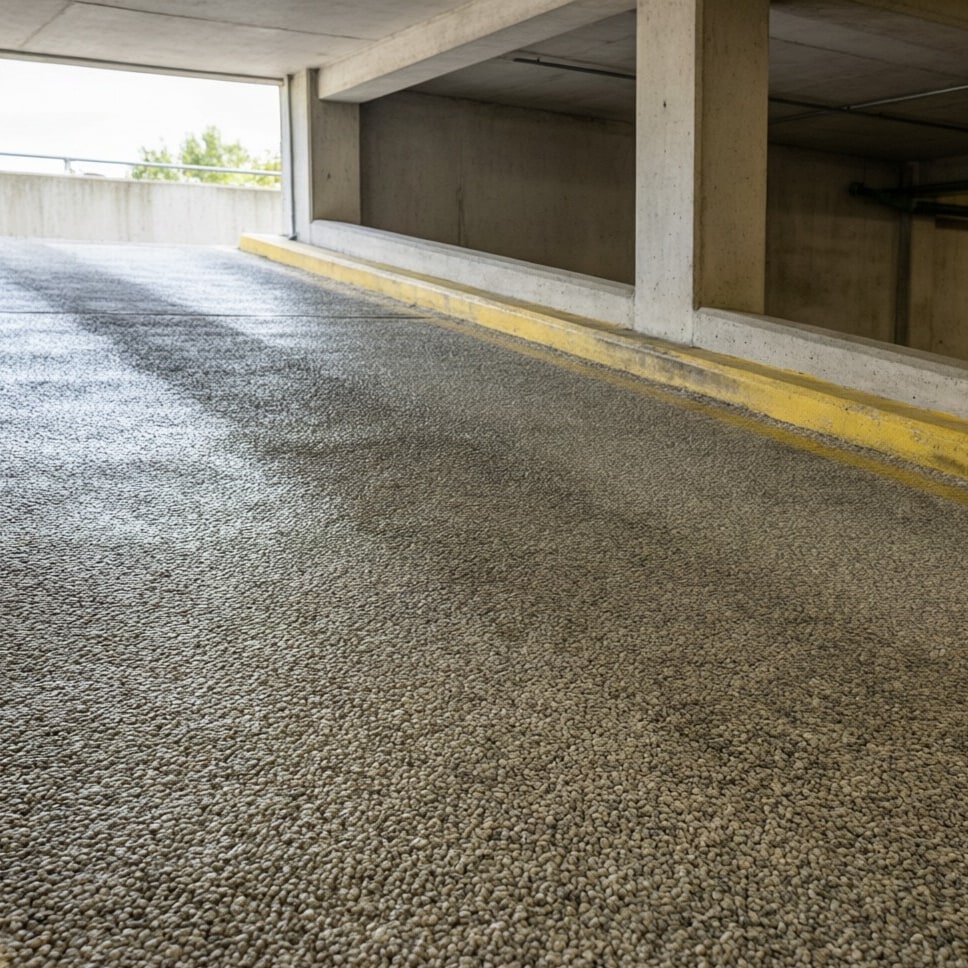
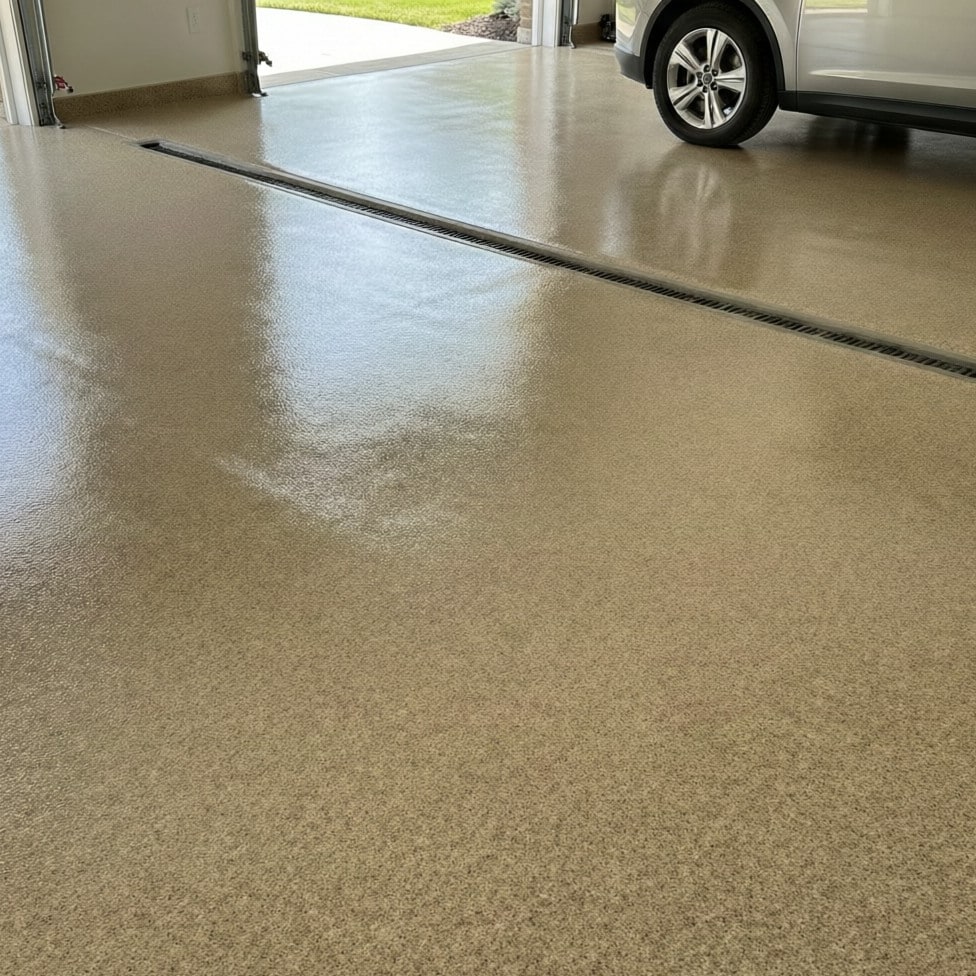
A coarse full-broadcast epoxy floor for car park decks and ramps: open aggregate texture for wet tyres and braking shear, movement joints detailed to move, and falls that drain.
Key Parameters
Standard pack: 25 kg/set (A: 20 kg + B: 5 kg). Reply within 24 hours. Custom RAL colours and OEM packaging available.
System line:Epoxy Colored Sand
A coarse full-broadcast epoxy floor for car park decks and ramps: open aggregate texture for wet tyres and braking shear, joint details that move, and falls that drain — the three things that actually decide whether a ramp floor lasts.
A coarse full-broadcast deck system: 5 mm built at 6 kg/m², open aggregate texture, mixed A:B = 2:1 out of a 25 kg set. It holds >85 Shore D and 78 MPa compressive with 3.5 MPa adhesion, keeps a Taber loss of ≤0.02 g (CS-17, 1000 cycles). 30 minutes of pot life at 20 °C, walk-on at about 10 hours, and full cure at 7 days before traffic is released onto gradients — the tyre window in between is on the Technical Specs tab.
Traffic arrives on a gradient, so a ramp takes continuous braking shear — wet, salty and often in direct sun. A smooth gloss film that behaves perfectly indoors will polish to a skate in six months here. The specification therefore starts with coarse open texture, then the two details that actually decide the life of a deck: movement joints that are allowed to move, and falls that carry water to the drain instead of letting it pond. Everything else on this page is downstream of those two.
Water is the failure agent on a deck rather than the load. A ponded area keeps a tyre in contact with a wet film instead of with aggregate, and in freeze-thaw climates it is the joint edge that spalls first. So we ask for the drainage layout before we ask for the colour.
No slip classification. This build has not been ramp-tested, so we describe the texture and the duty instead of quoting a number we cannot produce a report for — and we would rather be the supplier that says so than one that prints a rating for a surface nobody measured. Texture is specified by where the water comes in and how steep the lane is; a walkway that stays damp needs a finer profile than a braking ramp, and both are set with the grain size rather than with a label.
An interior racking aisle with wheel loads is a different problem from an exterior deck and is specified as a build-up rather than for wet grip — see our warehouse and forklift system. And a decorative interior floor that needs to read as a finish, not as traction, belongs on a coloured-sand or flake build. Send the falls drawing, the joint layout and the exposure, and we will tell you which of those you are specifying.
A car park ramp is a harder job than a garage floor for one reason: the traffic is arriving on a gradient. Tyres do not just roll and scrub, they brake, so the surface takes a continuous shear force along the slope, and it takes it wet, salty and in direct sun. A smooth gloss epoxy that behaves perfectly in a basement will polish to a skate in six months on a ramp.
So the specification starts with texture, not colour. A coarse full-broadcast — aggregate saturated into the binder and sealed, so the grains stand proud and stay proud — gives the wet-tyre grip and survives the braking shear that would wear a thin texture away. Then the two details that kill ramp floors: movement joints, because an exposed deck moves seasonally by more than most people expect and a rigid resin bridged across it will crack on the line; and falls, because water that ponds on a deck both makes it slippery and, in a frost, spalls the edges.
Two honest boundaries. An open deck in direct sun needs a UV-stable topcoat or the resin will amber — cosmetic, but visible, and we will tell you which topcoat we are quoting. And if the project has to reopen to traffic overnight, the industry answer is a methyl methacrylate system; we do not manufacture MMA, and our cure windows are the ones listed below.
| Prep | Shot-blast or grindOpen the slab, remove laitance, old sealers and any curing membrane; ramp surfaces are often tined and need levelling first |
|---|---|
| Repair | As neededSpalled joint edges rebuilt; cracks routed and filled; honeycombing at the kerb line made good |
| Primer | 0.3–0.5 kg/m²High-solids epoxy primer into the profiled slab; damp or poorly drained decks are tested first |
| Body | 4–6 mm full broadcast≈ 5.5–6.5 kg/m² binder with coarse aggregate saturated in; grade the aggregate coarser as the gradient steepens |
| Topcoat | 0.15–0.25 kg/m²Wear coat with a light aggregate refresher; UV-stable grade on open decks |
| Joints | Detailed separatelyMovement joints kept flexible with a sealant and aggregate transition; sawn joints carried through and filled |
Custom RAL matching available — we ship a physical sample card before production.
| Brand | Friway |
|---|---|
| SKU | FW-ECS-PRK |
| Category | Epoxy Colored Sand |
| Finish | Coarse textured |
| Coverage | 6 kg/m² |
| Thickness | 5 mm |
| Mix Ratio | A:B = 2:1 |
| Pot Life | 30 min |
| Walk-on Time | 10 h |
| Full Cure | 168 h |
| Hardness | >85 Shore D |
| Adhesion | 3.5 MPa |
| Compressive Strength | 78 MPa |
| Abrasion Resistance | ≤0.02 g (Taber CS-17, 1000 cycles) |
| Package | 25 kg/set (A: 20 kg + B: 5 kg) |
| Warranty | 3 years |
| Substrate | ≥ C25 concrete, ≥ 28 daysThe deck structure has to be sound and correctly falls'd — a coating will not create either |
|---|---|
| Slab moisture | ≤ 4 % CMDecks above occupied space are tested; a leaking deck is a repair job first |
| Cross-fall | ≈ 1:80 toward drainsStanding water is both a slip hazard and a frost hazard |
| Gradient guidance | Coarse texture from ≈ 1:10Steeper ramps and braking zones get the coarse grade and a full broadcast, not a sprinkle |
| Ambient | 10–30 °C, RH ≤ 80 %Slab 3 °C above dew point — on an open deck, morning condensation stops application as often as rain does |
| Walk-on | 8–12 h at 20 °C |
| Light vehicles | 48–72 hOnly once the topcoat has hardened; early tyre pickup leaves permanent marks |
| Full service | 7 daysIncluding power-wash and de-icing exposure |
| Compressive strength | 75–80 MPaBroadcast section at 7 d / 20 °C |
|---|---|
| Bond | ≥ 3.5 MPaConcrete failure before bond failure on a profiled deck |
| Hardness | > 85 Shore DResists indentation at the kerb line and in queueing zones |
| Abrasion | ≤ 0.02 gTaber CS-17, 1000 cycles |
| Wet grip | Coarse open textureSpecified for wet-tyre traffic; a formal ramp test on your build is available on request |
| De-icing salt | Good resistanceThe coating tolerates salt; the danger is salt water entering a cracked or unsealed joint |
| Hot tyres | Full-broadcast sectionA thin gloss film on a sun-heated deck is where tyre pickup happens |
| Not suitable for | Steel decks, MMA overnight reopensSteel movement needs a different system; we do not make MMA |
Figures are typical values measured in our laboratory. Substrate, climate and workmanship affect the result — we confirm the final specification in writing before your order.
We release documents as editable originals on request (batch-specific data is not in a generic PDF). One click sends your request with this product attached.
Two-component sets palletised for export, shipped fromDongguan, Guangdong, China by Dongguan Friway Hydraulic Control Technology Co., Ltd..
| Set composition | 25 kg/set (A: 20 kg + B: 5 kg) |
|---|---|
| Net weight / set | 25 kg |
| Pallet configuration | 20 sets (500 kg net) per 1200 × 1000 mm pallet, stretch-wrapped with corner boards |
| 20 ft container | ≈ 400 sets |
| 40 ft HQ | ≈ 800 sets |
| Shelf life | 12 months from fill date |
| Storage | Dry, ventilated store, 5–35 °C, keep away from direct sunlight; store Part A and Part B separately and reseal after use. |
Counted from confirmed deposit and approved colour. FOBShenzhen or Guangzhou; CIF and DDP quoted on request.
| Order quantity | Lead time | Notes |
|---|---|---|
| Sample (≤ 2 sets) | 2–4 days | courier freight collect via DHL / UPS / FedEx, shipping at your cost; 5–7 days door to door |
| 1–49 sets | 5–7 days | Stock colours first; standard export packing included |
| 50–199 sets | 10–12 days | Includes batch mixing and in-house QC record per batch |
| 200–999 sets | 15–20 days | Production slot reserved after 30% deposit |
| FCL / 1000+ sets | 22–28 days | Confirmed against the shipping schedule; FOB Shenzhen or Guangzhou |
RAL / Pantone reference or a physical sample; we send a wet film for approval before batch production.
Your logo and language on the pails and carton; artwork in AI/PDF. Blank labelling available below this MOQ.
Pail size, carton printing, palletising and shipping marks per your export requirement.
Formulation adjustment (gloss, cure speed, aggregate, conductivity range) with TDS and CoA issued under your brand.
Company-level documents we can issue for this system. We supply certificate copies and batch test reports on request rather than publishing them as images.
Survey the deck, not just the areaWeek −2
Gradient, falls, joint layout, drainage inlet positions, whether the deck is exposed or covered, and what is underneath it. A ramp over a shop ceiling is a different conversation from a ramp onto a ground slab.
Water-test the fallsBefore quoting
Flood or hose the deck and watch where it stands. Water that ponds will be ponding on the finished floor too, and no coating fixes a bad fall.
Shot-blast and make goodDay 1–2
Remove laitance, sealers and curing membrane; rebuild spalled joint edges and kerb lines where tyres scrape.
Detail the joints firstDay 2
Movement joints sawn clean and filled with a flexible detail; sawn and construction joints carried through the resin line. Doing this after the body coat is why joints fail on ramps.
Prime and full-broadcastDay 3, then 12–16 h
Primer at 0.3–0.5 kg/m², binder gauge-spread, then coarse aggregate broadcast to refusal and left until the resin cures under it. Excess is swept back.
Seal, mark, and open by zoneDay 4, then 7 d
Topcoat with a light aggregate refresher, lane and edge lines formed in the same coat. Zones are released as they cure; vehicles at 48–72 h, full service at 7 days.
Need the full method statement for your site? Request it with the form below — we review your slab data before your crew starts.
Braking and accelerating zones; coarsest grade at the top of the slope and at the turn.
No UV exposure, so the specification is about wet grip, tyre marks and joint durability.
Movement joints and drainage dominate the specification more than the resin itself.
Where tyres scrub against the upstand; joint edges are rebuilt and the aggregate grade is taken coarser.
Standing tyres, dripped oil and brake dust — a full-broadcast section cleans up without polishing through.
Yes, with three conditions: the deck has working falls so water does not pond, the movement joints are detailed to move rather than bridged, and a UV-stable topcoat is specified so ambering is not treated as a defect. An external deck with no falls or no joint movement allowance is not an epoxy job, and we will say so.
Because a sealed gloss film gives a wet tyre almost nothing to bite. On a gradient the tyre is also braking, so the demand is higher than on a flat floor. The answer is a coarse full-broadcast texture with the aggregate standing proud of the resin, and it has to be maintained — a texture that has been polished smooth by grit does not work either.
We texture by gradient rather than giving a single number: from roughly a 1:10 slope up, we move to the coarse broadcast grade, and braking zones and turns get it regardless. Very steep or heavily loaded industrial traffic ramps are designed individually — send us the gradient and the traffic and we will specify it.
The cured resin tolerates salt solution well. What fails in practice is water carrying salt into an unsealed or cracked joint, then freezing behind the coating and breaking the slab edge out. So the specification work goes into joints and drainage, and the maintenance work is annual joint inspection.
Walk-on in 8–12 hours, light vehicles at 48–72 hours, and full service including washing and salt exposure at 7 days at 20 °C. Colder weather moves all of these dates out, and on an exposed ramp that is usually the difference between a good and a bad surface.
On a sun-heated deck a thin gloss film is exactly where hot-tyre pickup happens. A full-broadcast section with the aggregate cured into the binder resists it far better, which is one more reason we do not put a 2 mm film on a ramp.
Not with our systems. An overnight reopen calls for a methyl methacrylate (MMA) system, and we do not manufacture MMA. We would rather lose the order than sell you an epoxy floor that gets driven on at six hours.
Mid to dark greys hide tyre marks and brake dust, which is what an exposed deck collects. Lighter tones lift the perceived safety of a basement level but show traffic lines sooner. Edge and lane marking is built into the topcoat so it wears with the floor rather than peeling off it.
Your project has conditions we cannot see from here? Send the slab report and drawings — our engineers answer with a written specification.
Dongguan Friway Hydraulic Control Technology Co., Ltd.
Every batch of Parking Deck & Ramp Anti-Slip Epoxy Floor is produced in our own facility by a team that integrates R&D, production, sales and technical service. Advanced equipment, batch-level lab testing and a complete quality system mean consistent quality — from the first sample to the last pallet.
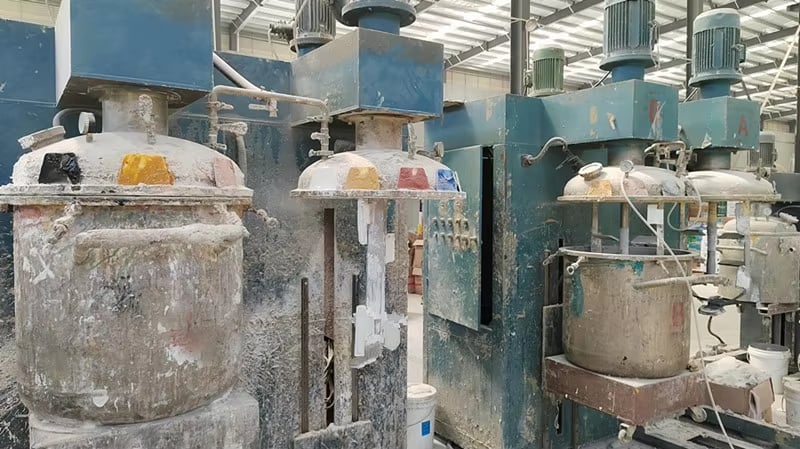 Mixing Lines
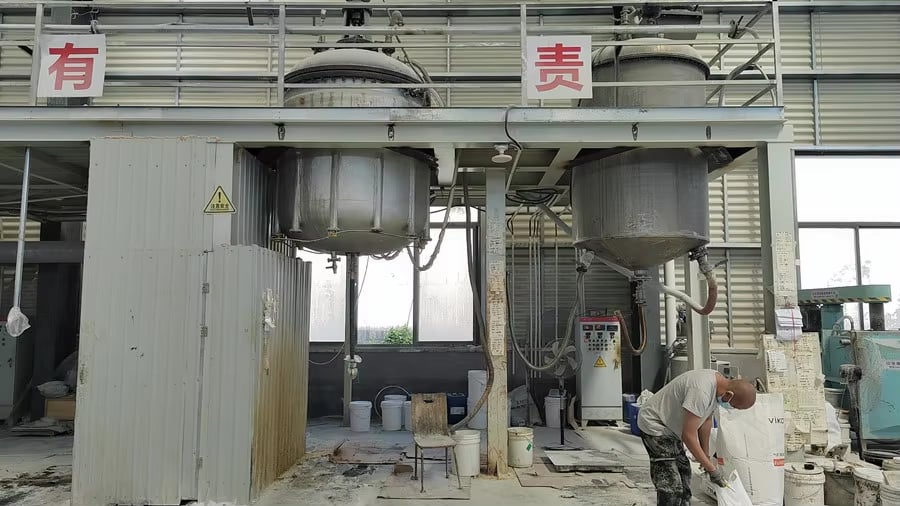 Reactor Kettles
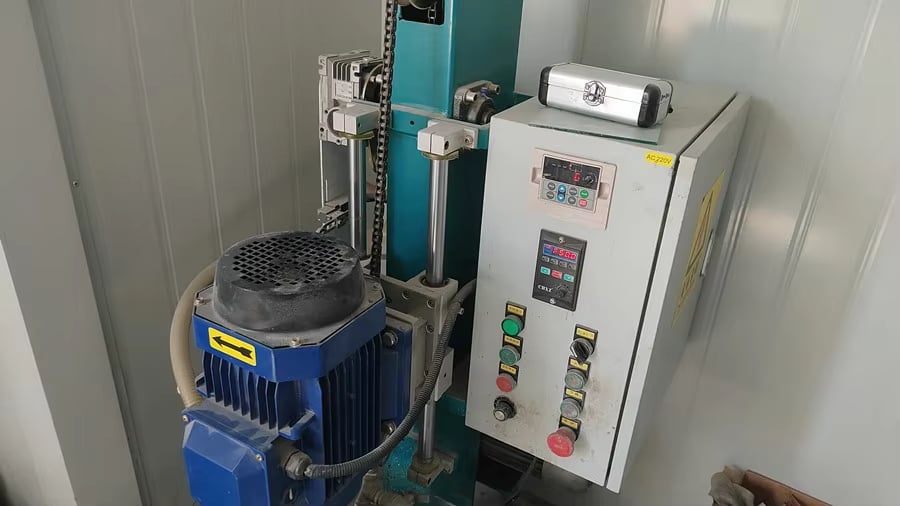 Dispersing Equipment
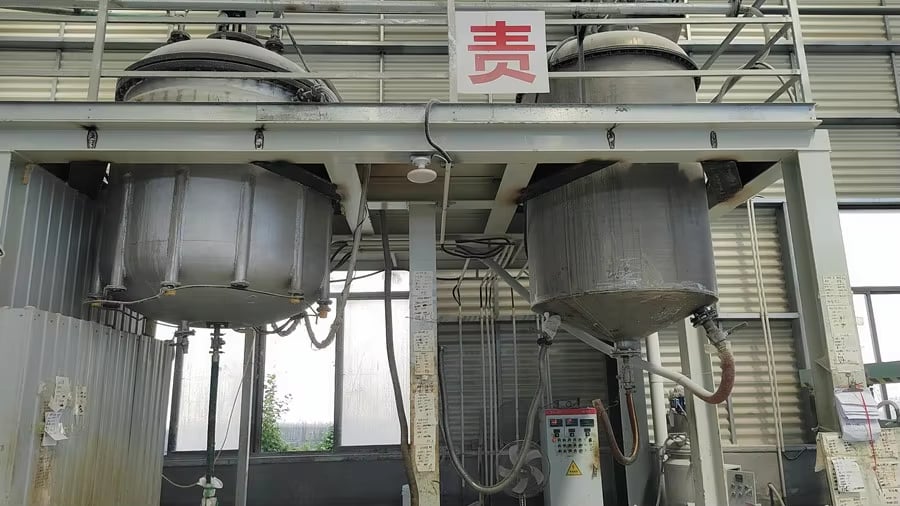 Mixing & Control
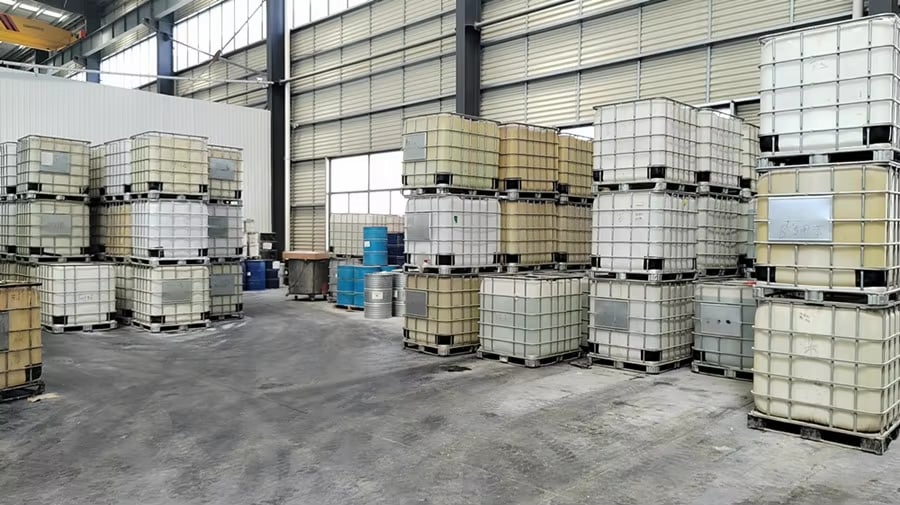 Raw-Material Store
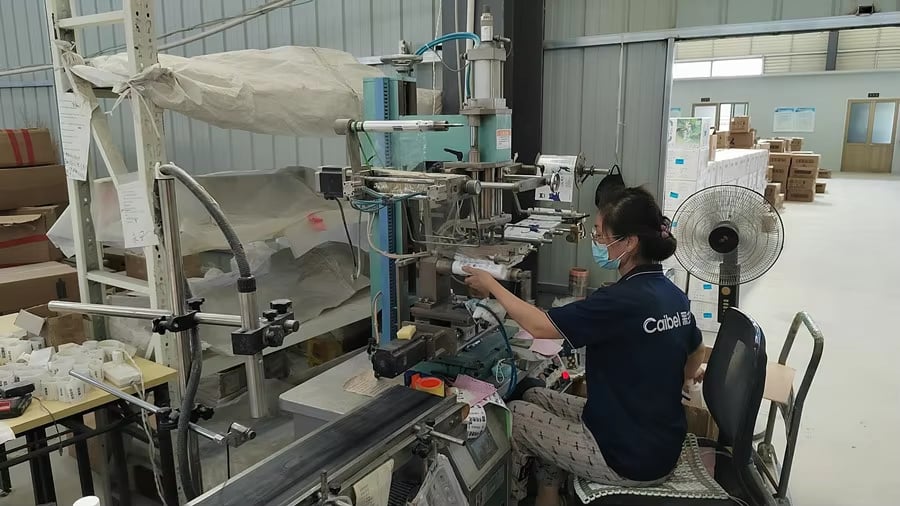 Labelling
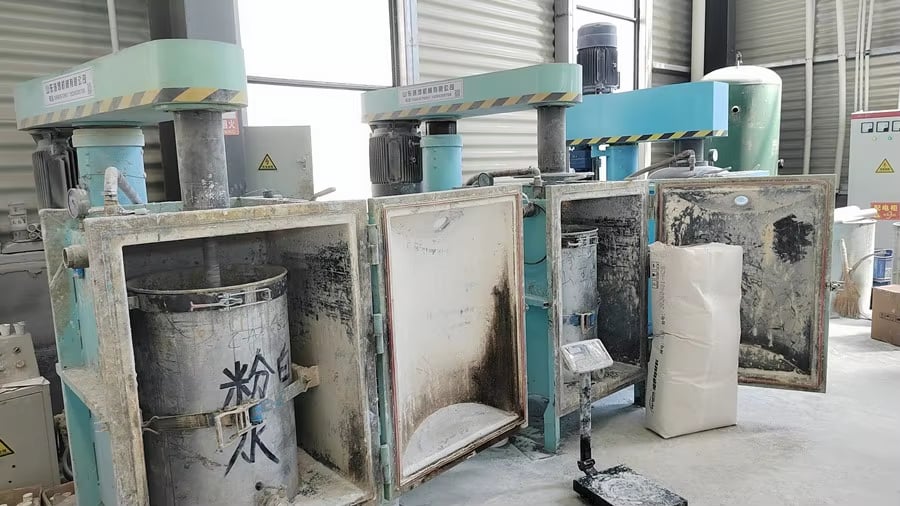 Vacuum Mixing
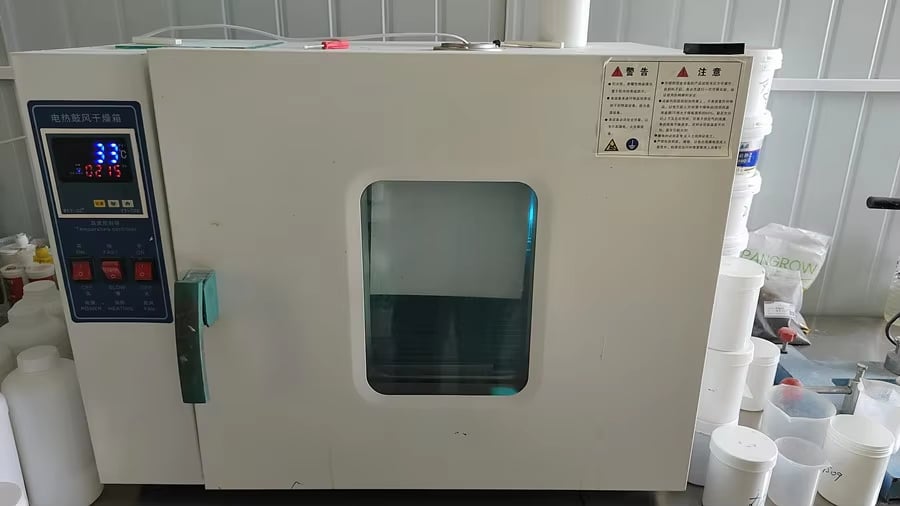 QC Drying Oven
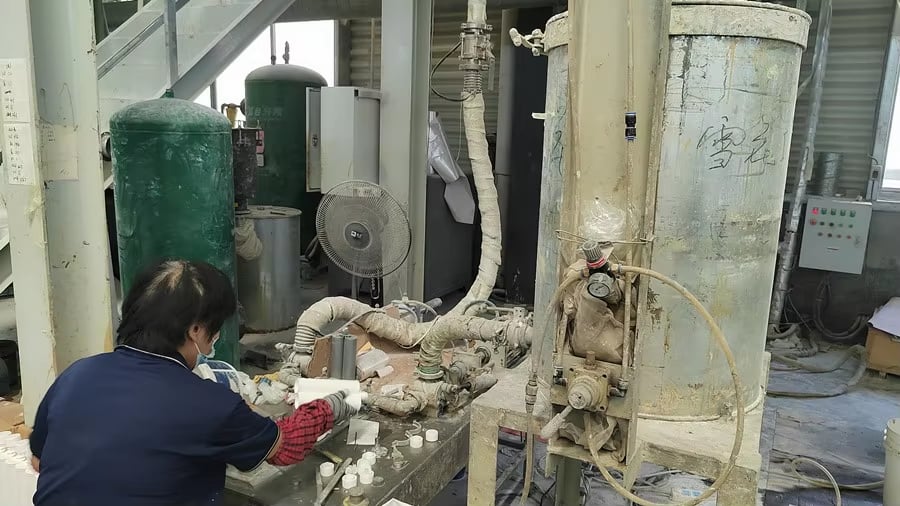 Filling & Capping


Questions about production, certificates or MOQ?
Ask Our TeamThis product line is verified by third-party laboratories. The marks shown above are the ones we publish as images; the documents behind them — certificate copies, batch-specific test reports, the CE Declaration of Conformity — are issued on request. A scanned badge proves nothing about your slab; the report behind it does.
Get a Free Quote
Send the floor area, substrate condition and what the room has to take. We reply with the system build-up, coverage estimate and an FOB quotation — usually within 24 hours.