Residential garages, single and double
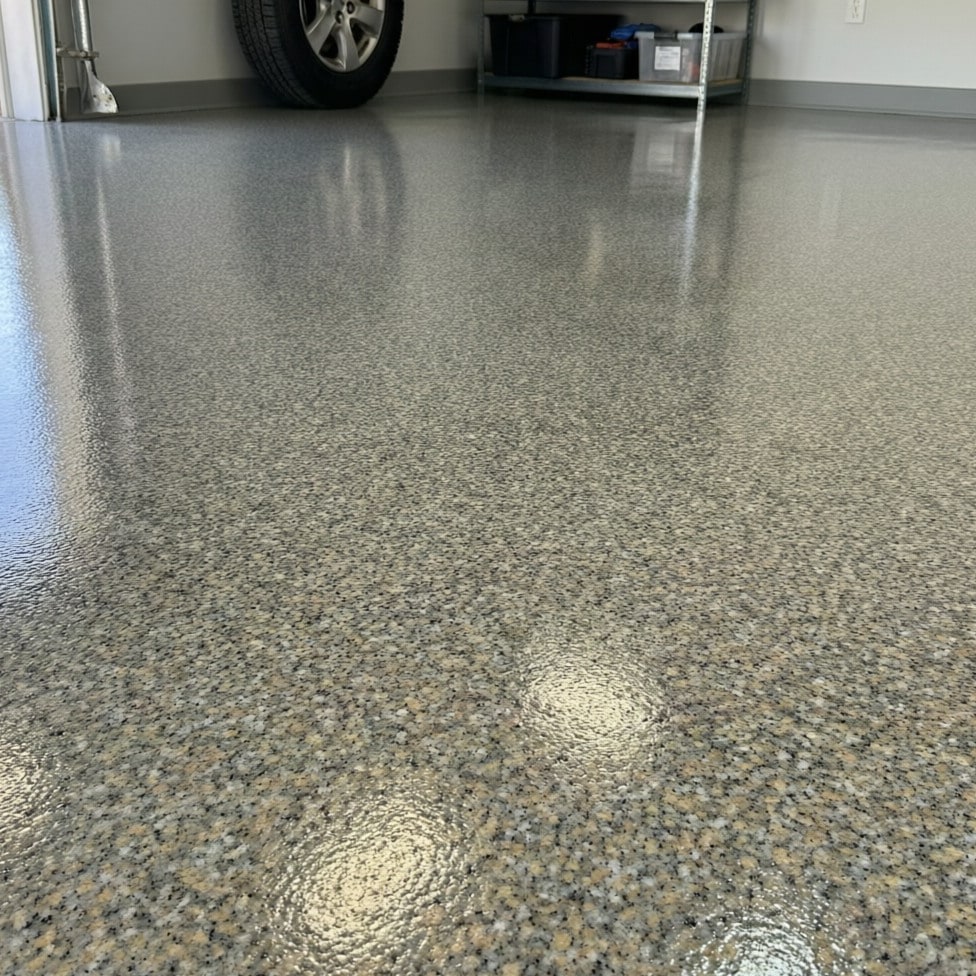
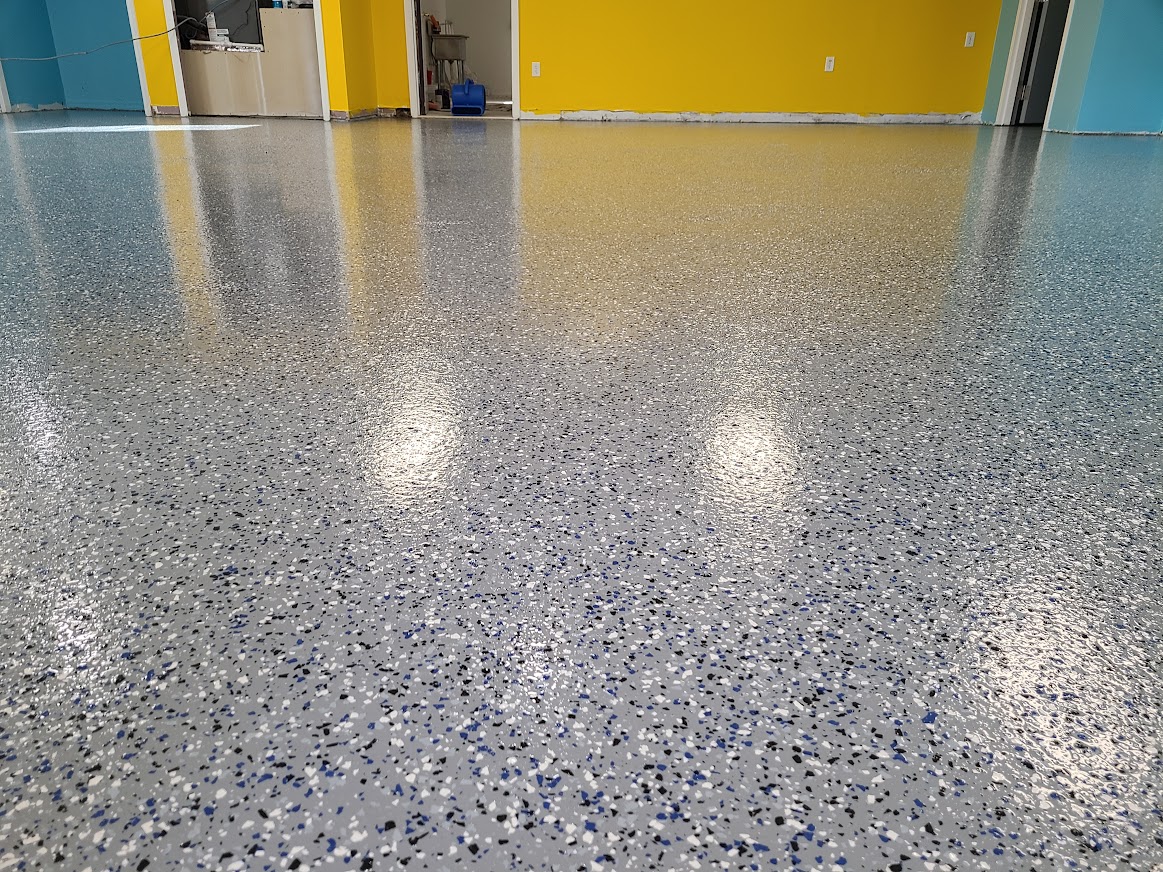
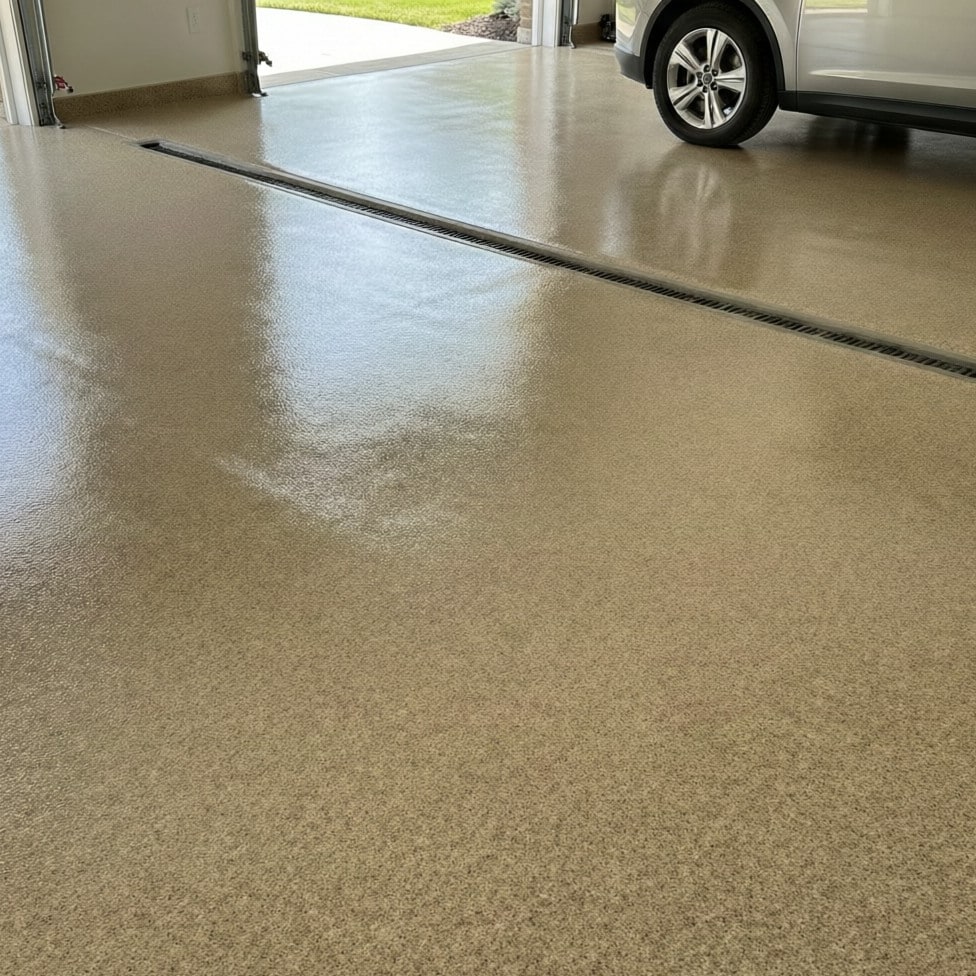
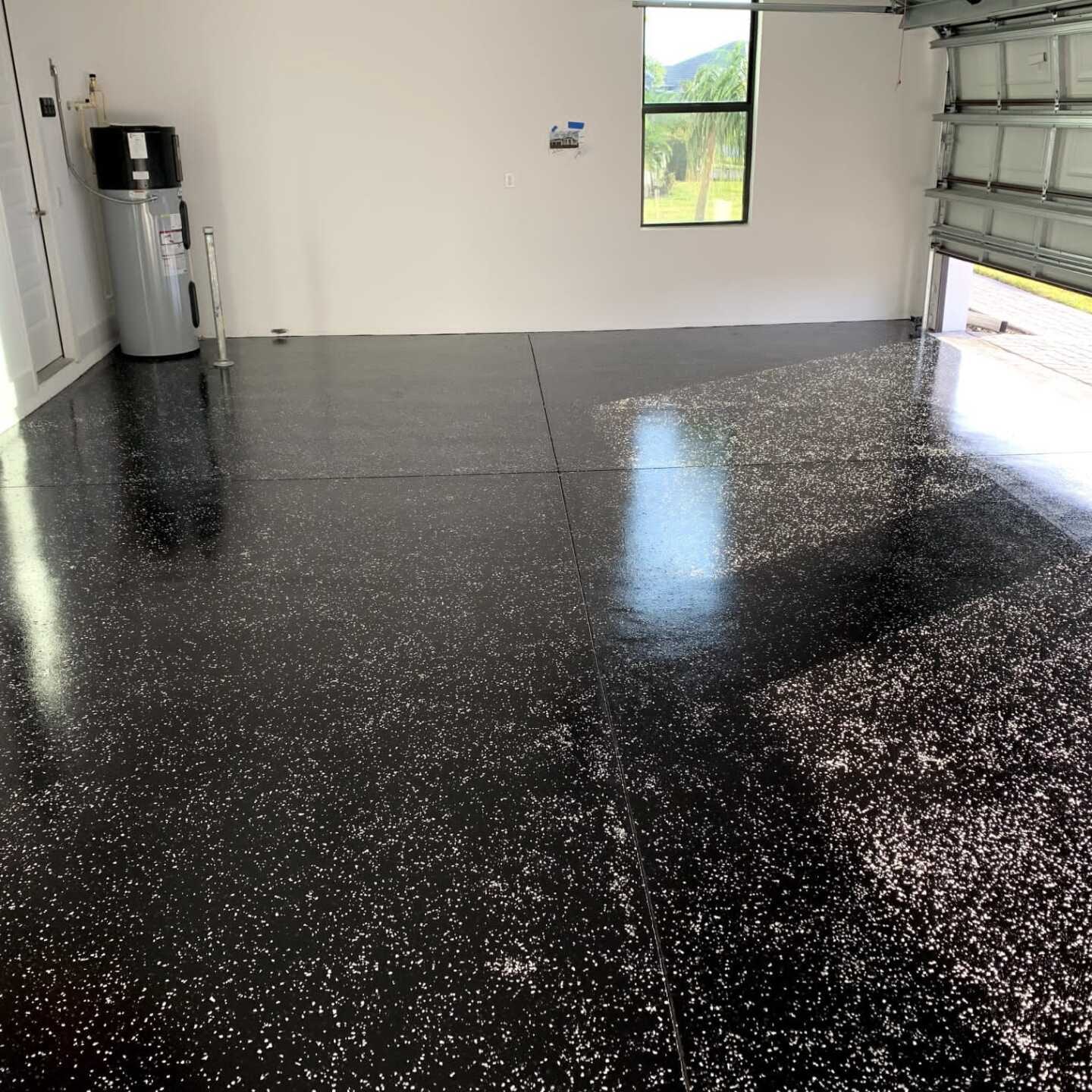
The standard build: full broadcast, dense topcoat, texture along the door line where snow and water come in.
SKU: FW-ECS-GRG
A 3–4 mm full-broadcast quartz garage floor system: hot-tyre and oil resistant, textured for damp conditions, supplied in area-sized sets for contractors and distributors.
Key Parameters
Standard pack: 25 kg/set. Reply within 24 hours.
System line:Epoxy Colored Sand > Flake Epoxy Colored Sand
A 3–4 mm full-broadcast quartz garage floor that survives hot tyres, oil and winter salt — textured enough to stay safe when the door is open and the slab is damp, supplied in area-sized sets for contractors and distributors.
A full-broadcast quartz garage system: 4 mm built at 4.5 kg/m², semi-gloss, mixed A:B = 2:1 by weight. It cures to >87 Shore D at the seven-day mark, with 78 MPa compressive, 50 MPa tensile and 3.8 MPa adhesion, a Taber loss of ≤0.02 g (CS-17, 1000 cycles) and 8 g/L VOC. 25 minutes of pot life at 20 °C, walk-on at about 12 hours, vehicle traffic from 24 hours, and 7 days at 20 °C before a hot tyre stands on it.
25 kg sets (A:B = 2:1 by weight) with a consumption table giving kg/m² per layer: primer 0.3–0.4, coloured quartz broadcast 3.5–4, topcoat 0.3–0.4. One set covers about 5.5 m² at the 4 mm build — send the floor plan and we size the order, including the door line where extra texture goes. That last part is not a detail: the threshold is where a garage floor is walked on with wet shoes and driven over with turned wheels, and it is the first place a uniform build gets polished.
The cure schedule is published: walk-on 12 h, vehicle traffic 24 h at 20 °C, and seven days at 20 °C before a hot tyre stands on it. We do not publish a slip classification for this build, because it has not been ramp-tested. A texture that reads as "grippy" in a photo and a measured ramp result are two different claims, and we only make the first one.
An unpainted basement slab with a moisture reading you do not trust is not a garage-floor problem — it is a substrate problem, and our basement floor coating is the one specified to go over a below-grade slab. And this build carries no weather-resistance claim: a ramp that sees rain and de-icing salt is a deck specification, not a garage one.
A garage floor does not fail under the weight of the car. It fails in four specific places: a hot tyre on a topcoat that was never fully cured, which takes the film off with it when the car moves; water and de-icing salt carried in past the door and left against the coating; slab moisture, because a garage slab is normally poured on grade with no damp-proof membrane and the open door dries the surface enough to make it look fine; and soft tyre compound plus grit, which leaves black scrub marks that a gloss seal cannot hide.
So the system is built around those four. A full broadcast of coloured quartz into a high-solids epoxy gives a mechanical key the tyre cannot get under, and a thickness that takes impact from dropped tools rather than transmitting it to the concrete. The topcoat is a dense, non-porous film that resists oil, fuel and salt solution for the hours they are actually in contact with it. And the cure schedule is published, because hot-tyre performance is mostly a question of whether the resin was allowed to finish crosslinking before somebody parked on it.
We are aware that “hot tyre resistant” is the phrase every supplier in this category uses, and we are equally aware that almost none of them publish a test method behind it. We will not invent a standard number to win that argument. What we publish instead is the mechanism, the build-up, the drive-on times at stated temperatures, and the seven-day cure before a hot vehicle stands on it — which is the part a flooring contractor can actually control and a distributor can actually enforce.
| Prep | Grind + degreaseDiamond-grind to CSP 2–4 and vacuum; oil spots degreased before grinding, not after |
|---|---|
| Repair | As neededStatic cracks routed and filled with epoxy mortar; expansion and perimeter joints stay joints |
| Primer | 0.3–0.4 kg/m²High-solids epoxy into the open profile; on a damp or questionable slab this is where a moisture-tolerant primer goes |
| Broadcast | ≈ 3.5–4 kg/m² coloured quartzFull saturation into the wet base — the layer that carries the tyre and the traffic |
| Lock | Trowel / floatBack-drag the broadcast to seat the aggregate and remove the loose |
| Topcoat | 0.3–0.4 kg/m²Dense chemical- and abrasion-resistant seal; fine aggregate added where the door lets water in |
| Brand | Friway |
|---|---|
| SKU | FW-ECS-GRG |
| Category | Epoxy Colored Sand > Flake Epoxy Colored Sand |
| Finish | Semi-gloss |
| Specification | 4mm heavy-duty garage epoxy colored sand system |
| Coverage | 4.5 kg/m² |
| Thickness | 4 mm |
| Mix Ratio | A:B = 2:1 |
| Pot Life | 25 min |
| Walk-on Time | 12 h |
| Full Cure | 168 h |
| Hardness | >87 Shore D |
| Adhesion | 3.8 MPa |
| Compressive Strength | 78 MPa |
| Tensile Strength | 50 MPa |
| Abrasion Resistance | ≤0.02 g (Taber CS-17, 1000 cycles) |
| VOC | 8 g/L |
| Package | 25 kg/set |
| Warranty | 5 years |
| Substrate | ≥ C25 concrete, ≥ 28 daysAnd no cure-and-seal, hardener or old coating left on it — that is the usual reason a garage floor lifts |
|---|---|
| Moisture | ≤ 4 % CM · MVER ≤ 4 lb / RH ≤ 75 %ASTM F1869 / F2170. An on-grade garage slab without a DPM is the normal case here, so measure it — an open door makes a wet slab look dry |
| Ambient | 10–30 °C, slab ≥ 3 °C above dew pointAn unheated garage in winter is a different schedule; tell us the climate |
| Mixing ratio | A:B = 2:1 by weightBy weight, not by volume — volume ratios drift with temperature |
| Pot life | 25–35 min at 20 °CA garage door line and a bay want to be finished inside one mix |
| Walk-on | 12 h at 20 °C |
| Drive-on | 24 h at 20 °C48 h at 10 °C. Light traffic only until the full cure below |
| Full cure / hot-tyre duty | 7 days at 20 °CThis is the number that decides whether a parked hot tyre lifts the film. Do not park before it |
| Shelf life | 12 monthsOriginal sealed containers, dry store 5–30 °C |
| Compressive strength | 78 MPaAt 7 d / 20 °C, on the full build |
|---|---|
| Bond | ≥ 3.8 MPaConcrete failure before bond failure on a ground, profiled slab |
| Hardness | > 87 Shore DMeasured at 7-day cure |
| Abrasion | ≤ 0.02 gTaber CS-17 wheel, 1000 cycles |
| Oil, fuel, brake fluid | Resists spillage that is wiped upGlycol brake fluid and standing diesel are the two that mark; wipe within hours |
| De-icing salt & salt solution | Resists; rinse the door lineBrine left against the topcoat through a winter is what dulls it, not the salt itself |
| Hot-tyre pickup | Built for it — see the cure scheduleFull broadcast plus a fully crosslinked topcoat. We do not publish a third-party standard number for it |
| Slip in wet conditions | Textured by locationFull-broadcast profile; we will arrange a ramp test on your build if your project needs a classification |
Figures are typical values measured in our laboratory. Substrate, climate and workmanship affect the result — we confirm the final specification in writing before your order.
We release documents as editable originals on request (batch-specific data is not in a generic PDF). One click sends your request with this product attached.
Two-component sets palletised for export, shipped fromDongguan, Guangdong, China by Dongguan Friway Hydraulic Control Technology Co., Ltd..
| Set composition | 25 kg/set |
|---|---|
| Net weight / set | 25 kg |
| Pallet configuration | 20 sets (500 kg net) per 1200 × 1000 mm pallet, stretch-wrapped with corner boards |
| 20 ft container | ≈ 400 sets |
| 40 ft HQ | ≈ 800 sets |
| Shelf life | 12 months from fill date |
| Storage | Dry, ventilated store, 5–35 °C, keep away from direct sunlight; store Part A and Part B separately and reseal after use. |
Counted from confirmed deposit and approved colour. FOBShenzhen or Guangzhou; CIF and DDP quoted on request.
| Order quantity | Lead time | Notes |
|---|---|---|
| Sample (≤ 2 sets) | 2–4 days | courier freight collect via DHL / UPS / FedEx, shipping at your cost; 5–7 days door to door |
| 1–49 sets | 5–7 days | Stock colours first; standard export packing included |
| 50–199 sets | 10–12 days | Includes batch mixing and in-house QC record per batch |
| 200–999 sets | 15–20 days | Production slot reserved after 30% deposit |
| FCL / 1000+ sets | 22–28 days | Confirmed against the shipping schedule; FOB Shenzhen or Guangzhou |
RAL / Pantone reference or a physical sample; we send a wet film for approval before batch production.
Your logo and language on the pails and carton; artwork in AI/PDF. Blank labelling available below this MOQ.
Pail size, carton printing, palletising and shipping marks per your export requirement.
Formulation adjustment (gloss, cure speed, aggregate, conductivity range) with TDS and CoA issued under your brand.
Company-level documents we can issue for this system. We supply certificate copies and batch test reports on request rather than publishing them as images.
Find out what is already on the slabWeek −2
New garages are commonly poured with a cure-and-seal or a floor hardener, and previous owners love gloss paint. Drop water on it: if it beads rather than soaking in within a minute, there is something on there that has to come off. A milky white bloom under a failed coating is the same story.
Measure the slab, do not eyeball itWeek −2
Moisture ≤ 4 % CM by CM test, or a 24-hour taped polyethylene sheet near the door and at the centre. A garage slab is normally on grade with no damp-proof membrane, and the open door dries the top centimetre enough to fool anyone looking at it.
Degrease, then diamond-grindDay 1, 3–4 h per 100 m²
Oil spots first — grinding a wet oil stain drives it deeper into an open profile. Then grind to CSP 2–4, expose sound concrete and vacuum to a dust-free surface. No grinding is the single most reliable predictor of a lifted garage floor.
Repair and detailDay 1–2
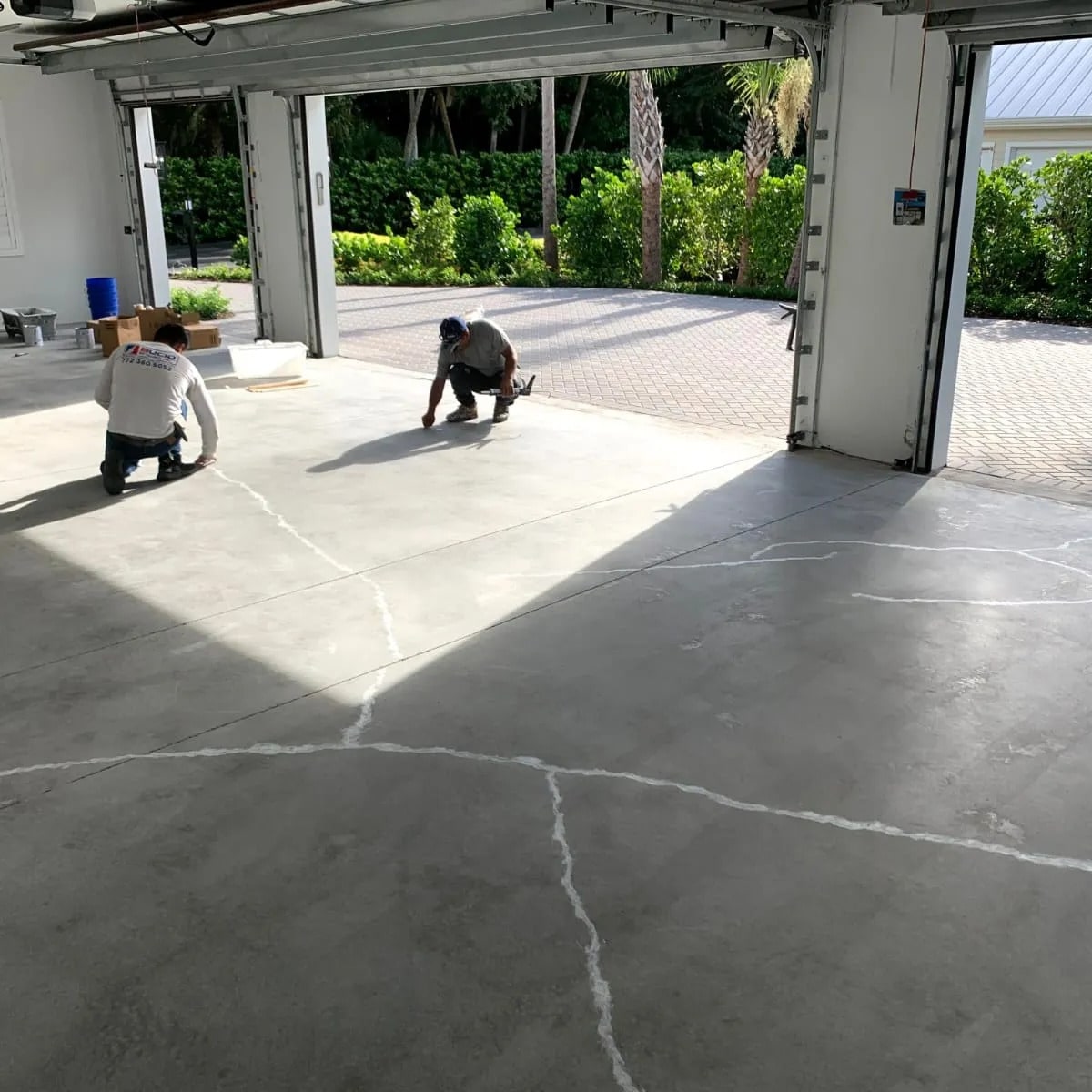
Static cracks routed and filled, corners and the door threshold detailed, expansion and perimeter joints left as joints with a flexible detail. Check the fall: garage slabs slope to the door, and water has to leave.
Prime and broadcastDay 2, then 12–16 h
Primer worked into the profile, then full saturation with coloured quartz into the wet film — one bay and one door line per pot. Back-drag to seat the aggregate once it has set enough to walk on.
Topcoat and release by temperatureDay 3, then 7 d
Dense seal coat, fine aggregate added along the door line where water and salt come in. Walk-on 12 h, drive-on 24 h at 20 °C, and no hot tyre standing on it before day 7.
Need the full method statement for your site? Request it with the form below — we review your slab data before your crew starts.
The standard build: full broadcast, dense topcoat, texture along the door line where snow and water come in.
Takes dropped tools, jack stands and trolley wheels, and wipes clean of cutting oil and adhesive.
Degreaser-tolerant sealing; specify the heavier build and a maintenance topcoat for daily duty.
Gloss seal option for lighting reflection under vehicle loads; mid-tone where tyre scrub has to stay invisible.
Works, but treat it as a below-grade job: moisture testing first, and see the basement system for the damp-proof logic.
It is a real failure mode and a real specification point, but almost nobody in this category publishes a test behind the claim, so treat the phrase with suspicion. What controls it is three things: a full-broadcast profile the tyre cannot get under, a topcoat with enough softening resistance, and a film that has finished crosslinking before a hot car stands on it. We publish the second and third as a cure schedule — seven days at 20 °C — and we do not attach a standard number we have not been tested to. If your project needs a documented test, ask us for a panel and we will arrange one.
Foot traffic at about 12 hours and vehicle traffic at about 24 hours at 20 °C. That is rolling traffic, not parking: a hot tyre left standing needs the film fully cured, so take it to day 7 at 20 °C before the car sleeps in the garage. An unheated garage at 10 °C roughly doubles those times — tell us your climate and we will write the schedule into the order.
Not without two checks. It needs 28 days minimum to cure and dry, and you need to know whether the pourer applied a cure-and-seal or a floor hardener — that is very common on garage slabs and it has to be removed by grinding, because nothing bonds to it reliably. Drop water on the slab: if it beads instead of soaking in within a minute, there is a sealer on there.
Yes, and more often than for an interior floor. A garage slab is normally poured on grade, frequently with no damp-proof membrane under it, and the big open door dries the surface enough to make a wet slab look perfectly fine. Our threshold is 4 % CM, 4 lb /1000 ft² / 24 h MVER or 75 % RH, measured at the door line and at the centre. If the slab fails, the answer is a moisture-tolerant primer or a different system — not a coating sold as able to take anything.
Engine oil, fuel and brake dust wipe off a dense topcoat without marking if they are dealt with in hours rather than weeks. Glycol brake fluid and standing diesel are the two that will attack a film if they sit. De-icing salt solution is fine as contact; it is the brine left to dry along the door line all winter that dulls the gloss, which is why we put extra texture and a rinse routine there.
Not as specified. Plain epoxy ambers and, if left in sun, will eventually chalk; a driveway also gets freeze-thaw at the surface, no door line to control water and a plough. For an outdoor apron we quote a UV-stable topcoat over a build chosen for that exposure — tell us the climate and the traffic and we will say plainly whether an epoxy is the right answer there, because in a lot of cases it is not. If a supplier sells you an interior garage system for a ploughed driveway, the failure is scheduled, not possible.
The full-broadcast profile is the reason this system is chosen for garages over a smooth self-levelling floor: it keeps a mechanical breakaway when the door is open and the floor is damp. We do not publish an R-class or a friction coefficient for it, because we have not tested this build to one — texture is specified by where the water comes from. If your documentation needs a classification we will arrange a ramp test on your build.
We supply systems as area-sized sets with a consumption table showing kg/m² per layer, so a contractor or distributor can quote and stock by floor area rather than by a boxed kit. We do not do retail small-pack kits with a roller in the carton — that is a different supply chain from ours and we would rather say so than send you a box that cannot cover your slab.
No. Peeling edges mean the old film has lost its bond, and a new coat on top inherits that. The old coating comes off by grinding, then the slab gets re-tested for moisture and re-primed. If a small area is sound you can feather the edge into it, but that is a repair detail, not a shortcut over a failing floor.
Soft tyre compound plus grit leaves black scrub marks on any floor — that is physics, not a coating defect. It is highly visible on a dark gloss surface and largely invisible on a mid-tone with a broadcast profile, which is what we specify for garages. A maintenance topcoat every few years resets it.
Your project has conditions we cannot see from here? Send the slab report and drawings — our engineers answer with a written specification.
Dongguan Friway Hydraulic Control Technology Co., Ltd.
Every batch of Heavy-Duty Anti-Slip Garage Epoxy Colored Sand is produced in our own facility by a team that integrates R&D, production, sales and technical service. Advanced equipment, batch-level lab testing and a complete quality system mean consistent quality — from the first sample to the last pallet.
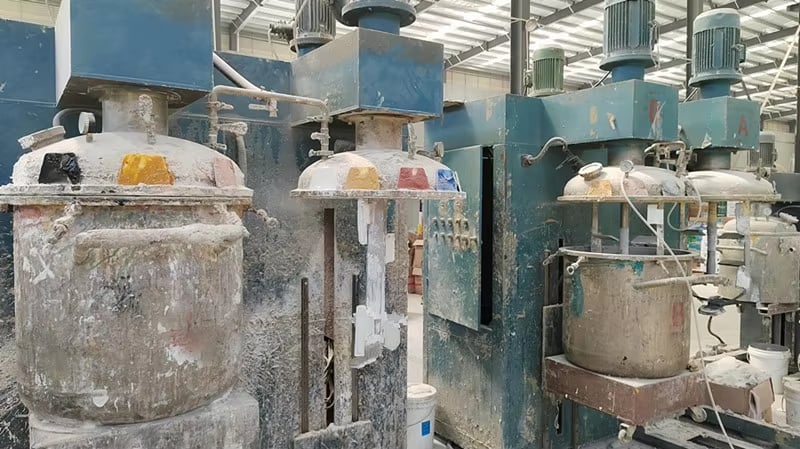 Mixing Lines
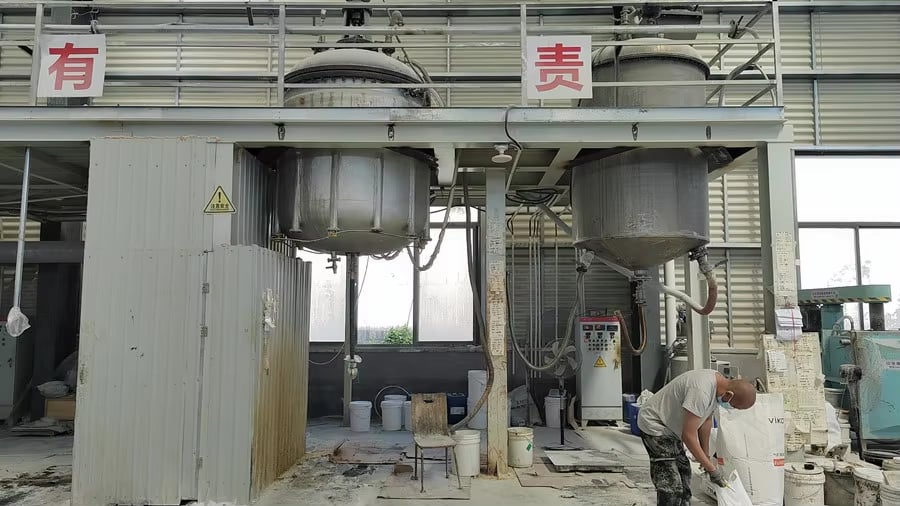 Reactor Kettles
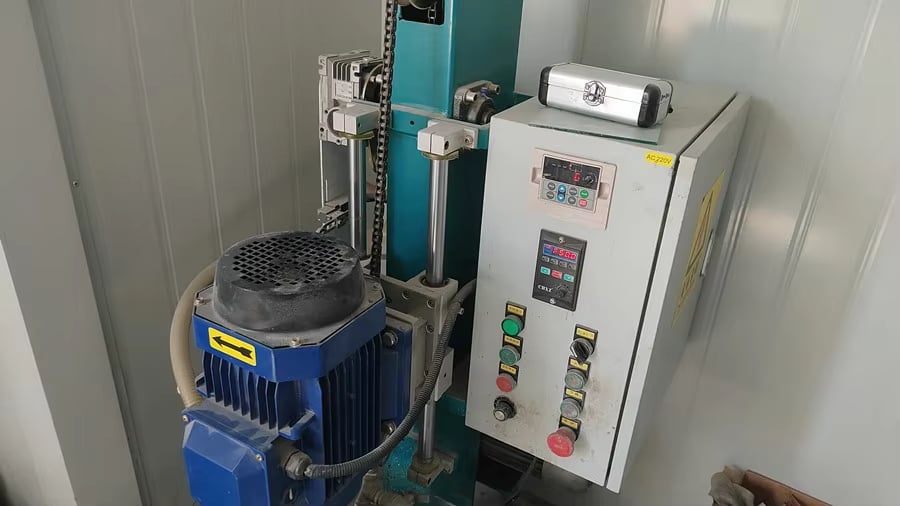 Dispersing Equipment
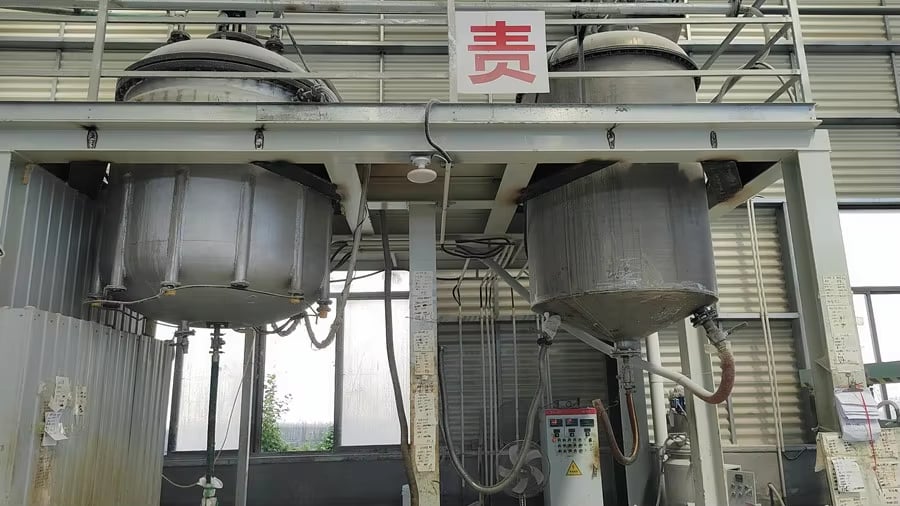 Mixing & Control
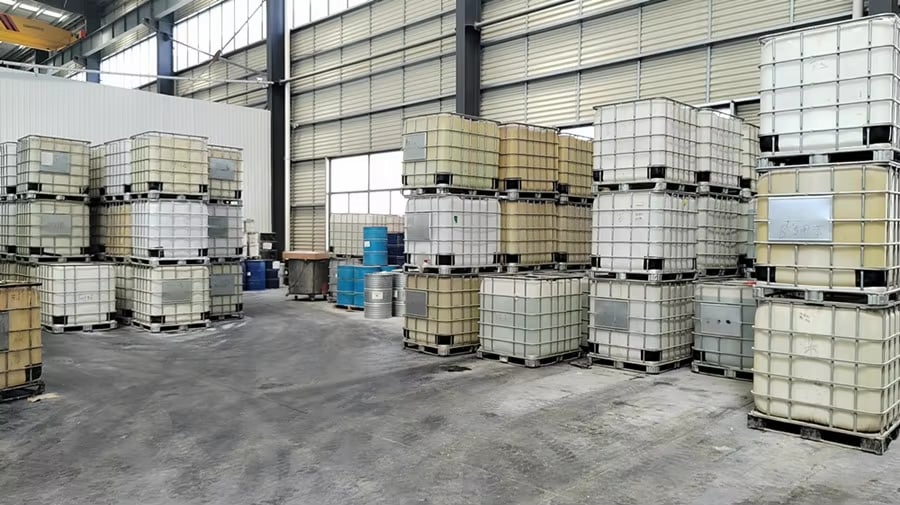 Raw-Material Store
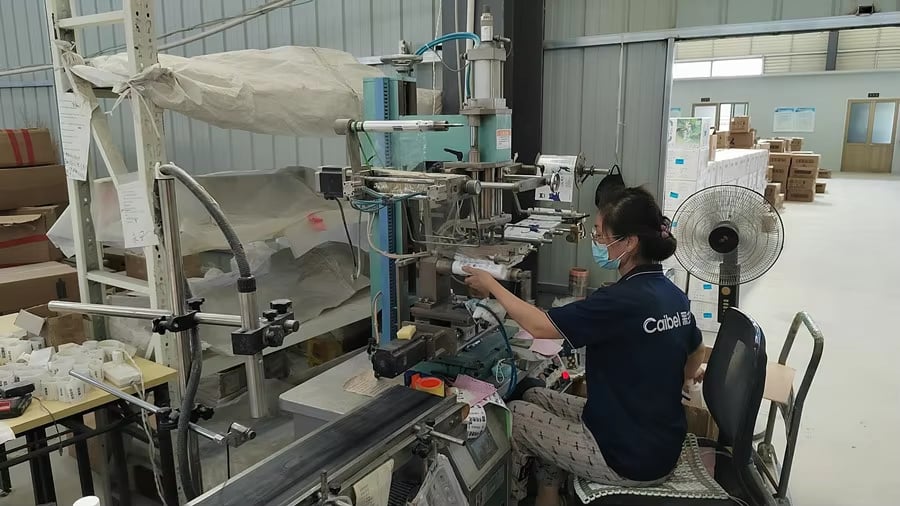 Labelling
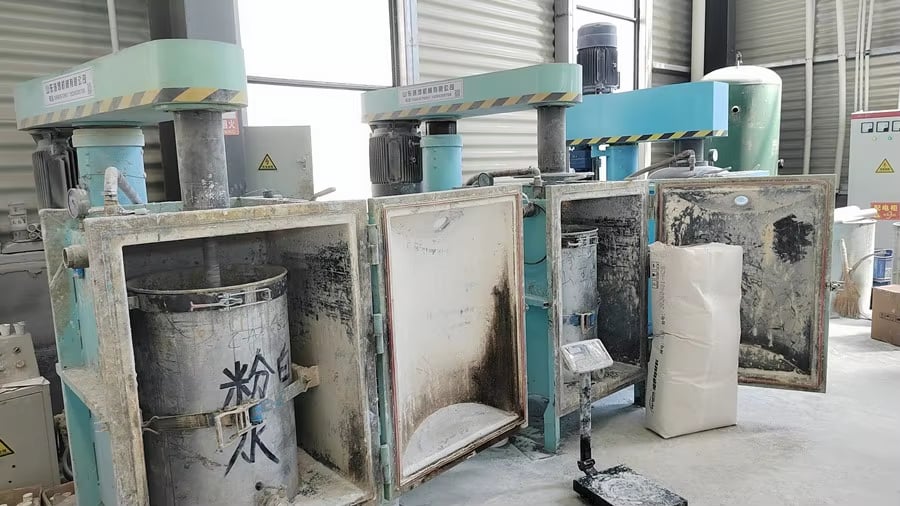 Vacuum Mixing
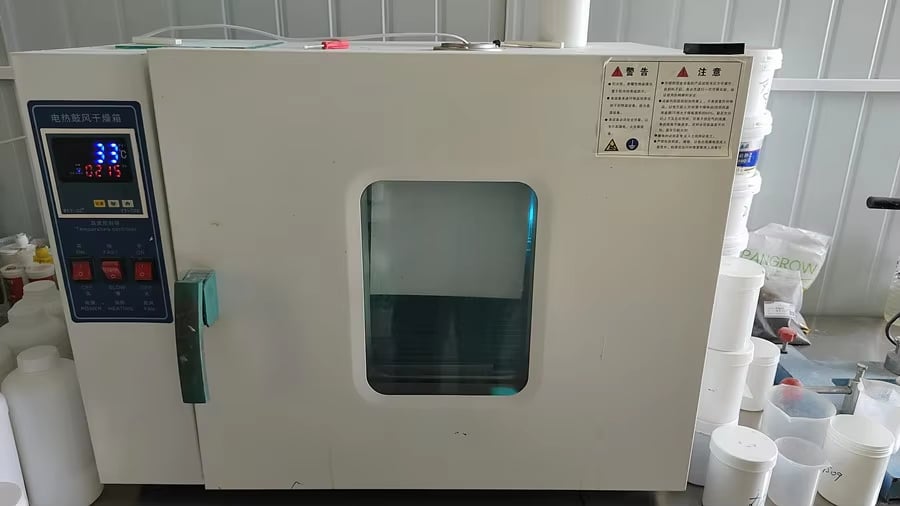 QC Drying Oven
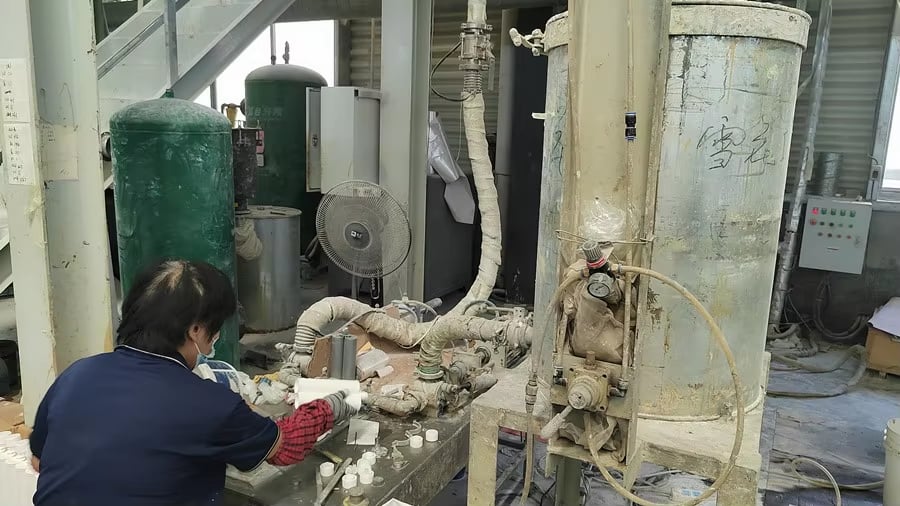 Filling & Capping


Questions about production, certificates or MOQ?
Ask Our TeamThis product line is verified by third-party laboratories. The marks shown above are the ones we publish as images; the documents behind them — certificate copies, batch-specific test reports, the CE Declaration of Conformity — are issued on request. A scanned badge proves nothing about your slab; the report behind it does.
Get a Free Quote
Send the floor area, substrate condition and what the room has to take. We reply with the system build-up, coverage estimate and an FOB quotation — usually within 24 hours.